
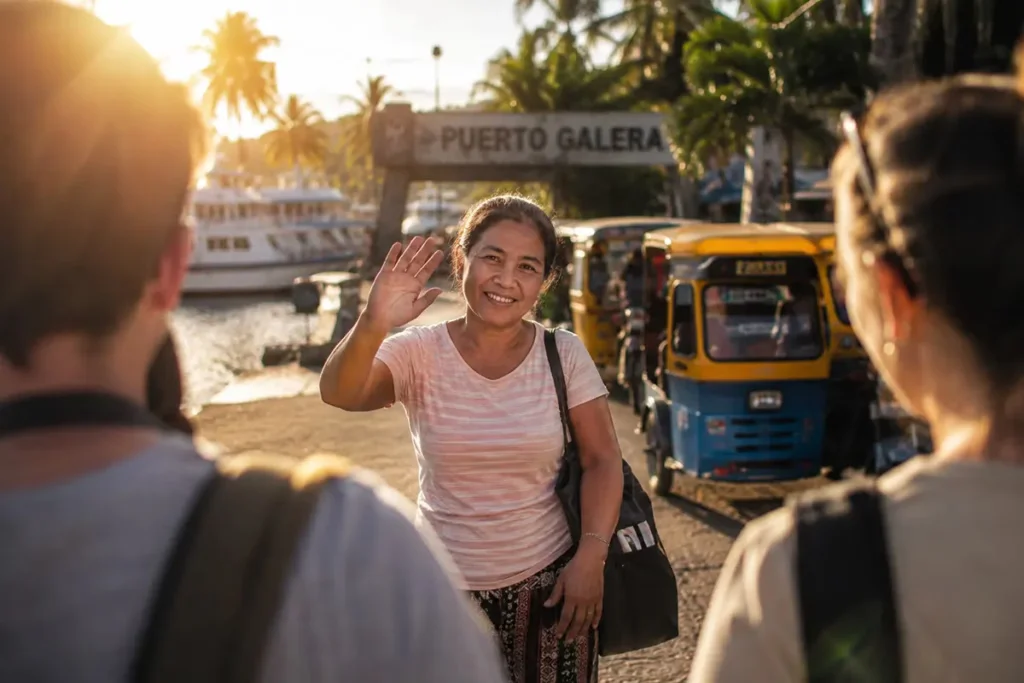
The first time I stepped off the boat in Puerto Galera, a woman named Lita grabbed my bag before I could protest. She flashed a smile so wide it felt like sunshine, gestured toward her tricycle, and started speaking to me in a mix of Tagalog and heavily accented English. Within five minutes, she knew where I was staying, what I wanted to eat, and whether I liked karaoke. She laughed at my terrible Tagalog. She waved off my peso tip for carrying my luggage. This is Mindoro tourism at its finest and the Mangyan people at their very best.
It was the warmest welcome I’d ever received. And yet, something nagged me.
Maybe it was how quickly she shifted from laughter to silence when another foreigner walked past without acknowledging her. Maybe it was the way her smile stayed frozen even as her eyes looked tired. Or maybe it was the realization that this hospitality, this immediate and generous openness, felt like a performance she’d rehearsed her entire life.
Key Takeaways
- Mindoro hospitality showcases warmth but hides a complex history of colonization and marginalization.
- The Mangyans, indigenous to Mindoro, face systemic inequalities despite their welcoming nature.
- Hospitality acts as a survival tactic, often feeling like a rehearsed performance rather than genuine interaction.
- Tourists benefit from this hospitality but rarely recognize the underlying struggles and exhaustion of the local people.
- To engage ethically, travelers should appreciate the culture, support local communities, and advocate for their rights.
The culture of the people of Mindoro Island is famous for its hospitality. Tourists rave about it. Travel bloggers gush. But what if that warmth isn’t just cultural pride? What if it’s also armor, a survival skill honed over centuries of dispossession, stereotyping, and silent humiliation?
What if being welcoming is both a gift and a wound?
The Historical Weight: Stigma Rooted in Centuries of Dispossession
Mindoro’s indigenous peoples, the Mangyans, have lived on the island for thousands of years. Long before Spanish colonizers arrived, they cultivated rice, harvested wild honey, and maintained intricate social systems. They were not rudimentary or backward. They were simply different.
Then came colonization.
Spanish friars labeled the Mangyans as “uncivilized” because they refused Christian conversion and highland living. The Americans later perpetuated similar narratives, framing indigenous Mindoreños as quaint relics needing modernization. Land was taken. Resources were extracted. The culture of the people of Mindoro Island was dismissed as superstition.
By the time the Philippine Republic solidified, the damage was done. The Mangyans and other Mindoro communities had been pushed to the margins, both geographically and socially. Lowland Filipinos absorbed colonial prejudices, often treating Mindoro’s indigenous peoples as lesser, peculiar, or pitiable.
I spoke with Ernesto, a Mangyan elder from Baco, about this history. He told me his grandfather was forced to work Spanish-owned plantations for no pay. His father couldn’t attend formal school because teachers called him “untamed” and refused to teach him. Ernesto himself grew up learning to smile at outsiders, not out of joy, but out of necessity.
“We smile so they don’t hurt us,” he said quietly. “We welcome them, so they don’t take more.”
That sentence stopped me cold. Hospitality, in this context, isn’t just friendliness. It’s a strategic posture developed over generations. It’s the armor you wear when your ancestors were punished for resistance, when survival meant blending in, pleasing, and performing.

The Performance of Being Welcoming: A Double-Edged Cultural Script
I attended a cultural dance performance in Calapan a few years ago. It was held for tourists visiting a local resort. The performers were mostly young Mangyan women, dressed in traditional attire, moving gracefully through choreographed routines. The audience clapped enthusiastically. A foreign couple took selfies with the dancers afterward.
The culture of the people of Mindoro Island was on full display. Yet something felt incomplete.
I stayed behind and watched the women pack up. One of them, Maria, sat on a plastic chair and rubbed her feet. She was exhausted. I asked her how often she performed.
“Three times a week,” she said. “Sometimes more if the tourists ask.”
Did she enjoy it?
She paused. “It pays. And they expect it. They come here for ‘authentic culture,’ so we give it to them.”
Her tone wasn’t bitter. It was resigned.
This is the double-edged sword of hospitality. Maria’s culture is real. Her dances hold meaning. But when they’re performed on demand for outsiders, something shifts. The welcome becomes transactional. The warmth becomes work.
Tourism in Mindoro thrives on this dynamic. Travelers arrive seeking untouched beaches, friendly locals, and cultural authenticity. They get all three. But the “friendliness” often comes at a cost most visitors never see: the exhaustion, the code-switching, the constant pressure to be charming even when you’re tired, frustrated, or simply want to be left alone.
One resort owner I spoke with, a transplant from Manila, told me bluntly: “Tourists love Mindoro because the locals are so accommodating. They never complain. They always smile.”
He said it like it was a compliment.
I heard it as an indictment.

The Invisible Wounds of Exclusion and Stereotyping Today
The hospitality narrative obscures ongoing inequality. While tourists praise the warmth they encounter, the island’s indigenous communities face systemic marginalization in education, healthcare, and political representation.
Consider this: Mangyan children often drop out of school by grade six. Not because they’re incapable, but because schools are located in lowland towns where they face ridicule and discrimination. Teachers frequently lack training in indigenous languages. Textbooks ignore Mangyan history and the broader culture of the people of Mindoro Island.
In 2019, a study by the National Commission on Indigenous Peoples found that Mangyan communities in Mindoro had the lowest literacy rates in the region. The same communities that tourists praise for their hospitality are routinely excluded from basic services.
I met Rosa, a Mangyan mother from Sablayan, who told me her son was mocked at school for his accent. Teachers called him slow. Classmates laughed when he struggled with Tagalog. Eventually, he stopped going.
“He’s smart,” Rosa said. “But they don’t see him. They see a Mangyan. They see someone to pity or ignore.”
Rosa’s son now works as a porter for tourists visiting the area. He carries bags and smiles. He welcomes visitors who will never know his story.
This is the problem: the hospitality tourists consume exists alongside structural inequality they never witness. The welcome is real, but it’s also a shield. It protects locals from further harm while hiding the harm already done.
Who benefits from this arrangement? Not the people doing the welcoming.

Hospitality as Resistance, Not Just Survival
Here’s where the story gets more complicated and more interesting.
Hospitality isn’t only a survival mechanism. It’s also a form of resistance.
When Ernesto smiled at colonizers, he wasn’t just protecting himself. He was refusing to let them see his anger. When Maria performs her dances, she’s not just entertaining tourists. She’s asserting that her culture exists, that it matters, that it will outlast dismissive outsiders.
In this reading, the culture of the people of Mindoro Island serves as a means of maintaining identity and agency in a world that constantly seeks to erase or exploit them. It’s a way to say: “You think you understand me because I’m welcome. But you don’t. You only see what I choose to show.”
This reframing is critical. The people of Mindoro are not passive victims. They are strategic actors navigating centuries of inequality with tools they’ve sharpened over time. Hospitality is one of those tools.
But tools wear down. And people get tired.
The question isn’t whether hospitality is real or fake. It’s both. The question is: what happens when the burden of being welcoming becomes too heavy to carry?

From Comfort to Accountability
If you’re planning to visit Mindoro or have already been, here’s what you can do differently.
First, stop treating hospitality as a spectacle. When someone welcomes you, recognize it as a choice, not a cultural obligation. Say thank you. Pay fairly. Don’t assume warmth equals contentment.
Second, engage beyond the surface. Ask locals about their lives, not just where to find the best beach. Listen without performing allyship. Amplify their voices when you return home. Learn about the actual culture of the people of Mindoro Island, not just the version packaged for tourists.
Third, question your role. Are you contributing to a system that benefits you more than the people welcoming you? Or, are you consuming culture without giving back? Are you complicit in maintaining inequality because it makes your vacation more pleasant?
For social justice advocates and diaspora communities: recognize that cultural displays often mask structural violence. Hospitality can be a coping mechanism, not a celebration. Push for policies that address educational disparities, land rights, and economic opportunities in Mindoro. Here’s the uncomfortable truth: if you admire the smile but ignore the story behind it, you’re part of the problem.

Conclusion: The Story Beyond the Smile
The culture of the people of Mindoro Island is not simple. It’s not just friendliness or cultural pride. It’s a layered, centuries-old story of pain, resilience, survival, and resistance.
When Lita grabbed my bag in Puerto Galera, she wasn’t just being nice. She was enacting a script written by colonizers, reinforced by tourists, and carried forward because the alternative is invisibility or hostility.
But she was also choosing. Choosing to engage and to assert her presence. Choosing to shape the narrative, even if only slightly.
The hospitality you encounter in Mindoro is real. But it’s not the whole story. The whole story includes stolen land, silenced voices, exhausted smiles, and systems that profit from inequality while praising the oppressed for their charm.
So, the next time you’re greeted with warmth on a Philippine island, pause. Appreciate it. But also ask yourself: what am I not seeing? Whose pain am I overlooking? And what can I do to ensure that hospitality becomes mutual, not transactional?
Because the people of Mindoro deserve more than your admiration. They deserve your respect, your accountability, and your willingness to see them fully.
That’s the lasting memory worth carrying home.
P.S. Before you book that Mindoro trip, consider this: the best way to honor someone’s hospitality is to make sure they don’t have to perform it just to survive. Support indigenous-led tourism initiatives. Advocate for educational equity. Share stories that challenge the romantic tourist gaze. The smile will mean more when it’s chosen freely, not scripted out of necessity.

Frequently Asked Questions

Mindoro’s hospitality is particularly complex because it’s intertwined with the island’s colonial history and the marginalization of its indigenous Mangyan communities. While hospitality exists throughout the Philippines, in Mindoro it often serves as both a cultural expression and a survival strategy, shaped by centuries of dispossession and stereotyping. The warmth visitors experience is genuine, but it also masks deeper historical pain and ongoing inequality.
The Mangyans are indigenous peoples who have inhabited Mindoro for thousands of years and comprise eight distinct ethnolinguistic groups. They maintain unique languages, writing systems, and cultural practices. Despite being the island’s original inhabitants, they’ve faced systematic marginalization since Spanish colonization. Their resilience and cultural preservation make them central to understanding Mindoro’s true identity beyond tourist narratives.
Spanish and American colonization labeled Mindoro’s indigenous peoples as “uncivilized,” forcing them to adapt their interactions with outsiders as a protection mechanism. Hospitality evolved from a simple cultural practice into a strategic behavior designed to minimize harm. This historical trauma created a pattern where being welcoming became expected, even required, to avoid further dispossession or violence. Today’s hospitality carries that historical weight.
Not intentionally, but often structurally. When tourists consume “authentic culture” without understanding the context, or when they benefit from cheap labor and services provided by marginalized communities, they participate in an unequal system. The key is awareness: recognizing that the hospitality you receive may come at an emotional cost, and actively working to ensure your presence benefits locals economically and respects their dignity.
Pay fair prices without haggling excessively. Choose indigenous-led tourism initiatives when available. Ask locals about their lives and listen genuinely. Learn basic phrases in local languages. Don’t photograph people without permission. Amplify indigenous voices through social media and conversations back home. Most importantly, question your assumptions about what hospitality means and who benefits from it.
This isn’t a contradiction; it’s human complexity. A smile can be sincerely warm while also strategically deployed. Someone can genuinely enjoy welcoming you while simultaneously feeling exhausted by the expectation to do so. Cultural expressions can be both authentic identity markers and commodified performances. Understanding this duality means seeing people as fully human, not as one-dimensional service providers or cultural ambassadors.
Educational reform that respects indigenous languages and the culture of the people of Mindoro Island, secures land rights and resource control, ensures meaningful political representation, provides accessible healthcare, and offers economic opportunities that don’t require cultural commodification. Tourism income should flow directly to communities, not through exploitative middlemen. Legal protections against discrimination need genuine enforcement, not just symbolic gestures.
It restores agency to people who are often portrayed as passive victims or simple service providers. Recognizing hospitality as resistance means understanding that the people of Mindoro make strategic choices about how to present themselves, protect their culture, and maintain their dignity in difficult circumstances. This framing respects their complexity and intelligence rather than reducing them to either happy natives or helpless victims.
Because the marginalization of indigenous communities reflects broader patterns of internal colonization within Philippine society. Diaspora communities often romanticize Philippine hospitality without recognizing its costs or the inequality it masks. Understanding Mindoro’s reality means confronting uncomfortable truths about how lowland Filipino culture has sometimes perpetuated colonial attitudes toward indigenous peoples. Accountability starts with recognizing these patterns.
The people welcoming you are complete human beings with complex histories, not living postcards. Their hospitality is real, but it exists within a context of historical trauma and ongoing inequality. The best way to honor their welcome is to see them fully: acknowledge their pain, respect their agency, materially support their communities, and commit to building a more equitable relationship between visitors and hosts.
Other Articles You Might Like
- Mindoro Fishing Families: A Tale of Survival
- Mindoro Culture and Its Rich Craft Traditions
- Mindoro Traditional Food You Need to Try Today
- Mindoro Gold Mining: Beyond the Gold That Never Existed
- Mindoro Island History: the Mangyan Indigenous Peoples’ Struggle for Survival
SUGGESTIONS FOR LODGING AND TRAVEL
Lodging is widely available throughout the Philippines. However, you may want to get some assistance booking tours to some of the Philippines’ attractions. I’ve provided a few local agencies that we’ve found to be very good for setting up tours. For transparency: We may earn a commission when you click on certain links in this article, but this doesn’t influence our editorial standards. We only recommend services that we genuinely believe will enhance your travel experiences. This will not cost you anything, and I can continue to support this site through these links.
- For Hotel Accommodations in the Manila area, I highly recommend The Manila Hotel. It is centrally located and within walking distance of Rizal Park and Intramuros. Many other attractions are easily accessible from there as well. I have provided a search box below to help you find hotels (click “Stays” at the top) or flights (click “Flights” at the top). This tool will provide me with an affiliate commission (at no cost to you).
Local Travel & Lodging Assistance
- Guide to the Philippines: This site specializes in tours throughout the Philippines. They seem to have some flexibility in scheduling, and pricing is very competitive.
- Kapwa Travel is a travel company focused on the Philippines. It specializes in customizing trips to meet customers’ needs.
- Tourismo Filipino is a well-established company that has operated for over 40 years. It focuses on tailoring tours to meet customers’ needs.
- Tropical Experience Travel Services – Tours of the Philippines: This company offers a range of tour packages, allowing you to tailor your trip to your preferences.
Lastly, we recommend booking international travel flights through established organizations rather than a local travel agent in the Philippines. I recommend Expedia.com (see the box below), the site I use to book my travel.

