
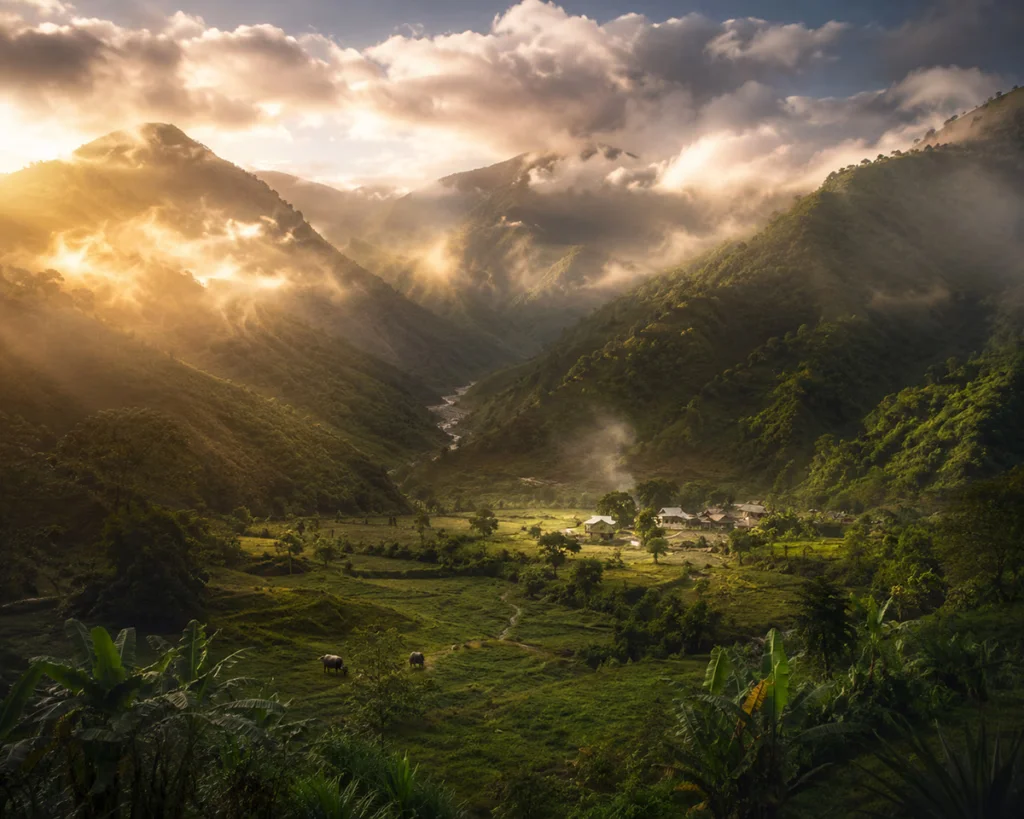
I stepped off the bangka in Calapan, Oriental Mindoro, on a Tuesday morning that smelled like diesel and dried fish. The pier had more cracks than planks that didn’t creak. A trike driver named Mang Ernie waved me over with the kind of smile that said he’d heard every foreigner joke about this place and had better comebacks than I’d ever manage. “First time in Mindoro, sir?” he asked, loading my bag onto the sidecar. “First time,” I said. “Looking for gold?” He laughed before I could answer. “Everyone looks for gold here. Spanish, Japanese, and American. Nobody found enough to get rich. Just enough to make us think we should have.” Such is the history of Mindoro Islands Gold.
His sentence hung in the humid air like laundry on a line. It wasn’t bitter, exactly. It was something sharper: the awareness that your home has been valued for what someone else wanted to take from it, not for what it actually is. Mindoro has carried that weight for five centuries. The Spanish called it Mina de Oro: mine of gold. They never proved it had the riches they imagined, but the name stuck anyway. When a place gets branded as a treasure chest before anyone bothers to understand it, that fantasy reshapes everything: identity, development, self-worth.

Key Takeaways
- Mindoro’s history is shaped by colonial perceptions of wealth, particularly the myth of abundant gold mining.
- The Spanish labeled the island Mina de Oro without evidence, leading to exploitation without real benefit for locals.
- Dependency and disappointment arose as outsiders extracted resources while locals remained impoverished.
- Historical trauma affects Mindoreños’ self-perception, fostering an ‘almost wealthy’ mindset linked to failed colonial promises.
- Mindoro’s true wealth lies in its biodiversity, agricultural potential, and indigenous knowledge systems, not in gold mining.
This is the story of how a colonial daydream became an economic anchor. It’s also the history of Mindoro Island that nobody talks about.
The Spanish Bet on a Name Before They Proved the Claim
Let’s clear something up first. The Spanish didn’t discover gold veins the size of subway tunnels in Mindoro. They heard rumors, mostly from traders passing through. Chinese merchants mentioned gold dust. Indigenous Mangyan communities panned small amounts from rivers. That was enough for the colonizers to rename the island and start planning extraction operations.
But the fantasy outpaced the findings.
Spanish records from the 16th and 17th centuries are maddeningly vague. They mention gold, but always in the future tense. Always as potential. Royal decrees ordered expeditions. Priests wrote letters back to Spain about untapped riches. Governors requested funding for mining infrastructure, but it never materialized.
Meanwhile, the Mangyan people who actually lived in the mountains were doing what they’d done for centuries: small-scale placer mining, trading modestly, living off the land. They weren’t sitting on dragon hoards. They were surviving.

But Spain had already committed to the narrative. Mina de Oro became Mindoro, and the branding did its job. It attracted attention and justified the occupation. It turned the island into a symbol of what could be extracted rather than what existed.
That pattern shaped the history of Mindoro Island in ways that are still visible today.
When Branding Becomes a Trap, Not a Promise

I met Liza Ramirez in a sari-sari store just outside Pinamalayan. She was restocking shelves while her daughter did homework at a plastic table near the rice sacks. We started talking because I asked about a framed black-and-white photo on the wall: miners in the 1950s, standing in front of a tunnel that didn’t look safe.
“That’s my grandfather,” Liza said, pointing to a man in the back row. “He worked for an American company that came looking for gold after the war. They closed the mine three years. Said it wasn’t profitable enough.”
“Did he make good money while it lasted?” I asked.
“Enough to feed the family. Not enough to save anything.” She shrugged. “They always say Mindoro is rich. But who got rich? Not us.”
That’s the paradox woven throughout the history of Mindoro Island. The name promised wealth, but it delivered dependency.
Every time a mining company arrived, locals hoped it would mean jobs, infrastructure, and schools. Sometimes it did, for a while. Then the company would pull out when profits fell short of projections, leaving behind environmental damage and a labor force with no transferable skills.
The cycle repeated with logging. Then with nickel. Then, with agricultural concessions.
Mindoro’s identity became tied to what outsiders wanted from it, not what Mindoreños wanted for themselves. That’s not pride. That’s a trap.
The Psychology of “Almost Wealthy” Is Worse Than Just Being Poor
Here’s the thing about being branded as rich when you’re not: it messes with your self-perception in ways outright poverty doesn’t.
If your island is “just” poor, you can organize around that. You can demand infrastructure, education, and investment. You can build solidarity around shared struggles.
But if your island is supposedly sitting on gold, and you’re still poor? Then the failure feels personal. It feels like maybe you didn’t work hard enough. Maybe you didn’t know how to capitalize on your blessings. Maybe the problem is you.
That’s psychological warfare, and it’s unintentional but devastating.
I heard versions of this from at least a dozen people across Oriental and Occidental Mindoro. The phrasing changed, but the sentiment didn’t: “We should be doing better. Other places with less have done more.”
No. Other places didn’t spend five centuries being told they were rich while being treated as resource extraction zones.
The history of Mindoro Island is not a story of squandered opportunity. It’s a story of colonial branding that created impossible expectations and zero support systems to meet them.
The Mangyan Were the Original Mindoreños, and They Never Signed Up for This
Let’s talk about who was actually here first.
The Mangyan people are the indigenous communities of Mindoro. There are seven distinct ethnolinguistic groups: Iraya, Alangan, Tadyawan, Tawbuid, Buhid, Hanunoo, and Ratagnon. They lived in the mountainous interior long before the Spanish arrived, and they’ve been systematically sidelined ever since.
The Spanish saw them as obstacles or sources of labor. The Americans saw them as “uncivilized.” Lowland Filipinos often treated them as backward. Modern development projects routinely displaced them without consultation or compensation.

The gold fantasy didn’t benefit the Mangyan. It endangered them.
When Spanish expeditions pushed into the interior in search of mines, they disrupted trade routes and forced conversions. The American companies arrived in the early 20th century, and they carved up ancestral lands without regard for existing communities. When nickel mining expanded in recent decades, Mangyan territories were classified as “unoccupied” and leased to foreign corporations.
The End Result
This is what happens when a place is valued for what can be taken from it. The people who belong there become inconvenient.
I spoke with a Hanunoo elder named Tomas in the foothills near Bulalacao. He didn’t want his full name used. He was cautious, and I didn’t blame him.
“The lowlanders think we have nothing because we don’t live like them,” he said. “But we have the forest. We have the rivers. We know how to live without destroying. They come for gold, for nickel, and they leave us with poison in the water.”
That’s not romanticizing indigenous life. That’s acknowledging that the people who were here first had a functioning relationship with the land. And colonialism wrecked it in pursuit of wealth that mostly never materialized.
The Mangyan are central to understanding the history of Mindoro Island, yet they remain invisible in most official narratives.

The Japanese Occupation Added Another Layer of Exploitation Fantasy
World War II brought a fresh wave of treasure hunters to Mindoro, this time in uniform.
Japanese forces occupied the island in 1942. Rumors swirled that they’d hidden gold and other valuables in caves and tunnels before retreating in 1945. For decades afterward, treasure hunters descended on Mindoro, convinced they’d find General Yamashita’s lost hoard.
They didn’t. Mostly, they just dug holes.

But the treasure hunting had real consequences. It kept the fantasy alive. It kept the island framed as a place where wealth was buried, waiting, just out of reach.
Mang Ernie, the tricycle driver from my opening scene, told me that his uncle spent 15 years digging in the mountains near Bongabong. “He never found anything. Lost his farm, lost his wife, kept digging. People said he was out of control, but he said the maps were real.”
“Were they?” I asked.
“Who knows? What’s real is he died poor.”
That’s the end game of treasure mythology. It’s not about what’s actually there. It’s about the obsession, the distraction, the decades spent chasing someone else’s fantasy while your actual life crumbles.
This chapter in the history of Mindoro Island added yet another layer to the extractive narrative: even when there’s nothing left to take, outsiders keep looking.
What Mindoro Actually Has: A Case for Rebranding Based on Truth
Let’s get honest about what Mindoro is.
It’s not a gold mine. It’s not a hidden treasure chest. But it’s also not poor in the ways that matter.
Mindoro has some of the richest marine biodiversity in the Philippines. The reefs around Puerto Galera and Sablayan are world-class. The Apo Reef Natural Park is the second-largest contiguous coral reef system in the world.

It has productive agricultural land. Rice, coconut, and fruit farming sustain tens of thousands of families. The problem isn’t the land. It’s the lack of processing facilities, cold storage, and market access.
It has deep indigenous knowledge systems that modern sustainability experts are only beginning to appreciate. Mangyan farming techniques, forest management practices, and water conservation methods have been used for centuries without depleting the ecosystem.
It has cultural traditions that deserve recognition, not pity. The Hanunoo script, one of the few surviving pre-colonial writing systems in the Philippines, is still taught in some communities.

And it has people like Liza, Mang Ernie, and Tomas who are proud of where they’re from, even when the branding doesn’t match the reality.
What Mindoro needs is not another mining company or treasure hunt. It needs infrastructure that supports what’s already there. It needs policies that prioritize the people who live there over the corporations that want to extract from there.
Most of all, it needs a new story.
Rewriting the Mindoro Narrative: From Extraction to Equity
Here’s the uncomfortable part: changing the narrative means admitting the old one was a lie.
Mindoro was never Mina de Oro as the Spanish imagined. It was a place with modest mineral resources, rich biodiversity, and resilient communities. The problem wasn’t that it failed to deliver gold. The problem was that colonizers sold a fantasy and then blamed the land when reality didn’t match the brochure.
Rebranding Mindoro isn’t about tourism slogans or catchy campaigns. It’s about shifting the entire framework from extraction to equity.
That means recognizing Mangyan land rights and including indigenous voices in every development decision. It means investing in education, healthcare, and infrastructure that benefit locals, not just corporations. Further, it means supporting small-scale, sustainable industries instead of waiting for the next big mining contract.
And it means letting go of the myth that Mindoro is “underperforming” because it hasn’t delivered the riches someone imagined in the 1500s.
If we keep measuring the island by a colonial fantasy, we’ll keep missing what’s actually valuable. The real history of Mindoro Island isn’t about gold that never existed. It’s about resilience, as always.
The Identity Crisis No One Names
The saddest part of this story isn’t economic. It’s psychological.
When I asked people in Mindoro how they felt about their home, I heard pride mixed with defensiveness. I heard love mixed with frustration. I heard “We’re not poor, but we could be doing better” so many times it felt like a rehearsed line.
That’s the identity crisis. Mindoro has been told for five centuries that it should be rich. When it’s not, the blame turns inward. But the failure isn’t Mindoro’s. The failure is the colonial model that valued places only for what could be extracted and then abandoned them when the numbers didn’t work out.
Mindoro doesn’t need to prove it’s a gold mine. It needs to stop being measured by that standard.

The Ending That Should Make You Uncomfortable
Here’s what I want you to sit with: How many places do you think of as “underperforming” because they haven’t delivered what colonizers, corporations, or tourists expected?
How many islands, provinces, and regions have been branded with someone else’s fantasy and then blamed when reality didn’t match?
And how many people have internalized that failure as their own?
Mindoro is just one example. There are dozens more across the Philippines. Hundreds across the colonized world.
The question isn’t whether Mindoro has gold. The question is whether we’re ever going to stop valuing places only for what we can take from them.
I don’t have the answer. But I know who does: the people who live there. They are the ones who stayed when the mines closed. The ones who rebuilt after the logging companies left, and the ones who never bought the fantasy in the first place.
Maybe it’s time we listened to them instead of the old maps.
A Personal Confession
I’ll admit something. When I first heard about Mindoro, I thought: “Why haven’t I heard of this place?”
Then I went, and I talked to people. I realized I’d absorbed the same bias everyone else has: if a place isn’t famous, it must not be important.
That’s garbage thinking, and I’m working on unlearning it.
Mindoro is important because people live there. Because culture exists there. Because history happened there. Not because it delivered gold to Spanish galleons or dividends to American mining shareholders.
If that sounds obvious, good. It should be.
But we keep forgetting it every time we measure a place by what it produces for us rather than by what it means to the people who call it home.
Understanding the real history of Mindoro Island means letting go of the colonial fantasy and seeing what’s actually there: people, culture, resilience, and a future that doesn’t depend on extraction.
FAQ: Mindoro’s History, Identity, and the Gold That Never Was
Small amounts of gold existed, mainly in rivers where indigenous Mangyan communities practiced placer mining. But there’s no evidence of the massive deposits Spanish colonizers imagined. The name “Mina de Oro” was aspirational branding, not a geological fact. This distinction is crucial to understanding the history of Mindoro Island.
Colonial powers often branded territories based on potential rather than evidence. Naming the island Mina de Oro justified occupation, attracted investment, and reinforced the narrative that colonization was economically rational. The fantasy served political and economic purposes even when the facts didn’t support it.
The “gold mine” label attracted extractive industries: mining, logging, and later nickel operations. These industries provided temporary jobs but rarely invested in long-term infrastructure, education, or local ownership. When companies left, they are left behind environmental damage and communities without sustainable economic foundations. This pattern defines much of the history of Mindoro Island.
The Mangyan are the island’s indigenous inhabitants, comprising seven ethnolinguistic groups. They lived sustainably in the mountains long before colonization. Spanish and later American interests displaced them, ignored their land rights, and often framed them as obstacles to development. Modern mining and agricultural projects continue this pattern. Any complete telling of the history of Mindoro Island must center on Mangyan voices and experiences.
Yes. Nickel mining is the primary extractive industry in parts of Oriental and Occidental Mindoro. These operations face criticism for environmental damage, inadequate consultation with indigenous communities, and limited benefit to local populations. The pattern of extraction over equity persists.
Mindoro has extraordinary marine biodiversity, including the Apo Reef. It has productive agricultural land and indigenous knowledge systems that offer sustainable alternatives to extractive industries. The island’s cultural heritage, particularly the Hanunoo script and Mangyan traditions, represents irreplaceable value that has nothing to do with minerals.
Many locals internalize the narrative that Mindoro “should be” wealthier, leading to a sense of failure or underperformance. This psychological burden ignores the systemic issues: a lack of infrastructure investment, corporate extraction without reinvestment, and policies that favor outside interests over local communities. The problem isn’t Mindoreño effort. It’s the colonial framework that still shapes development priorities.
Rebranding requires recognizing indigenous land rights, investing in infrastructure that serves residents, supporting sustainable industries like ecotourism and small-scale agriculture, and abandoning the extraction-first model. Most importantly, it means listening to Mindoreños about what they want for their home instead of imposing external visions of what the island “should” be.
Mindoro lacks the infrastructure investment and marketing that turned other destinations into household names. Puerto Galera has a solid dive tourism base, but much of the island remains underdeveloped. This isn’t failure. It’s an opportunity to build tourism that prioritizes local benefit and environmental sustainability over volume.
Places should be valued for what they are and what their residents want them to be, not for what outsiders hope to extract. The history of Mindoro Island is a warning: colonial branding can shape identity and development for centuries, often to the detriment of the people who actually live there. Rewriting that story requires honesty, investment, and centering local voices over external fantasies.
Other Articles You Might Like
- Mindoro Hospitality: The Heart of the Island
- Mindoro Fishing Families: A Tale of Survival
- Mindoro Culture and Its Rich Craft Traditions
- Mindoro Traditional Food You Need to Try Today
- Mindoro Island History: the Mangyan Indigenous Peoples’ Struggle for Survival
- History of Mindoro Island and Its Rich Heritage
SUGGESTIONS FOR LODGING AND TRAVEL
Lodging is widely available throughout the Philippines. However, you may want to get some assistance booking tours to some of the Philippines’ attractions. I’ve provided a few local agencies that we’ve found to be very good for setting up tours. For transparency: We may earn a commission when you click on certain links in this article, but this doesn’t influence our editorial standards. We only recommend services that we genuinely believe will enhance your travel experiences. This will not cost you anything, and I can continue to support this site through these links.
- For Hotel Accommodations in the Manila area, I highly recommend The Manila Hotel. It is centrally located and within walking distance of Rizal Park and Intramuros. Many other attractions are easily accessible from there as well. I have provided a search box below to help you find hotels (click “Stays” at the top) or flights (click “Flights” at the top). This tool will provide me with an affiliate commission (at no cost to you).
Local Travel & Lodging Assistance
- Guide to the Philippines: This site specializes in tours throughout the Philippines. They seem to have some flexibility in scheduling, and pricing is very competitive.
- Kapwa Travel is a travel company focused on the Philippines. It specializes in customizing trips to meet customers’ needs.
- Tourismo Filipino is a well-established company that has operated for over 40 years. It focuses on tailoring tours to meet customers’ needs.
- Tropical Experience Travel Services – Tours of the Philippines: This company offers a range of tour packages, allowing you to tailor your trip to your preferences.
Lastly, we recommend booking international travel flights through established organizations rather than a local travel agent in the Philippines. I recommend Expedia.com (see the box below), the site I use to book my travel.


Thanks for this article. I searched about mining in the Philippines by the Chinese because of this new obsession about Pax Silica. I wanted to learn how it is going for the island Mindoro where I heard there is mining there. I grew up in Panay island. Never heard of mining in our island in particular. We just recently retired here in PI. I have to confess. I’m not versed about other sub cultures in my native land. I learned more from reading your article. I heard people called Mangyan in a derogatory term but not about the Mangyan people as a culture. After reading what you wrote about Mindoro, now I want to visit the island. Please keep writing about our richness as a people and culture.
What is your opinion about Pax Silica? How about Chinese mining habit in the Philippines?
Have a blessed day!
I was plesantly surprised by your inquiry about Pax Silica. I think that one the surface, it souds like a great idea however, I’m cautious with the current administration. There is honestly now way to forcast how they will really treat it from day to day. So, I’m reserving any final judgenet until I see what they really do with it (if anything). As for the Chinese mining habit, I really haven’t explored it too much. There is an obvious history that I ran across in my research on this article but I didn’;t go much beyond that.
Anyhow, thanks for reading the article and taking the time to provide a comment. I truly appreciate it. This is my way of giving back to the Philippines for everything I have received throughtout the year’s. I truly love the Philippines and I look forward to every trip. I’m acrtually planning one now, likely in late January.