
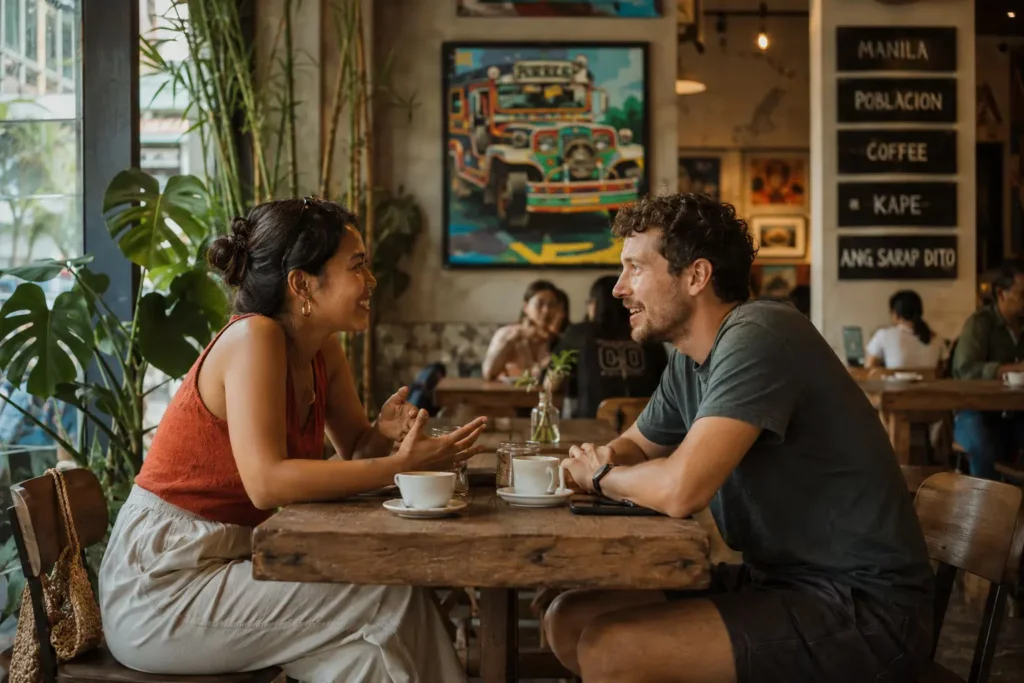
I met Marcus on a Tuesday at a café in Poblacion, Makati. Like me, he was a solo traveler in the Philippines. He’d just arrived from Cebu, I was nursing my third coffee, and within twenty minutes we’d covered his divorce, my military career, and whether San Miguel Pale Pilsen was objectively better than Red Horse. Spoiler: it’s not, but I let him have that one. Anyhow, this article is about travel loneliness and making friends while traveling, and the challenges that come with it.
We laughed hard. Made plans to check out the Chinatown night market. Talked about hitting El Nido together since we were both headed to Palawan. For three hours, I forgot I’d been traveling alone for six weeks.
Then he checked his phone. His flight to Bangkok was in two days.
Key Takeaways
- Traveling solo in the Philippines often leads to intense but brief friendships, creating emotional challenges during goodbyes.
- Connection addiction can develop as travelers seek fleeting relationships, making loneliness feel more pronounced afterward.
- Filipino culture fosters quick connections, making goodbyes more painful due to the depth of initial bonds.
- To navigate solo travel painlessly, prioritize quality connections over quantity and engage with local communities.
- Healing after goodbyes involves acknowledging feelings, sharing stories, and seeking deeper connections with locals.
That sinking feeling? That’s the subject of this article. And if you’ve done any solo travel in the Philippines for any length of time, you know exactly what I’m talking about.
The Problem Nobody Warns You About
Travel blogs sell you the magic of making friends on the road. Hostels market themselves as social hubs. Instagram influencers show group beach shots with captions like “found my crew.” The message is clear: loneliness in solo travel is easily solved by meeting more people.
That’s not just incomplete. It’s a setup for emotional whiplash.

I’ve watched it happen dozens of times in Manila, Cebu, Siargao, and every backpacker hub in between. Solo travelers in the Philippines arrive alone, meet incredible people within hours, bond intensely over shared meals and sunset beers, then face a goodbye neither party saw coming. The friendship felt real because it was real. The loss hurts because the connection mattered.
Maria, a Filipina tour guide from Bohol, told me something that stuck. “We meet foreigners every week. Some we remember for years. Some leave, and we never hear from them again. It doesn’t hurt less just because it happens often.”
She’s not alone in feeling that. This isn’t just a foreigner problem.
The Cycle You Can’t Escape
Let me explain what I call connection addiction. It’s not clinical. It’s experiential. You meet someone while traveling solo through the Philippines. The conversation flows effortlessly, and you share stories you don’t tell people back home. You make plans for tomorrow. You feel seen, understood, and less alone.
Then one of you leaves. Maybe it’s a three-day gap, maybe three hours. The friendship evaporates before it solidifies. You’re back to solo dinners and long bus rides with your own thoughts.
So you do it again. New hostel, new city, new person. Same cycle.
The pattern creates an emotional dependency on fleeting connections. You start chasing the high of instant friendship because it temporarily fills the void. But it also trains you to expect impermanence, which makes vulnerability harder each time. You learn not to invest too deeply because you’ve been burned before.
I watched this play out in a hostel common room in Coron. Two Australian women, both in their late twenties, were having near-identical conversations with different groups on opposite sides of the room. Same questions and enthusiastic energy. Same surface-level charm. When I asked one of them later why she didn’t just join one conversation, she shrugged. “Easier this way. Less attached.” That’s the toll. You protect yourself by staying shallow, which guarantees the loneliness you were trying to escape.

Why the Philippines Amplifies the Pain
Filipino culture doesn’t do distant politeness. Warmth here is immediate, genuine, and disarming. A stranger offers you a ride without hesitation. A local family invites you to lunch after five minutes of small talk. Jeepney drivers crack jokes in broken English just to make you smile.
This hospitality is beautiful. It’s also why goodbyes hurt more here than almost anywhere else I’ve traveled.
In countries with more reserved social norms, relationships develop slowly. There’s a buffer. You don’t bond deeply in three days because the culture doesn’t facilitate it. In the Philippines, that buffer doesn’t exist. You’re pulled into people’s lives quickly, which means attachment forms faster for solo travelers navigating this cultural landscape.
Jose, a tricycle driver in Dumaguete, summed it up perfectly. “Foreigners always say Filipinos are so friendly. Yes, we are. But you leave, and we stay. You think it’s easy for us?”
It’s not. Locals feel these fractured connections, too. The difference is that they don’t have the option to leave. They stay in the same town, drive the same routes, and meet the next batch of travelers who will also disappear.
The emotional asymmetry is real. Travelers get the thrill of new friendships. Locals absorb the repetitive loss.

I’ve traveled through Southeast Asia, Europe, and Latin America. Nowhere else have I felt the sting of goodbye quite like this. The speed of connection here makes the departure feel like a betrayal, even when it’s just logistics.
The Uncomfortable Truth About Connection
Here’s the part most travel advice gets wrong: you cannot defeat loneliness by accumulating more friendships. Connection quantity is not the antidote to emotional isolation. Depth is. Duration is. Consistency is.
Short-term travel friendships lack all three.
That doesn’t make them worthless. It makes them fundamentally different from the relationships that sustain you over the long term. Confusing the two categories sets you up for disappointment and exhaustion.
I learned this the hard way in Siargao. I spent two weeks befriending everyone I met during my solo travel stint. Shared meals every night. Group surf sessions. Late-night bonfires. It felt like a community. Then everyone’s trips ended within three days of each other. Suddenly, I was alone in a place that had felt full.
The loneliness after that week was worse than anything I’d felt traveling solo before meeting them. I’d mistaken temporary companionship for a lasting connection.

Solitude, by contrast, doesn’t promise what it can’t deliver. It’s honest. You’re alone, you know you’re alone, and you build coping mechanisms accordingly. You read more, and you journal. You observe and engage with locals in smaller, more intentional ways.
I’m not romanticizing isolation. Loneliness is real and painful. But chasing shallow connections to avoid it often makes things worse.
How to Navigate Friendships Without Losing Yourself
So what’s the alternative? You can’t avoid meeting people. You shouldn’t. Human connection, even a temporary one, adds richness to solo travel in the Philippines. But you can approach it more mindfully.
First, quality over quantity. One deep conversation with a local jeepney driver who shares his family’s history is worth ten surface-level hostel chats. Seek substance, not volume.
Second, set emotional boundaries without guilt. It’s okay to enjoy someone’s company without pretending the friendship will last forever. You can value the moment without needing it to become more.
Third, honor connections as you prepare for goodbyes. Exchange contact information if you want, but don’t build expectations around staying in touch. Most won’t. That’s not failure; it’s reality. Fourth, cultivate resilience through self-reflection. Ask yourself why you’re seeking connection in the first place. Are you running from something? Filling a void? Or genuinely enjoying shared experiences? The answer changes how you approach relationships.

Finally, engage with local communities, not just other travelers. Join a language exchange in Manila. Volunteer at a community center in Cebu. Attend a local basketball game. These spaces offer connection without the built-in expiration date of backpacker culture.
Raquel, an expat from Spain who’s lived in Manila for eight years, told me this: “I stopped going to traveler events. Everyone’s gone in a month. I joined a Filipino running club instead. Same people every week. Real friendships formed.”
That shift, from transient to stable, changes everything.
Healing After the Goodbye
You will experience painful goodbyes. That’s non-negotiable. How you process them determines whether they accumulate as emotional scar tissue or contribute to your growth.
Simple rituals help. Write about the person and what you appreciated. Send a message thanking them, even if they don’t respond. Allow yourself to feel the sadness without judgment.
Don’t numb the pain by immediately seeking the next connection. Sit with it. Recognize what the friendship gave you. Then let it go.
Leverage local voices. Filipino culture values storytelling and emotional honesty. Talk to locals about loss and connection. You’ll find they understand better than most.
Community exists for solo travelers dealing with these exact struggles. Online forums, expat groups, and local meetups provide space to share without pretense. Use them.

Vulnerability is not weakness. Admitting that goodbyes are painful doesn’t make you fragile. It makes you human. The travelers who pretend it doesn’t affect them are either lying or emotionally shut down. Neither is aspirational.
What Will You Risk for Connection?
So here’s my challenge: stop romanticizing travel friendships as the antidote to loneliness. They’re not. They’re beautiful, fleeting moments that deserve appreciation without false expectations.
Ask yourself what you’re actually seeking. If it’s a community, build it with locals and long-term expats. Looking for companionship, accept its temporary nature, and protect your emotional reserves. If it’s an escape from deeper issues, solo travel won’t fix that.
The Philippines will offer you a connection that is faster and more genuine than in almost any other place. That’s its gift. But the goodbyes will hurt more, too. That’s the cost.
You can’t have one without the other.
I still meet people in cafés and make plans that sometimes fall through. I still feel the sting when someone I’ve connected with boards a plane I’m not on. But I’ve stopped pretending those friendships are something they’re not.

Share your painful goodbye stories in the comments. Don’t sugarcoat them. The rawness matters. And if you’re planning solo travel in the Philippines, save this article. You’ll need it when the loneliest goodbye finds you.
Because it will. And knowing it’s coming doesn’t make it hurt less, but it does make you less alone in the pain.
Closing Thought
If you’ve never solo-traveled, this article might sound dramatic. If you have, you’re probably nodding along. The loneliest goodbye isn’t dramatic when you’re living it. It’s just Tuesday afternoon in a Manila café, laughing with someone you’ll never see again, already bracing for the silence that follows. That’s the reality nobody puts on Instagram. And that’s exactly why it needs to be said.
FAQ
Focus on depth over breadth. Spend more time with fewer people. Engage with local communities through volunteering, language exchanges, or shared hobbies rather than only meeting other travelers. Locals who live in the area provide continuity that backpackers cannot. Accept that most travel friendships are temporary, and reserve emotional investment for relationships with staying power.
Completely normal. The contrast between connection and isolation amplifies loneliness. When you experience intense companionship during solo travel in the Philippines, and then it suddenly ends, the silence feels heavier. This is emotional whiplash, not a personal failing. Recognizing the pattern helps you manage expectations and process the feelings more effectively.
Filipino culture prioritizes hospitality, warmth, and immediate relational connection. Social barriers that exist in other cultures are lower here. This cultural trait creates rapid bonding, which benefits solo travelers but also increases the emotional impact of departure. The same openness that makes the Philippines feel welcoming also makes goodbyes more painful.
No. Isolation isn’t the answer. Instead, approach friendships mindfully. Enjoy connections without false expectations of permanence. Set emotional boundaries that let you value the moment without demanding it become more. The goal is resilience, not avoidance. Pain is part of meaningful connection; numbing yourself eliminates both.
Additional FAQ Considerations
How can I process the sadness of saying goodbye to travel friends?
Allow yourself to feel it without judgment. Write about the person and what the friendship meant. Send a thank-you message if appropriate. Avoid immediately seeking the next connection as a distraction. Sit with the loss. Talk to locals about similar experiences; they often understand better than other travelers. Simple rituals of acknowledgment help you move forward without carrying unprocessed grief.
What’s the difference between loneliness and solitude in solo travel?
Loneliness is the painful feeling of being unwantedly isolated. Solitude is chosen, intentional time alone. Solo travel involves both. Learning to cultivate solitude as a practice reduces dependency on fleeting connections. Solitude allows reflection, observation, and deeper engagement with place. Loneliness signals a need for connection, but chasing shallow friendships to escape it often backfires.
Do locals in the Philippines get tired of saying goodbye to travelers?
Yes. Many do. Tour guides, hostel staff, tricycle drivers, and others in tourist-facing roles experience repetitive goodbyes. Some protect themselves by maintaining emotional distance. Others remain genuinely warm despite the pattern. Recognizing their side of the experience adds perspective. They’re not just a backdrop; they’re people absorbing the same transience from a different angle.
How do I find a stable community as a solo traveler in the Philippines?
Join local groups that meet regularly: running clubs, language exchanges, volunteer organizations, and hobby groups. Attend events aimed at residents, not tourists. Build relationships with expats who’ve lived in the area long-term. Stability comes from repeated interaction over time, which traveler-only spaces cannot provide. Prioritize people who aren’t leaving next week.
Still More FAQ Considerations
Is it better to travel solo or with someone to avoid these painful goodbyes?
Neither option eliminates pain. Traveling with someone introduces different relational challenges. Solo travel offers freedom and self-discovery but includes loneliness and transient connections. The question isn’t which avoids discomfort, but which trade-offs align with your goals. Solo travel requires emotional resilience, but it also builds it. Choose based on what you want to learn about yourself.
What should I do if I’m struggling with loneliness while solo traveling in the Philippines?
First, assess whether you’re chasing connection or avoiding solitude. Both require different approaches. Engage meaningfully with fewer people rather than superficially with many. Spend time in local, non-tourist spaces. Write or journal to process feelings. Reach out to expat or traveler support communities online. Consider whether you need a break from constant movement. Sometimes staying in one place longer provides the stability that reduces loneliness more effectively than meeting more people.
Other Articles You Might Like
- Best Family Travel in the Philippines: Why Pitstop Towns Beat Famous Beaches
- Manila Tourist Safety Guide: Why Dense Cities Protect Travelers Better Than Isolation
- Digital Nomad Life in the Philippines: The Complete 2026 Guide
- Affordable Island Living: Why Retirees Love the Philippines
SUGGESTIONS FOR LODGING AND TRAVEL
Lodging is widely available throughout the Philippines. However, you may want to get some assistance booking tours to some of the Philippines’ attractions. I’ve provided a few local agencies that we’ve found to be very good for setting up tours. For transparency: We may earn a commission when you click on certain links in this article, but this doesn’t influence our editorial standards. We only recommend services that we genuinely believe will enhance your travel experiences. This will not cost you anything, and I can continue to support this site through these links.
- For Hotel Accommodations in the Manila area, I highly recommend The Manila Hotel. It is centrally located and within walking distance of Rizal Park and Intramuros. Many other attractions are easily accessible from there as well. I have provided a search box below to help you find hotels (click “Stays” at the top) or flights (click “Flights” at the top). This tool will provide me with an affiliate commission (at no cost to you).
Local Travel & Lodging Assistance
- Guide to the Philippines: This site specializes in tours throughout the Philippines. They seem to have some flexibility in scheduling, and pricing is very competitive.
- Kapwa Travel is a travel company focused on the Philippines. It specializes in customizing trips to meet customers’ needs.
- Tourismo Filipino is a well-established company that has operated for over 40 years. It focuses on tailoring tours to meet customers’ needs.
- Tropical Experience Travel Services – Tours of the Philippines: This company offers a range of tour packages, allowing you to tailor your trip to your preferences.
Lastly, we recommend booking international travel flights through established organizations rather than a local travel agent in the Philippines. I recommend Expedia.com (see the box below), the site I use to book my international travel. I have provided a search box below for you to search for flights (click “Flights” at the top) or Hotels (click “Stays” at the top). This tool will provide me with an affiliate commission (at no cost to you).
