
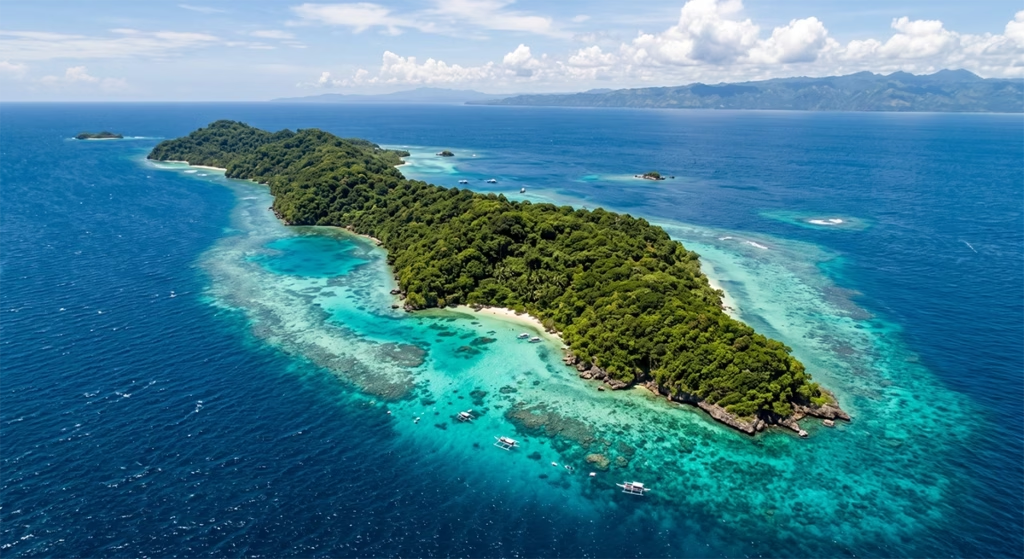
You have read the reports and you know coral bleaching is accelerating. You know tourist footfall damages reefs. So, you do what a certain kind of careful traveler does: you stay away. You tell yourself the reef is better off without you. Danjugan Island, three kilometers off the coast of Negros Occidental, is a direct challenge to that logic. This article explores the initiatives supporting eco-tourism on the marine reserve, known as the “Danjugan Island PRRCFI eco-tourism model,” and explains reef conservation tourism.
Here, the Philippine Reef and Rainforest Conservation Foundation, PRRCFI, has managed a fully protected marine sanctuary for nearly three decades. Every visitor fee funds either a ranger wage or a reef-monitoring run. PRRCFI caps access, requires pre-booking, and provides guides. They turn away walk-ins. The reef has responded: 244 coral species and 572 fish species now live in waters that fishers had pushed to the point of collapse within living memory.
This is not eco-tourism as branding. This is what a working conservation model looks like from inside a snorkel mask.
Where Danjugan Island Is and Why It Exists
Danjugan Island sits in the Sulu Sea, roughly three kilometers off Cauayan in Negros Occidental. It covers 43 hectares. Within 1.5 kilometers of protected land and reef, seven distinct ecosystems coexist: coral reefs, seagrass beds, mangrove forests, sandy beaches, rocky shores, lagoons, and a freshwater lake.
PRRCFI established its sanctuary program here in the mid-1990s, when the reefs were already showing severe degradation from years of blast fishing and overextraction. The island was chosen because its relative isolation made enforcement feasible and because local coastal communities were willing partners. Protection required their cooperation. It still does.
The organization’s founding insight was simple: a reef that generates income for the people living beside it will be defended by those people. Conservation had to be a livelihood, not just a cause. That principle drives every operational decision PRRCFI makes on Danjugan today.
The Science of What Was Saved
Numbers carry weight when you understand what they represent. Before protection, dynamite fishing and cyanide extraction had stripped large sections of the reef. Fish populations were crashing. Coral cover was declining across the region.

Today, 244 coral species have been documented at Danjugan. That figure places it among the most biodiverse reefs remaining in the Philippines. It was earned through sustained, unglamorous enforcement: ranger patrols, fishing exclusion zones, and decades of community compliance. Fish documentation reaches 572 species. Parrotfish, damselfish, and anemonefish are common sightings. Rays move through the deeper margins. Sea turtles pass through occasionally. The reef is not a curated display. It is a recovered ecosystem.
The Tridacna gigas, the giant clam, is the most visually striking marker of the reef’s health. PRRCFI’s restocking program has returned this species to the reef in meaningful numbers. These are not decorative. They are indicators. A giant clam of significant size requires years of undisturbed growth. Their presence tells you something real about the consistency of protection here.

How the Conservation Model Works
Most marine tourism in the Philippines operates on volume. More boats, more visitors, more fees, and the reef absorbs the cost. Danjugan runs on the opposite logic.
Visitor numbers are capped deliberately. Pre-booking through PRRCFI is mandatory. The low-volume model is not a quirk of remote location. It is an enforced policy. It means the reef is never overwhelmed, and it means every visitor who does arrive is guided, briefed, and accounted for.
Every fee paid goes directly into the operational budget: ranger wages, patrol equipment, reef monitoring research, and community livelihood programs. There is no intermediary tour operator extracting a margin. PRRCFI controls access and channels income back into protection.
The rangers who lead guest briefings and patrol the boundaries are coastal residents. Many come from fishing families. Their employment depends on the reef remaining healthy and the sanctuary remaining credible. This alignment of economic interest and conservation outcome is the actual engine of what works here.

Extractive fishing in these waters ended not because of enforcement alone, but because an alternative income became real and reliable. That shift, from extraction to protection as a form of employment, is the most transferable lesson Danjugan offers to reef conservation efforts elsewhere in the country.
The Snorkeling Experience
The reef begins close to shore. This is not a dive operation. You do not need certification, a boat ride to depth, or technical equipment. You need a mask, fins, a reef-safe sunscreen, and the willingness to follow your guide.
Snorkeling at Danjugan is guided without exception. Rangers accompany every group in the water. Lifebuoys are provided. Before entering, guests receive a briefing covering touch protocols, fin technique near coral, and sunscreen compliance. The briefing is not optional theater. It is the mechanism by which the low-impact standard is maintained across every visit.

In the water, the density of life is immediate. Parrotfish move in groups large enough to be audible. Damselfish hold territory with disproportionate confidence. The coral formations are varied: branching, massive, and plating structures in the shallows, deepening as the reef slopes away.
The giant clam encounters tend to stop people. Size carries a different meaning underwater. An organism that large, that unhurried, that old, it recalibrates your sense of what the reef is and what it has survived.
What snorkelers consistently report leaving with is not just the visual inventory of what they saw. It is the specific sensation of floating above something that was nearly lost and was not. That is not a small thing to carry home.
Visiting Responsibly
Getting to Danjugan requires planning. There are no walk-in visitors. All access is pre-arranged through PRRCFI.
From Bacolod, take a Ceres Bus headed toward Hinoba-an and alight at Crossing Remollos in Cauayan. PRRCFI coordinates the 30-minute boat transfer from there. The road distance is shorter, and the drive time is roughly halved when you depart from Sipalay.

According to current public listings, day tours start at around ₱1,950, including meals and guided snorkeling. Overnight eco-stays run about ₱2,950 with full board. Confirm current rates and payment terms directly with PRRCFI before travel. Prices are subject to change, and booking confirmation is the only guarantee of access.
Dry season (March to June) offers the best conditions: calm seas and strong underwater visibility. July through October brings rain and the possibility of rougher boat crossings. Always check local weather forecasts and confirm conditions with PRRCFI before departure.
Pack reef-safe sunscreen. Carry a reusable water bottle. Bring as little single-use plastic as possible. These are not suggestions. On a 43-hectare island with no municipal waste infrastructure, every item you bring in is an item the island has to manage.
What This Place Asks of the Traveler
Danjugan Island will not fix your climate anxiety. It will not resolve the structural failures that have bleached reefs across the Indo-Pacific. It will not make you a conservation hero for spending a day in the water.
What it will do is give you evidence. Thirty years of sustained, locally rooted protection have produced a reef that has demonstrably recovered. That recovery is not a metaphor. There are 244 coral species and 572 fish species, whereas there were far fewer.
The traveler’s role here is specific and honest. You are not a volunteer or a researcher. You are a fee-paying guest whose money funds the wages of people who do the actual work. That is a real contribution. It is not heroic, but it is nothing.

The guilt that keeps environmentally conscious travelers away from reefs is understandable. But avoidance does not fund rangers. It does not pay for reef monitoring equipment. It does not create an economic argument for coastal communities to choose protection over extraction.
Choosing Danjugan, booking directly with PRRCFI, following every briefing, and paying the full fee: that is the form of action available to you. It is quieter than you might want action to be. It is also the kind that works.
Conclusion
The reef at Danjugan is not waiting to be discovered. It has been tended, defended, and rebuilt by people who live beside it. PRRCFI has made that work financially viable for nearly three decades by turning careful visitors into a funding source rather than a threat.
What the island asks of you is not sacrifice. It is attention. Pay the fee. Follow the guide. Wear the right sunscreen. Stay within the briefed boundaries. In doing so, you become part of the operational logic that keeps this reef alive.
Climate guilt is an honest response to honest information. But guilt held in isolation produces nothing. Danjugan Island offers a different option: guilt converted into a specific, measurable act of support for people who have already chosen the reef.
That choice is available. The booking page for PRRCFI is at danjuganisland.ph. The boat leaves from Crossing Remollos, Cauayan. The reef is there, waiting.
Frequently Asked Questions
Take a Ceres Bus from Bacolod to Hinoba-an and alight at Crossing Remollos, Cauayan. PRRCFI pre-arranges the 30-minute boat transfer to the island. From Sipalay, the drive time is halved. Only pre-booked guests are accepted. Walk-ins are not allowed.
Day tours start at around ₱1,950 and include meals and guided snorkeling. Overnight eco-stays run about ₱2,950 with full board. Confirm the latest rates and payment directly with PRRCFI before travel to ensure accuracy.
Danjugan limits visitor numbers and channels every fee into conservation wages, reef monitoring, and community livelihood. Its strict low-volume model ensures coral and fish populations remain healthy. It is a working model of eco-tourism in the Philippines.
Yes. The reef sits close to shore, and guided snorkeling is required. Lifebuoys and certified local guides accompany all guests. It is safe even for first-timers, provided you follow ranger briefings and wear reef-safe sunscreen.
Expect parrotfish, damselfish, anemonefish, rays, and the giant clam Tridacna gigas. Coral diversity exceeds 200 documented species. Sea turtles are occasional visitors. The density of life reflects nearly 30 years of continuous protection under PRRCFI.
Additional FAQ’s For Consideration
Can I volunteer or join a conservation program?
PRRCFI runs occasional education camps and research collaborations. Visitors cannot do hands-on restoration, but can apply for internship or camp roles through danjuganisland.ph. Paying guests indirectly support ongoing conservation by funding local jobs.
When is the best time to snorkel at Danjugan Island?
Dry season (March to June) offers calm seas and clear visibility. July to October can bring rain or rougher crossings. Always check local forecasts and confirm with PRRCFI before traveling to avoid canceled boat transfers.
Other Articles You Might Like
- Embrace Your Authentic Travel Self on Danjugan Island’s Hidden Shores
- How to Visit Dinagat Islands Without Breaking What’s Special
- How to Get to Dinagat Islands Before the Resorts Do
- Forget Boracay, Dinagat Island Tourism Will Challenge You Instead
SUGGESTIONS FOR LODGING AND TRAVEL
Lodging is widely available throughout the Philippines. However, you may want to get some assistance booking tours to some of the Philippines’ attractions. I’ve provided a few local agencies that we’ve found to be very good for setting up tours. For transparency: We may earn a commission when you click on certain links in this article, but this doesn’t influence our editorial standards. We only recommend services that we genuinely believe will enhance your travel experiences. This will not cost you anything, and I can continue to support this site through these links.
- For Hotel Accommodations in the Manila area, I highly recommend The Manila Hotel. It is centrally located and within walking distance of Rizal Park and Intramuros. Many other attractions are easily accessible from there as well. I have provided a search box below to help you find hotels (click “Stays” at the top) or flights (click “Flights” at the top). This tool will provide me with an affiliate commission (at no cost to you).
Local Travel & Lodging Assistance
- Guide to the Philippines: This site specializes in tours throughout the Philippines. They seem to have some flexibility in scheduling, and pricing is very competitive.
- Kapwa Travel is a travel company focused on the Philippines. It specializes in customizing trips to meet customers’ needs.
- Tourismo Filipino is a well-established company that has operated for over 40 years. It focuses on tailoring tours to meet customers’ needs.
- Tropical Experience Travel Services – Tours of the Philippines: This company offers a range of tour packages, allowing you to tailor your trip to your preferences.
Lastly, we recommend booking international travel flights through established organizations rather than a local travel agent in the Philippines. I recommend Expedia.com (see the box below), the site I use to book my travel.
