The Coconut Water Incident That Changed My View on Responsible Tourism in the Philippines
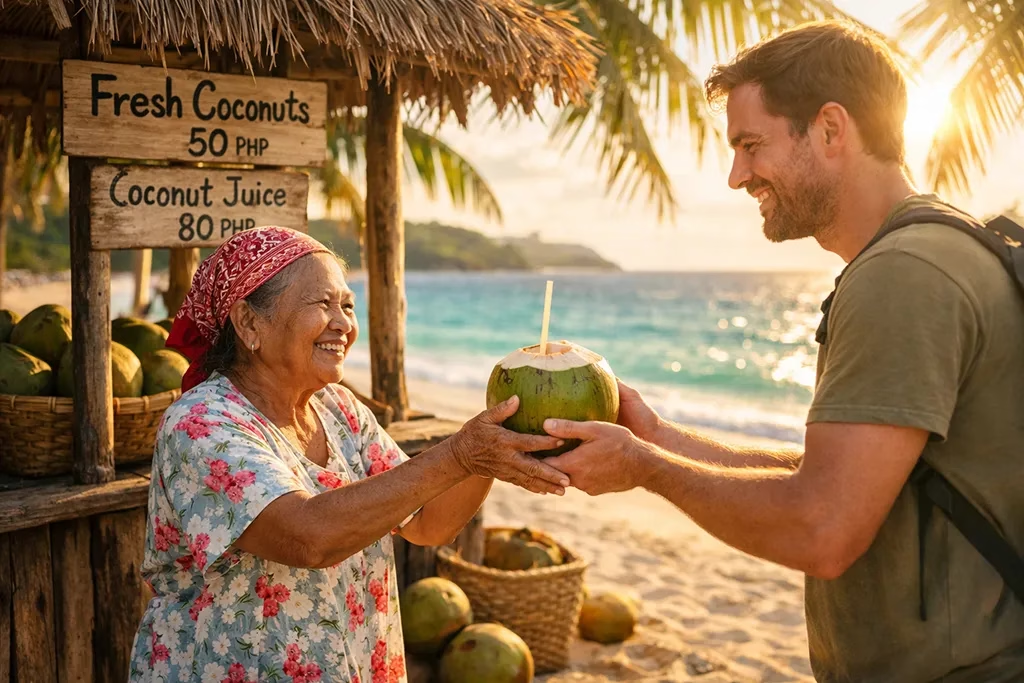
Anyone who takes a little interest can find multiple examples of tourists in the Philippines who are not respectful to their hosts. I watched a sunburned Australian tourist argue with a 67-year-old Filipino grandmother for fifteen minutes over two pesos. Two. Pesos. That’s roughly 3.5 US cents. The cost of her fresh coconut water was 25 pesos—about 45 cents. He’d misheard and thought she said 23. When she politely corrected him, he launched into a tirade about “honesty” and “scams.”
I stood there in Nacpan Beach, Palawan, watching Lola Maria’s face shift from confusion to hurt to resignation. She didn’t argue back. She just accepted the 23 pesos, turned away, and began the long walk back to her stand. “Did you see that?” the tourist asked me, grinning. “You have to watch these people. They’ll try to cheat you every time.”
At that moment, that inconsiderate, unnecessary, completely avoidable moment crystallized something I’d been wrestling with for years: it changed the way I think about responsible tourism in the Philippines forever.
I’ve been traveling to the Philippines since 2009, eventually spending three years living between Manila and Cebu. I’ve watched Philippine tourism explode from under 2 million international arrivals to nearly 9 million in 2019.
And I’ve watched Paradise develop an anxiety disorder.
Why Cultural Etiquette in Philippines Travel Matters More Than You Think
The Philippines Is Not a Theme Park — it’s 115 million Real Lives
Here’s what nobody tells you in the glossy travel magazines. When you treat the Philippines like a backdrop for your adventure, real people pay the price. When travelers ignore cultural etiquette in the Philippines, real people absorb the cost.
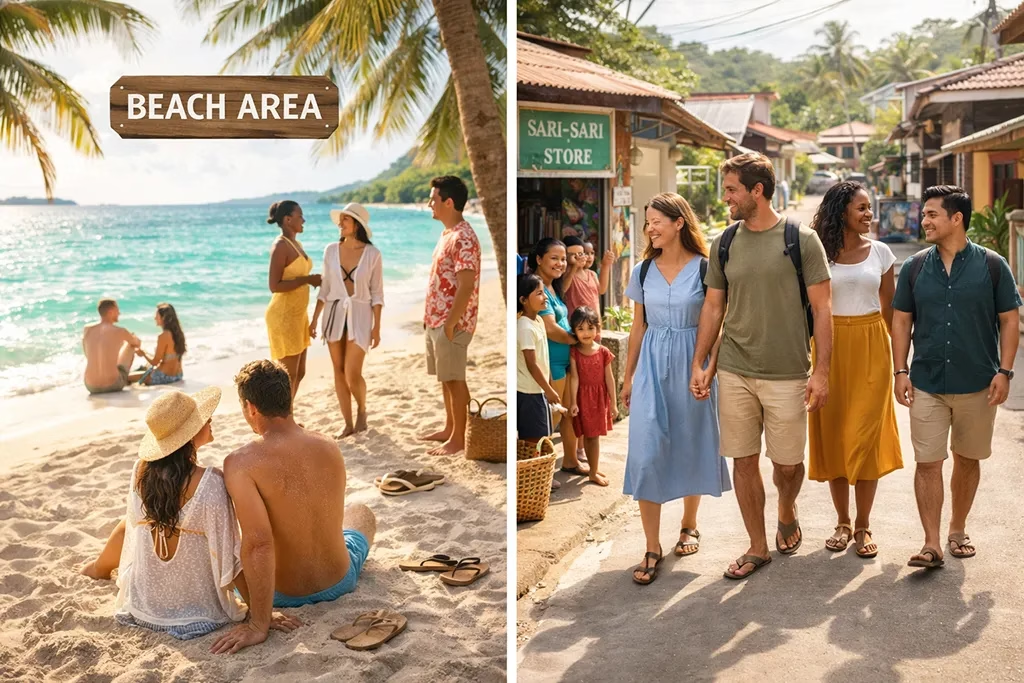
I learned this the hard way during my first visit to Coron in 2010. I was young, enthusiastic, and completely ignorant, and I wore a bikini in a small sari-sari store in town. The owner, a middle-aged woman named Tita Lorna, gently offered me a sarong. “Para sa’yo, ma’am,” she said softly. For you. I was confused. It was hot. We were near the beach. What was the problem?
Understanding Filipino Hospitality Culture (And Why Silence Isn’t Approval)
My guide later explained that, outside of designated beach areas, that level of undress was deeply uncomfortable for locals. Especially in town centers. Especially in stores where entire families worked and lived. This was my first lesson in Filipino culture and customs.
“But I see Filipinas in shorts and tank tops all the time,” I protested. “Yes,” he said patiently. “But not swimwear. There’s a difference. Context matters.” That moment stung. I thought I was being carefree and casual. I was actually being disrespectful.
The worst part? Tita Lorna never said a word of complaint. She just quietly tried to help me save face. This is not how anyone becomes an advocate for respectful tourism in the Philippines. No one shamed me. No one scolded me. That’s the power — and danger — of the Filipino hospitality culture. They will protect your dignity, even when you fail to protect theirs. They’ll endure your mistakes with a smile, then process the discomfort long after you’ve left.
When Instagram Goes Wrong: Tourist Behavior in the Philippines That Hurts Local Communities
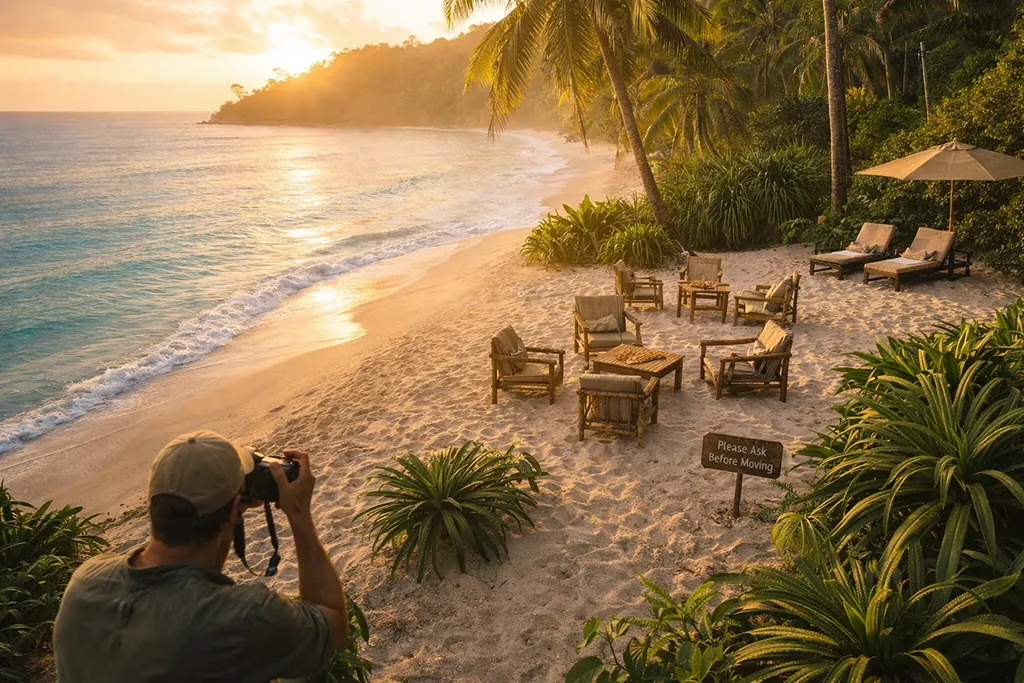
Fast forward to 2018. I’m in Siargao, which has transformed from sleepy surfing town to influencer hotspot faster than you can say “Cloud 9.”
A travel blogger I knew—let’s call her Jessica—was shooting content at a small family-owned resort. Without asking permission, she repositioned furniture from the common area onto the beach. She wanted “that perfect sunrise setup.”
The furniture got soaked by an unexpected high tide. Three chairs and a ruined handwoven table were the result. The table had been made by the owner’s late father. Jessica’s response when confronted? “Well, they should have been watching their stuff. Besides, I’m giving them exposure. I have 50,000 followers.”
The furniture replacement costs more than the family made in two weeks. The table was irreplaceable. She never mentioned them in her posts. Never tagged them. Never provided the “exposure” she claimed was payment enough.
This was exploitation disguised as aesthetics. It’s a textbook case of the kind of tourist behavior in the Philippines that quietly erodes goodwill. She got her content and moved on to El Nido. I have to say, “How difficult is it to be a respectful tourist when in the Philippines?”
The family now keeps all furniture locked up after 6 PM. They’ve installed chains and padlocks. Their previously open, welcoming common area looks like a storage facility.
One careless moment reshaped how they trust visitors. One person’s thoughtlessness changed their entire business model. If you’ve ever wondered why locals resent tourists in the Philippines, this is why.
The Hidden Cost of “Exposure” Tourism
Here’s the thing about the Philippines that makes these behaviors particularly damaging: the Philippines is a collectivist culture with an indirect communication style.
Translation? People won’t tell you to your face that you’re being a jerk. They’ll accommodate you, smile, and then deal with the consequences after you leave.
I’ve seen this play hundreds of times:
- The littering tourist who leaves empty bottles on the beach because “someone will clean it up.” That someone is usually a local resident or underpaid staff member who spends their pre-dawn hours cleaning up after visitors instead of preparing for their actual job.
- The haggler who demands discounts from small vendors that are already operating on razor-thin margins. That 50-peso reduction you’re so proud of negotiating? It might mean the difference between a vendor’s child getting a school snack or going hungry.
- The drone operator who flies over private property and sacred sites for aerial shots. You’re not just being annoying. In some communities, you’re committing a spiritual violation. And you’re definitely breaking the Civil Aviation Authority of the Philippines regulations, which carry hefty fines.
- The loud partier who treats residential areas like Khao San Road. Filipino families often live in multi-generational homes. Your 3 AM party isn’t just disturbing one annoyed neighbor. It’s waking up grandparents, parents, children, and babies across multiple households.
A 2022 study by the Department of Tourism found that 68% of residents in major tourist destinations reported a decline in their quality of life. Not because they opposed tourism. Because tourist behavior had become unsustainable. This is a call for sustainable tourism in the Philippines. Because tourism supports millions of livelihoods. But irresponsible tourism drains dignity.
What Filipinos Wish Foreign Travelers Understood
I’ve had countless conversations with Filipino friends, guides, resort owners, and random strangers over the years. When you build trust, they’ll tell you what they really think. This is one of the perks of being a respectful tourist in the Philippines. Here’s what I’ve heard from Filipino’s about what they wish tourists understood:
- “We’re not your servants.” Maria, a resort manager in Bohol, told me about guests who snap their fingers at staff or whistle to get attention. “We’re hospitality professionals. We deserve basic respect. A ‘please’ and ‘thank you’ costs nothing.”
Hospitality professionals deserve respect. Snapping fingers and barking orders doesn’t align with ethical travel in the Philippines.
Filipino Culture and Customs Aren’t Costumes
- “Our culture isn’t a costume.” Ramon, a guide in Banaue, described tourists who mock traditional clothing or treat indigenous people like zoo exhibits. “They want photos with us, but they don’t want to learn our names or hear our stories.”
- “Our English isn’t entertainment.” Jenny, a university student working part-time in tourism, hates it when tourists laugh at pronunciation mistakes. “I speak three languages. How many languages do you speak?”
Again, the expectation here is for common courtesy. Put yourself in the situation, on the receiving end, and you’ll quickly see how frustrating this sort of behavior is.
Philippines Tipping Etiquette for Tourists
- “We notice when you only tip foreign-owned businesses.” Carlo, a bartender in Manila, pointed out something I’d never considered. Tourists often tip generously at expat-owned restaurants but nothing at local establishments. “Why is our service worth less?”
Don’t reserve generosity only for expat-owned restaurants. If you’re learning about Philippines tipping etiquette for tourists, know this: appreciation shouldn’t be selective.
Is Haggling Rude in the Philippines? It Depends.
- “Stop assuming everything is cheap because you’re rich.” This is from Liza, who sells handwoven products in Vigan. “My work takes days. Sometimes weeks. When you offer half-price because ‘it’s cheap to make,’ you’re devaluing my skill and my time.”
The common thread? It’s basic cultural respect when traveling in the Philippines. Filipinos aren’t asking for much. Just basic human dignity, and recognition that you’re visiting their home.
The Ultimate Ethical Travel Checklist for Philippines Visitors Should Follow
Philippines Travel Tips for Foreigners Before You Arrive

Okay, enough horror stories. Let’s talk about solutions. Because I genuinely believe most tourists aren’t intentionally awful. They’re just clueless.
I’ve created a practical checklist based on fifteen years of mistakes, observations, and conversations. Feel free to screenshot this, print it out, or save it on your phone.
Philippines Travel Tips for Foreigners Before You Arrive
Here’s your real-world guide to how to travel respectfully in the Philippines.
Before You Arrive:
- Learn basic Tagalog phrases: “Po” and “opo” (respectful yes), “salamat” (thank you), “pasensya na po” (excuse me/sorry)
- Research local customs in the Philippines for your specific destination—Mindanao differs from Luzon, which differs from Visayas
- Download offline maps to avoid constantly asking for directions
- Understand tipping culture: it’s not mandatory, but it is increasingly expected in tourist areas (10% is standard)
- Check current regulations: some islands now limit tourist numbers or require permits
These are foundational travel tips for foreigners in the Philippines.
Money Matters:
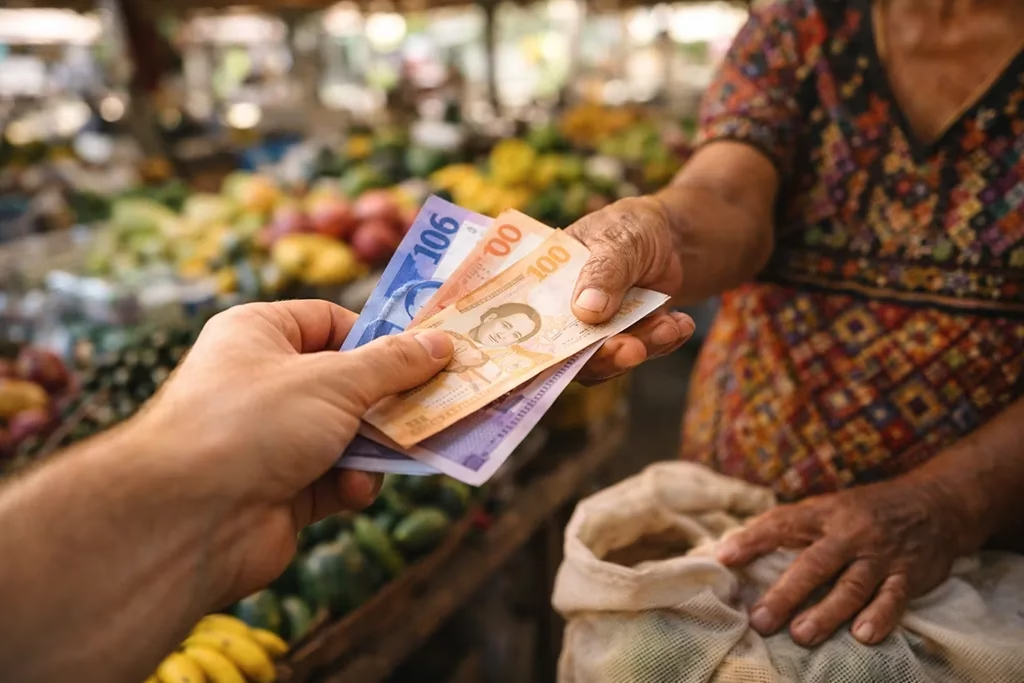
If you’ve ever asked, “Is haggling rude in the Philippines?” — the answer is: context matters.
- Haggling in markets? Normal.
- Bargaining over bottled water from a small vendor? Not admirable.
- Carry small bills—breaking a 1,000-peso note at a small store can drain their entire daily cash supply
- Pay asking prices at small vendors; save your haggling for malls and established shops
- Tip in cash directly to service workers, not on credit cards (management often keeps card tips)
- Calculate reasonable prices: if it seems impossibly cheap, it probably is (and someone is being exploited)
- Paying deposits and fees promptly creates real financial stress relief for local businesses
This is part of how to support local communities when traveling in the Philippines.
Philippines Travel Dos and Don’ts

Beach and Island Etiquette:
If you care at all about responsible island tourism in the Philippines, do this:
- Use reef-safe sunscreen (regular brands kill coral, and reefs are already 70% damaged in popular areas)
- Don’t touch, stand on, or take coral—it’s illegal and destroys ecosystems that took decades to grow
- Take all trash with you, including cigarette butts (which take 10+ years to decompose)
- Stay on designated paths—trampling vegetation causes erosion and habitat loss
- Ask before moving beach furniture or equipment
- Respect quiet hours (usually 10 PM–6 AM in residential areas)
Photography Protocol:

- Always ask permission before photographing people, especially children
- Don’t photograph sensitive situations (poverty, traditional ceremonies without invitation)
- If someone helped make your shot happen, tag and credit them if you post it
- No drones without proper permits and local permission.
- Don’t block access or create hazards for “the shot.”
These aren’t nitpicking. They’re part of my sustainable travel tips for the Philippines. If we all make the conscious decision to follow these guidelines, travel to the Philippines will truly be something to remember.
Proper Dress Code in the Philippines for Tourists
If you’re wondering about the proper dress code in the Philippines for tourists, here are the rules:
- Beach attire stays at the beach—cover up when entering towns, shops, or restaurants
- Shoulders and knees covered when entering churches (yes, even if you’re not religious)
- Going shirtless is generally only acceptable for men at beaches and pools
- Avoid wearing revealing clothing in rural or conservative areas
It’s not about restriction. It’s about respect. Ignoring this is one of the most common cultural mistakes foreigners make in the Philippines.
Responsible Island Tourism in the Philippines
If you want to know how to avoid offending locals in the Philippines, remember:
- Don’t touch people’s heads (especially children)—it’s considered disrespectful
- Remove shoes when entering homes (wait for host’s guidance)
- Accept food and drink when offered—refusal can be seen as a rejection of hospitality
- Avoid public displays of anger or confrontation—they cause profound embarrassment
- Use both hands when giving or receiving items from elders
- Don’t point with your finger—gesture with your full hand or lips (yes, they use their lips here)
Small gestures like these matter in the Filipino hospitality culture.
How to Avoid Offending Locals in the Philippines
- Don’t expect Western punctuality—Island time is real, and getting frustrated won’t change it
- Agree on tricycle and habal-habal fares before riding
- Be patient with traffic—Manila is the world’s most congested city per 2023 data
- Don’t criticize driving styles while in the vehicle—you’re not helping
Sustainable Travel Tips for the Philippines
- Refuse single-use plastics when possible (bring a reusable water bottle and shopping bag)
- Don’t feed wildlife—it alters behavior and creates dependency
- Stay on trails in nature areas
- Support eco-certified tours and accommodations when available
- Participating in beach cleanups, if opportunities arise, will go a long way toward building lasting relationships
How to Support Local Communities When Traveling in the Philippines
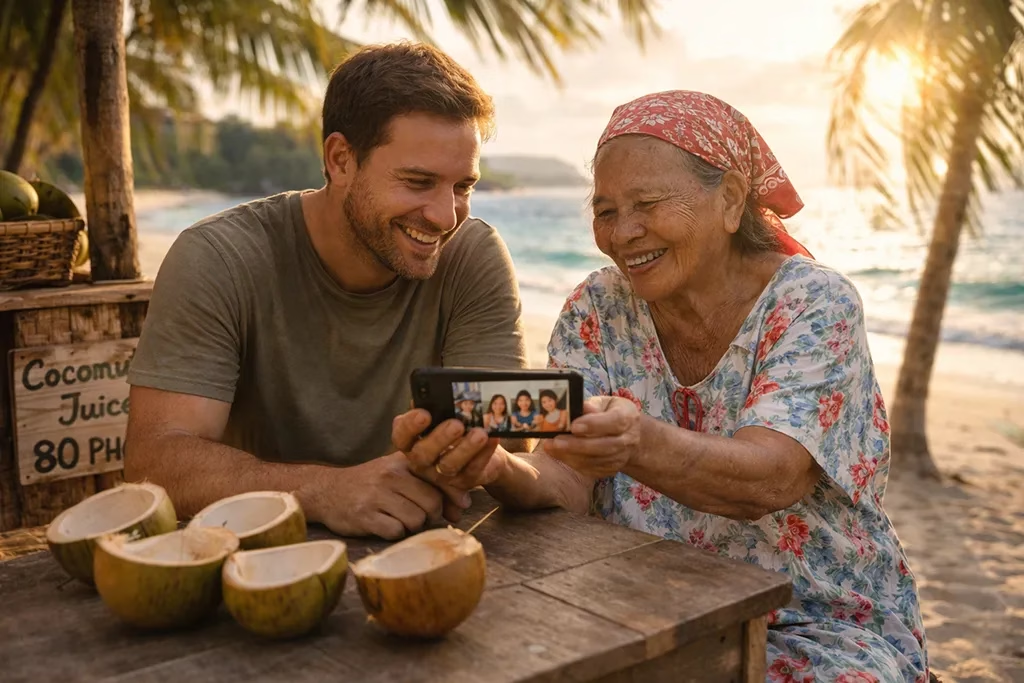
So, what happened with the coconut water incident? I wish I could say I immediately intervened and saved the day, but I didn’t. I was too shocked and too conflict-averse, and I just stood there. But after the Australian left, I walked to Lola Maria’s stand. I bought three coconuts at 30 pesos each (slight overpay). I asked if I could sit and talk.
In broken Tagalog and better English, we chatted for an hour. She told me about her grandson, who wanted to be an engineer. About the changes she’d seen in Palawan. About how some tourists were wonderful, and some were difficult.
“But we need them,” she said practically. “Tourism helps us. We just wish some would understand we are people, not just… scenery.”
That conversation reshared how I write and speak about ethical travel in the Philippines. It altered my entire approach to travel writing and tourism advocacy.
I started asking hard questions. When I wrote glowing reviews of destinations, I also included information on responsible tourism. I called out bad behavior in travel communities. I highlighted Filipino-owned businesses over foreign-operated ones.
Did it make me popular? Not always. I’ve been accused of being “preachy” and “ruining the fun.” But here’s what I know after fifteen years of travel and three years of living in the Philippines: the best experiences come from respectful engagement.
The travelers who take the time to learn basic cultural norms are the ones who get invited to family meals. They discover hidden beaches locals don’t share with typical tourists and they form real friendships.
The ones who bulldoze through with entitlement and ignorance? They see the surface, collect their photos, and leave wondering why Filipino hospitality felt transactional.
Choosing Filipino-Owned Businesses (A Practical Travel Guide)
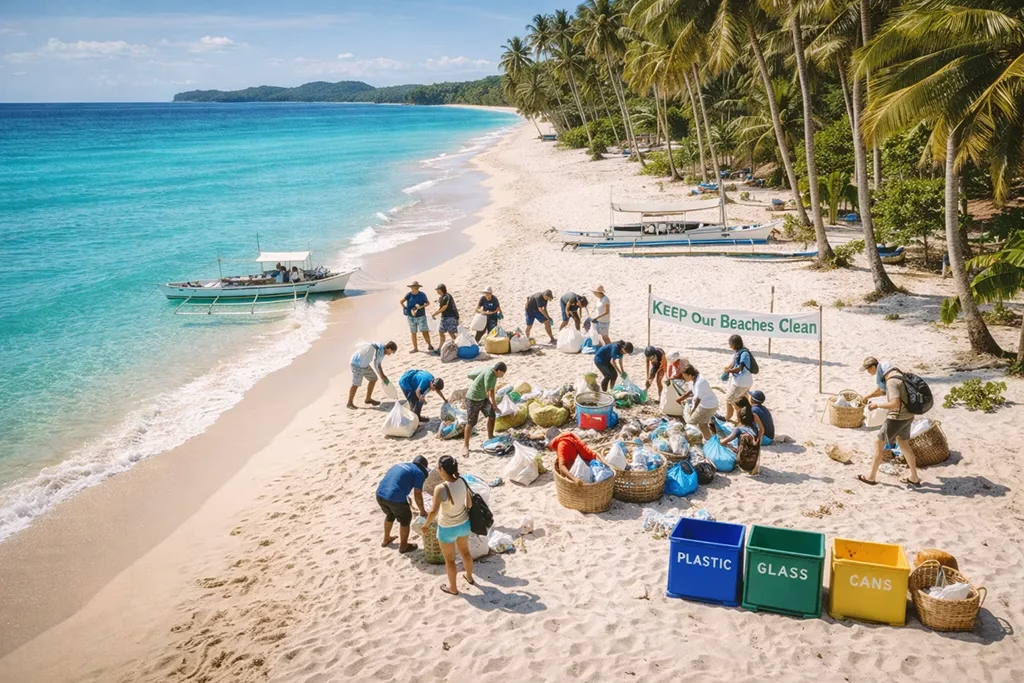
Philippine tourism is at a crossroads. Pre-pandemic, annual international arrivals approached 9 million. The government projects 12 million by 2028.
Small islands and communities are already overwhelmed. Boracay had to close entirely in 2018 for environmental rehabilitation. Coron’s waters show significant coral degradation. El Nido struggles with waste management.
We can’t keep loving these places to death.
The question isn’t whether tourism should continue—it absolutely should. Tourism provides livelihoods for millions of Filipinos. The question is: how do we do it? Sustainable tourism isn’t just about environmental impact. It’s about human impact. Social sustainability. Cultural respect. Economic equity. It’s whether we choose responsible tourism, Philippines style — or consumption without conscience.
Every small action matters. Every interaction creates ripples.
That 2-peso argument? It told Lola Maria that her dignity was worth less than four US cents to someone who probably spent $2,000 to get to the Philippines.
The furniture incident? It taught a family that openness and trust led to loss and damage.
These aren’t isolated incidents. They’re part of a pattern that erodes the very warmth and hospitality that makes Philippine tourism special.
The good news? You can be different. You can set yourself up to be the tourist locals remember fondly. The one who learned their name. The one who asked permission. Or the one who said thank you and treated them like the dignified human beings they are.
Your Action Plan (Free Downloadable Checklist)
I’ve created a comprehensive pre-trip checklist you can download and use for any Philippine destination. It includes:
- Cultural do’s and don’ts by region
- Essential Tagalog phrases with pronunciation
- Fair pricing guides for common services
- Eco-friendly product alternatives
- Emergency contact information
- Selecting Filipino-owned businesses by destination
Why Ethical Travel in the Philippines Strengthens Local Economies
Every time you visit the Philippines, you’re casting a vote. Not at a ballot box, but with your behavior.
You’re voting for the kind of tourism you want to see. The kind of interactions you value. The kind of world you want to live in.
Paradise has rules because paradise is real. It’s not a movie set or a video game. It’s home to real people with real lives, real struggles, and real dignity.
Those rules aren’t restrictive. They’re protective. They ensure paradise stays paradise for everyone, locals and visitors alike.
The Future of Philippine Tourism: Why Responsible Travel Is No Longer Optional

The tiny behaviors that turn tourists into villains aren’t mysterious or complex. They’re basic failures of respect, awareness, and empathy.
The beautiful thing is that they are completely fixable.
You can choose to be different. You can choose to be the tourist who makes locals say, “I hope more visitors are like you,” instead of, “I’m so tired.”
The Philippines will welcome you either way. That’s the nature of Filipino hospitality.
But don’t mistake hospitality for approval. Don’t confuse a smile with permission. Don’t assume silence means everything is fine.
Show up with humility. Ask questions. Accept correction gracefully. Treat people like people.
It’s really that simple.
And that’s complicated. Because simple isn’t always easy, especially when it requires checking our privilege and admitting we don’t know everything.
But if you can do that—if you can travel with awareness and respect—you’ll discover a Philippines that tour groups never see.
You’ll be invited into homes. Trusted with stories. Included in celebrations. Treated like family.
That’s the real paradise. Not the beaches (though those are spectacular). Not the waterfalls (though those are breathtaking).
The real paradise is the connection. The humanity. The moment when you stop being a tourist and become a welcome guest. That’s the difference between tourism and ethical travel in the Philippines.
Paradise has rules. But it also has rewards.
The choice, as always, is yours.
The Real Reward of Cultural Respect When Traveling Philippines
Three months after the coconut water incident, I returned to Nacpan Beach. Lola Maria was still there, still selling coconuts with quiet dignity.
I bought one for 25 pesos. We chatted briefly—her grandson had started engineering school.
As I left, a young European couple approached her stand. I heard the woman say, “Magkano po?” (How much, respectfully?)
Lola Maria’s face lit up. “Ay! You speak Tagalog!”
“Only a little,” the woman laughed. “We’re learning.”
I watched Lola Maria insist they take extra coconuts at no charge. Watched her pull out her phone to show pictures of her family. Watched a transaction become a conversation become a connection.
That’s the difference: It’s what responsible tourism in the Philippines looks like. That’s everything. Learn the words. Show the respect. Receive the welcome. Paradise is waiting. Just remember you’re a guest, not a conqueror, and act like it.
Understand Filipino-owned businesses travel guide recommendations aren’t about politics — they’re about equity. The Philippines will welcome you regardless. That’s who they are. But don’t mistake hospitality for approval. And don’t confuse silence with consent. Paradise has rewards. But it also has expectations.
The choice — always — is yours.
Frequently Asked Questions About Responsible Tourism in the Philippines
1. Am I really “that tourist” if I don’t mean any harm?
Probably not — intentionally. But impact beats intention every time. Most of the behaviors described in this article come from ignorance, not malice. The problem is that locals absorb the consequences long after tourists move on. Awareness is the upgrade. Once you know better, you get to do better.
2. Isn’t haggling Rude in the Philippines?
Yes… and no. Haggling is common in markets and tourist-heavy areas, but aggressively negotiating with small vendors selling necessities can cross a line fast. If someone is selling food, water, or handmade goods they rely on daily, paying the asking price is often the respectful choice. Save your bargaining skills for malls and souvenir stalls — not survival income.
3. Why don’t locals just tell tourists when something is offensive?
Filipino culture values harmony, saving face, and indirect communication. Confrontation causes embarrassment — not just for you, but for them. Silence usually isn’t approval. It’s graceful. That grace, however, shouldn’t be mistaken for consent.
4. What Is the Philippines Tipping Etiquette for Tourists?
It’s not mandatory, but in tourist areas it’s increasingly appreciated — especially by staff earning modest wages. A 10% tip or small cash gratuity goes a long way. Just as important: tip local establishments too, not only foreign-owned ones. Service quality isn’t tied to nationality.
5. What’s the big deal about dress codes if it’s hot and near the beach?
Context matters. Swimwear is fine on the beach, but once you step into towns, shops, or churches, covering up signals respect. Many Filipino businesses are family-run, multi-generational spaces. Dressing appropriately isn’t about control — it’s about courtesy.
6. Are drones really that serious an issue?
Yes. Drones can violate privacy, sacred spaces, and national aviation laws. Flying without permission can result in fines, confiscation, or worse—and in some communities, it’s considered spiritually disrespectful. Always ask. When in doubt, don’t launch.
7. Isn’t tourism still good for local communities overall?
Absolutely. Tourism provides livelihoods for millions of Filipinos. The issue isn’t tourism — it’s unsustainable behavior. Communities want visitors. They just don’t want to feel erased, exploited, or disrespected in the process.
8. How can I support local people without making it awkward or performative?
Simple moves matter most:
- Choose Filipino-owned businesses
- Tip directly in cash
- Ask names, not just prices
- Credit locals if they help create your content
- Say thank you — sincerely
No speeches. No savior complex. Just human decency.
9. How Can I Travel Respectfully in the Philippines?
Remember you’re a guest, not a customer in a theme park. Learn a few words. Ask before assuming. Slow down. Treat every interaction like it involves someone’s grandmother, livelihood, or pride — because it often does.
Other Articles that may be of Interest
You may also find the following articles interesting.
- What Makes Corregidor’s Ghost Story an Unusual Philippines Tale
- How to Find Safe Swimming Beaches in the Philippines
Suggestions For Lodging and Travel
Lodging is widely available throughout the Philippines. However, you may want to consider getting assistance booking tours to some of the Philippines’ attractions. I’ve provided a few local agencies that we’ve found to be very good for setting up tours. For transparency, we may earn a commission when you click on certain links in this article, but this doesn’t influence our editorial standards. We only recommend services that we genuinely believe will enhance your travel experiences. This will not cost you anything, and I can continue to support this site through these links.
Local Lodging Assistance
Guide to the Philippines: This site specializes in tours across the Philippines, offering flexible scheduling and competitive pricing. I highly recommend them for booking local arrangements for a trip like this one. You can book flights and hotels through the Expedia link provided below.
Hotel Accommodations: I highly recommend The Manila Hotel for a stay in Manila. I stay here every time I travel to the Philippines. It is centrally located, and many attractions are easily accessible from there. Intramuros and Rizal Park are within walking distance. I have provided a search box below for you to use to find hotels (click “Stays” at the top) or flights (click “Flights” at the top). This tool will provide me with an affiliate commission (at no additional cost to you).
Kapwa Travel is a travel company focused on the Philippines. It specializes in customizing trips to meet customers’ needs.
Tourismo Filipino is a well-established company that has been operating for over 40 years. It specializes in tailoring tours to meet customers’ needs.
Tropical Experience Travel Services – Tours of the Philippines: This company offers a range of tour packages, allowing you to tailor your trip to your preferences.
Lastly, we recommend booking international travel flights through established organizations rather than a local travel agent in the Philippines. I recommend Expedia.com (see the box below), the site I use to book my international travel. I have provided a search box below for you to use to find flights (click “Flights” at the top) or Hotels (click “Stays” at the top). This tool will provide me with an affiliate commission (at no cost to you).