
The Legend That Won’t Stay Buried
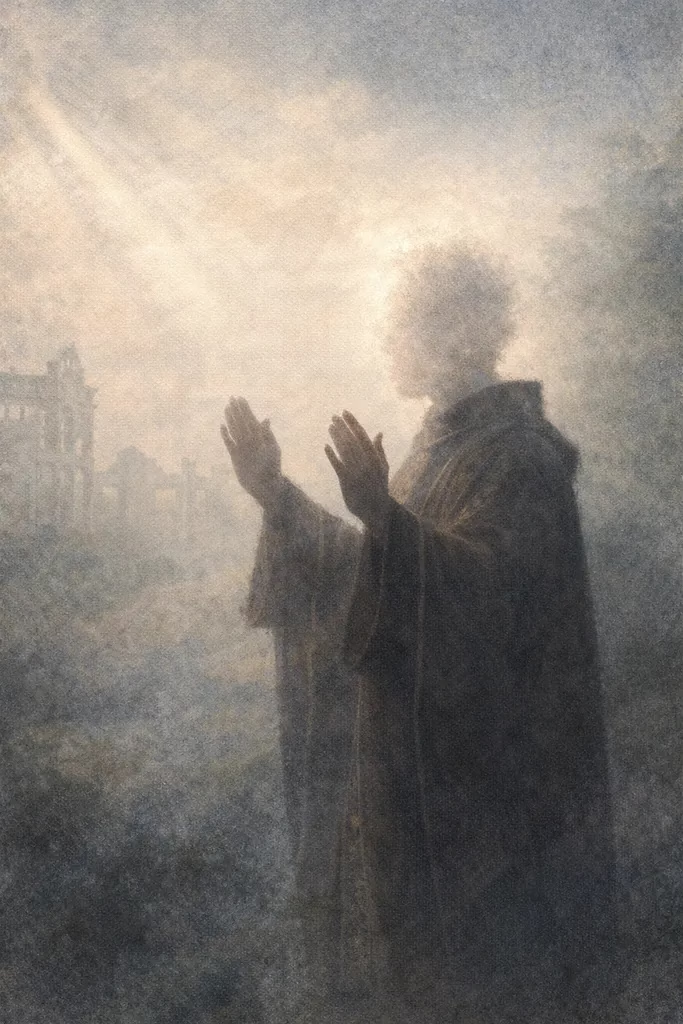
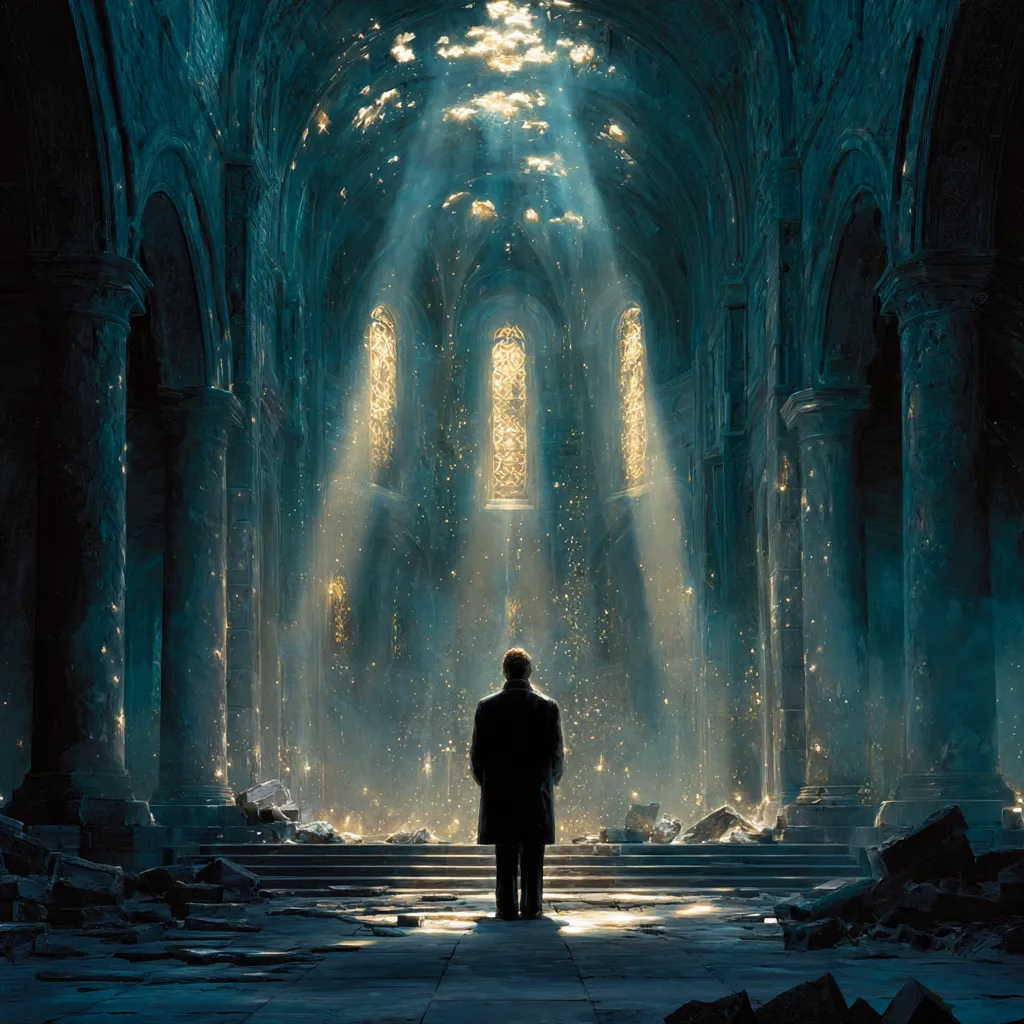
Picture this: you’re wandering through the bombed-out ruins of Corregidor Island at twilight. The air smells like salt and rust and something older. Then you see him, a priest in tattered robes, gliding soundlessly through the crumbling Spanish barracks. He raises his hands as if to bless you. Except there’s nothing above his collar. No head and no face. No voice to offer absolution.
I first heard this story from my Lola when I was eight years old. She told it with such conviction that I refused to sleep without a light on for three months. “The headless priest,” she whispered, “he walks because his faith was taken from him. And some losses, Anak, they follow you beyond death.”
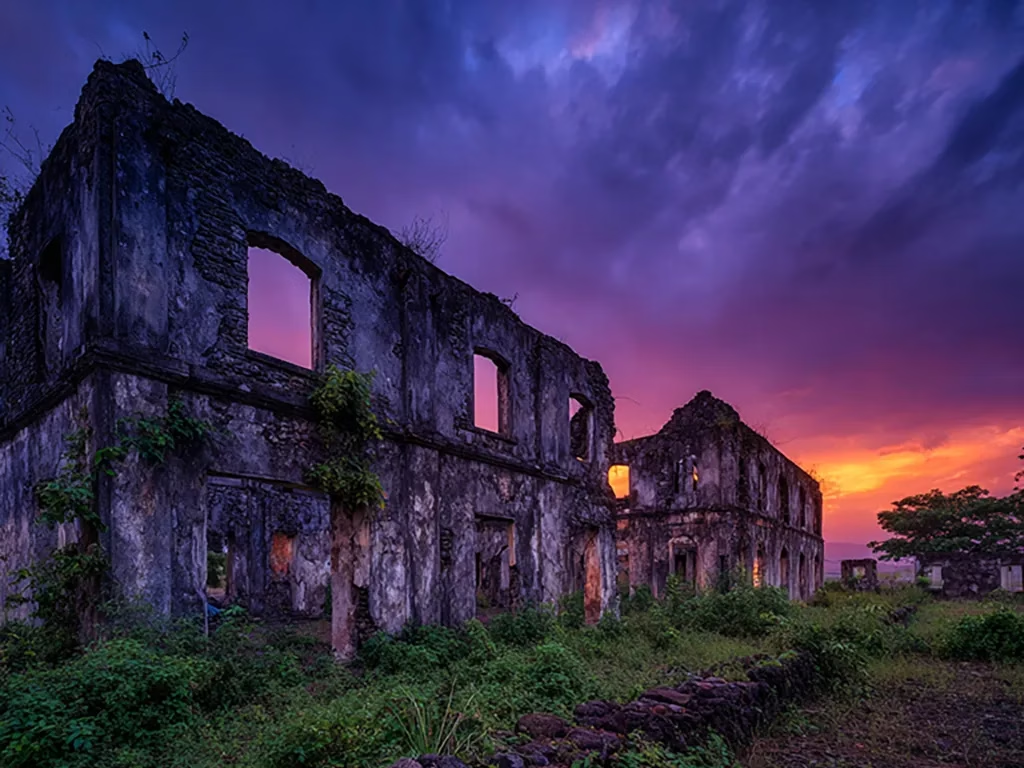
At eight, I thought this was just a scary campfire tale. At forty-three, after fifteen years of writing about history’s forgotten corners, I understand it differently. The headless priest isn’t about jump scares or paranormal investigations. He’s about what war does to faith itself, how it decapitates belief, severs guidance from practice, and leaves entire communities spiritually mute.
And here’s the kicker: trying to “banish” this shadow might be missing the entire point.
When Paradise Became Hell’s Doorstep
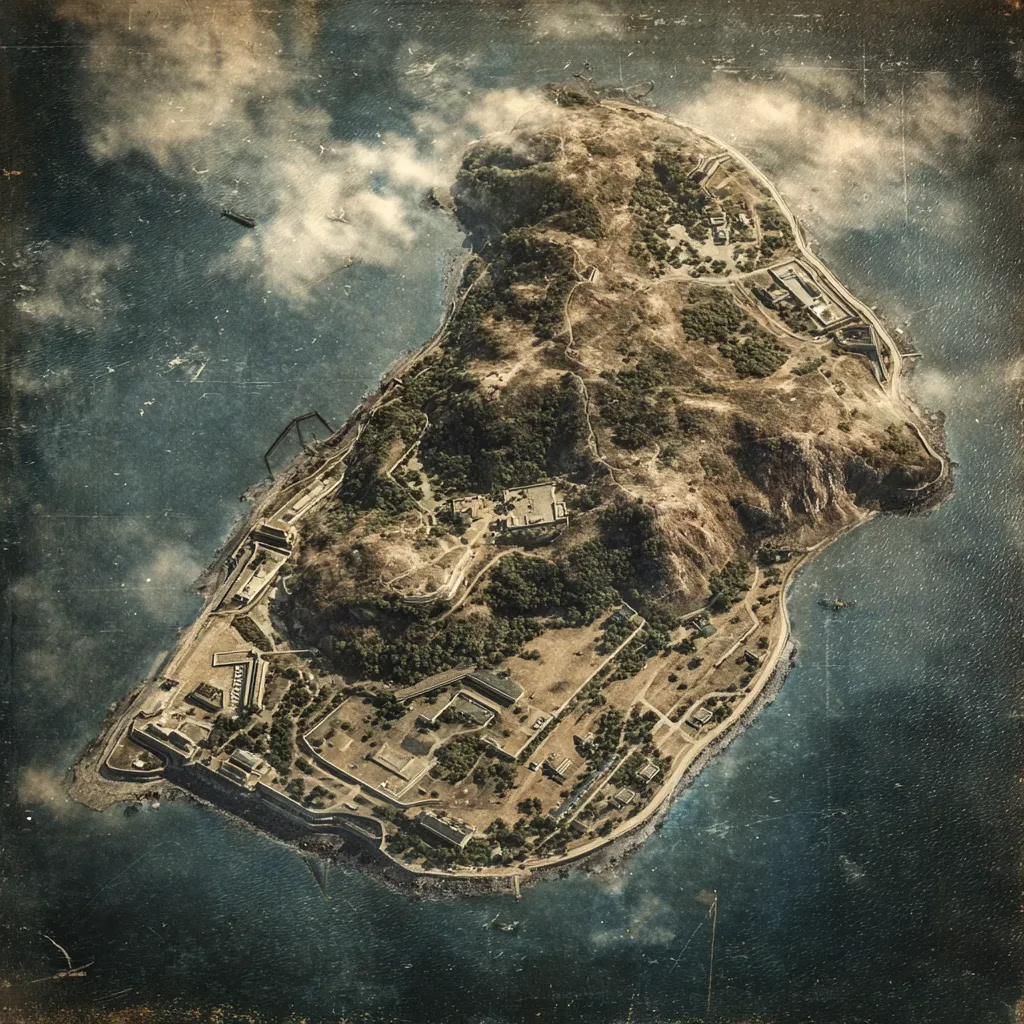
Let’s get our history straight first, because Corregidor’s story is anything but simple folklore. This tadpole-shaped island at Manila Bay’s mouth was called “The Rock” for good reason. During World War II, it became the last American stronghold in the Philippines before surrender.
The Battle of Corregidor lasted from December 1941 to May 1942. Japanese forces bombarded the island relentlessly. Artillery shells rained down every seventeen seconds at peak intensity. Imagine that. Every seventeen seconds, the earth shook. The sky screamed. And everyone’s prayers got a little more desperate.
Over 15,000 American and Filipino troops defended that rock. Priests, chaplains, and religious civilians were among them, not as soldiers, but as spiritual anchors. They heard confessions in bomb shelters and administered last rites between artillery strikes. They held rosaries with trembling hands while others held rifles.
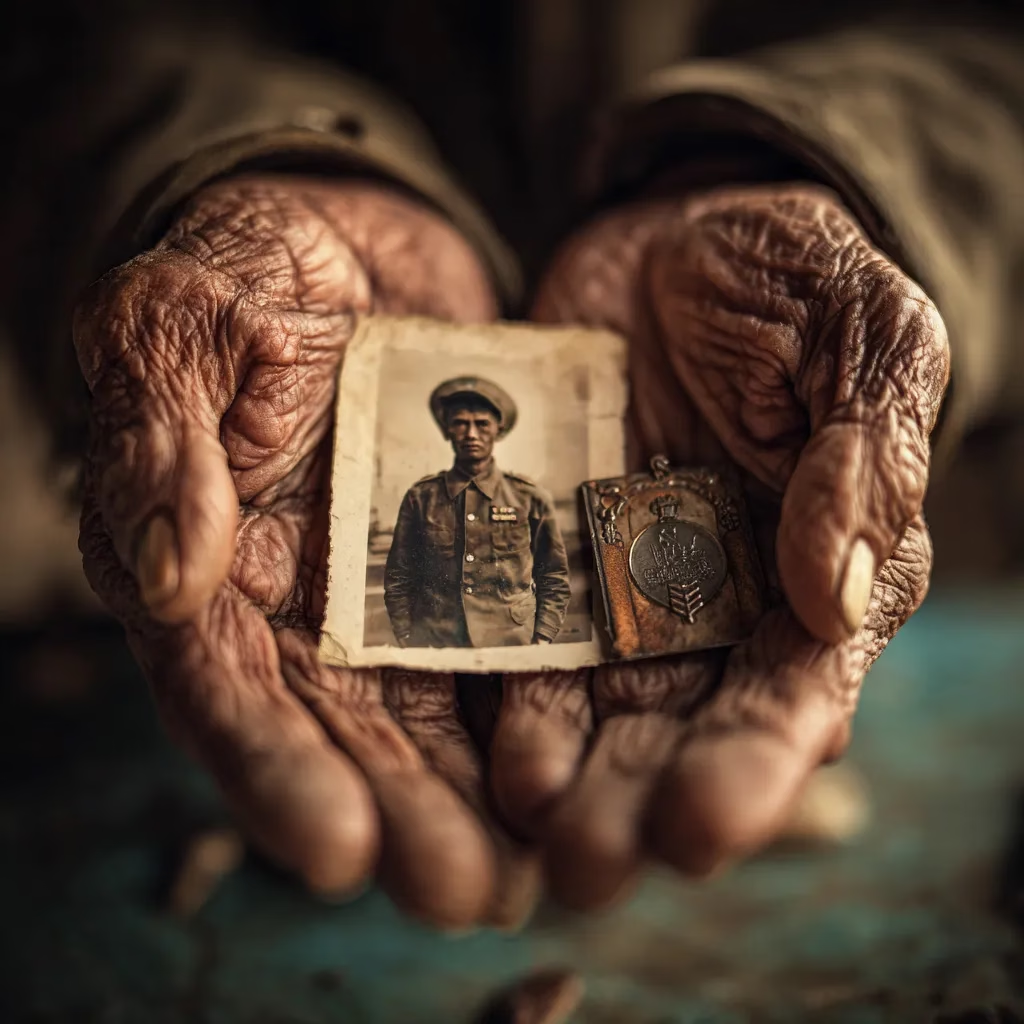
My grandfather’s cousin, Father Ramon, was there. Family letters describe him as a “man of unshakeable faith” before the war. After? The few letters that survived speak of “silence where God once answered” and “prayers that hit concrete ceilings and shattered.” He never returned to active ministry. Some wounds don’t heal. They just learn to walk upright.
The Clergy’s Impossible Position
Here’s what nobody tells you about wartime religious leaders: they’re expected to hold everyone else’s faith together while their own is being systematically demolished. Talk about an impossible job description.
During the occupation that followed Corregidor’s fall, priests faced horrifying dilemmas. Collaborate with occupiers to protect parishioners? Resist and watch innocents suffer? Comfort the dying while questioning why God allows such suffering? There were no good answers. Only degrees of spiritual injury.
One documented account describes Father Guillermo, who was forced to bless Japanese military ceremonies while secretly harboring resistance members. He survived the war physically intact. But according to his nephew’s testimony, “He never said Mass the same way again. Something in his voice had gone hollow. Like an echo of an echo of faith.”
This wasn’t a weakness. This was the sound of belief being beheaded, separated from its source, its certainty, its voice. The headless priest of legend may represent any number of these clergymen who lost their spiritual heads, even if their bodies survived.
Spiritual Injury: The Wound We Don’t Name
Let’s talk about something the psychology establishment only officially recognized in 2018: moral injury, also called spiritual injury. It’s distinct from PTSD, though they often travel together like unwelcome cousins at a family reunion.
PTSD says, “I’m in danger. The threat won’t stop. I can’t feel safe.” Spiritual injury says: “I violated my deepest values. God abandoned me. Nothing means what I thought it meant.”
PTSD manifests in hypervigilance, flashbacks, and panic attacks. Spiritual injury? It shows up as existential emptiness, loss of meaning, corrosive guilt, and profound disconnection from previously held beliefs. It’s the difference between being scared and being untethered from your moral universe.
Veterans describe it in haunting terms. “It’s like someone reached into my chest and unplugged something essential.” Or: “I pray, but the words just hang in the air like smoke. They don’t go anywhere.” That’s the headless priest metaphor made flesh, faith with no head to guide it, no voice to express it.
The symptoms include persistent guilt unrelieved by confession or therapy, inability to forgive oneself, loss of trust in previously meaningful spiritual frameworks, and profound alienation from religious communities. Sound familiar? It should. These are the same feelings that give rise to ghost stories about priests who walk without heads.
Why Faith Breaks First: A Personal Reflection
I’ve interviewed seventy-three WWII Philippine veterans and their families over the years. Here’s what I’ve learned: faith doesn’t break because it’s weak. It breaks because it’s held too tightly when reality becomes unbearable.
Think about it. You’re taught that God is loving, just, and protective. Then you watch children starve. You see good people being tortured. You participate in violence that appalls your conscience. The cognitive dissonance doesn’t just create doubt; it shatters the entire framework through which you’ve understood existence.
One veteran, Mang Celso, told me: “I stopped praying after I had to choose which villagers to betray to save my unit. I knew what I was doing. God knew. And He didn’t stop me or them or any of it. So, what was the point of asking His opinion after?”
That’s spiritual injury in a nutshell. Not anger at God, that requires still believing He’s there to be angry at. This is deeper. It’s the meaning of the beheading itself. And it’s why some wounds from 1942 are still bleeding in 2024.
Recognizing Spiritual Injury in Yourself and Others
Here’s your practical takeaway, because Lord knows we need actionable information and not just existential dread. How do you recognize spiritual injury, whether in yourself, a loved one, or a community?
Watch for these signs:
- Withdrawal from previously meaningful religious or spiritual practices
- Persistent statements like “God abandoned me” or “I can’t be forgiven.”
- Inability to find meaning or purpose after traumatic events
- Extreme guilt unrelieved by conventional therapy or religious counsel
- Profound cynicism about moral frameworks or meaning-making systems
- Feeling like a “walking ghost” or “hollow inside.”
If you’re nodding along, recognizing yourself or someone you love, here’s what matters: spiritual injury responds to different healing approaches than PTSD. It requires reconstructing meaning, not just managing symptoms. Sometimes that means therapy, sometimes ritual. Sometimes storytelling and communal acknowledgment. Often, all three.
And sometimes, staying with me here means honoring the ghost rather than banishing it.
The Headless Priest as Mirror, Not Monster
Let’s get literary for a moment, because the symbolism here is chef’s kiss perfect. A priest without a head is faith without intellect, guidance without voice, tradition without connection to its source. It’s the perfect metaphor for what war does to belief systems.
The head represents reason, interpretation, and articulation of faith. When it’s severed, you’re left with the body, the rituals, the practices, the forms, but disconnected from meaning. You go through the motions. You say the words. But comprehension is gone. Connection is severed.
This is why the headless priest doesn’t speak. He can’t. The mechanism for voicing faith has been removed. He can only wander, hands raised in blessing or supplication, unable to complete the act. It’s every unanswered prayer made visible. Every abandoned plea personified.
And here’s where it gets really interesting: the legend says the priest appears to those struggling with their own faith. Not to scare them, well, okay, definitely to scare them, but also to reflect their own spiritual decapitation back at them. “See?” the ghost seems to say. “You’re not alone in this. The silence you feel. I feel it too. I AM it.”
Why Lingering Doubts Haunt Generations
My Lola told me the headless priest story in 1989. The war ended in 1945. That’s forty-four years of transmission. Why does this story persist when thousands of others have faded?
Because the spiritual injury was never addressed. The Philippines, like many post-war societies, focused on physical reconstruction, economic recovery, and political stability. All crucial. All necessary. But nobody organized national healing rituals for collective spiritual trauma. Nobody created space for “my faith was beheaded by what I saw and did” conversations.
So, the injury got transmitted. Second- and third-generation Filipinos carry spiritual questions their grandparents couldn’t voice. “Why did God allow this?” became a family silence. “How could good people do such terrible things?” became an unspoken tension at dinner tables.
The headless priest walks because we keep avoiding the conversation he represents. The ghost is the question we won’t ask, the doubt we won’t acknowledge, the wound we won’t name. And honey, unnamed wounds fester. They don’t heal by being ignored.
Why Ghost Hunters Miss the Point Entirely
Now here’s where I’m going to annoy the paranormal investigation crowd. Sorry, not sorry. Every few years, some ghost-hunting team descends on Corregidor with EMF meters, night vision cameras, and an arsenal of equipment designed to “capture evidence” of the headless priest.
They’re asking the wrong questions. “Is he real? Can we prove it? They also ask whether we can communicate. Can we banish him?” These approaches treat the legend as a problem to solve, a mystery to crack, a phenomenon to neutralize. They completely miss the spiritual and historical significance.
Here’s my contrarian take: trying to “banish” the headless priest is like trying to banish memory itself. It’s an attempt to avoid reckoning with what the ghost represents: collective spiritual trauma, unresolved moral injury, and the ongoing legacy of faith fractured by war.
What if, instead of trying to prove or disprove or eliminate the ghost, we sat with what it’s trying to tell us? What if the haunting is the point, not the problem?
Embracing the Shadow to Find the Light
I know this sounds counterintuitive. We’re conditioned to think ghosts are bad, hauntings are problems, and spiritual disturbances need cleansing. But some shadows deserve respect, not exorcism.
The headless priest’s continued presence keeps the conversation open. He won’t let us forget what war costs spiritually. He insists that we acknowledge the clergy who lost their moral moorings, the faithful who lost their faith, and the communities who lost their spiritual guides.
This isn’t about wallowing in trauma. It’s about creating space for honest reckoning. When we acknowledge that faith can be beheaded, that belief can be shattered, and that some spiritual injuries persist across generations, we stop gaslighting ourselves and others.
Perhaps we should stop saying “just pray harder” to people experiencing spiritual injury. Maybe we should stop expecting faith to remain intact through horrors that would break anyone. By doing so, we create space for doubt, questioning, and spiritual reconstruction rather than demanding the immediate restoration of broken belief systems.
The headless priest, paradoxically, guides us by showing us what happens when guidance is severed. He teaches by demonstrating what happens when teaching becomes impossible. He blesses us by revealing what blocks blessing. That’s worth preserving, not banishing.
Healing Without Erasing: The Path Forward
So what does constructive engagement with spiritual injury actually look like? Because I refuse to leave you with just philosophical musing and no practical applications. That’s blog writing malpractice, and I’ve got standards.
For individuals: Seek out therapists trained in treating moral injuries. Traditional PTSD therapy won’t cut it. You need someone who understands meaning-reconstruction and existential wounds. Organizations like the Veterans Administration now offer specialized programs. Faith communities increasingly offer “dark night of the soul” support groups.
For families: Create space for difficult stories. Don’t shut down Lolo when he starts talking about wartime spiritual struggles. Don’t change the subject when Lola mentions unanswered prayers. These narratives need to be witnessed, not silenced. Record them. Honor them. Let them be complicated and unresolved.
For communities: Develop rituals that acknowledge spiritual injury alongside physical sacrifice. The Philippines has beautiful memorial traditions. Expand them to include acknowledgment of lost faith, shattered beliefs, and broken moral frameworks. Make space for the headless priests, literal and metaphorical, in your commemorations.
Philippine Models of Spiritual Reconciliation
Here’s something beautiful: several Filipino organizations are doing this work brilliantly. The Philippine Veterans Affairs Office now includes chaplains trained in moral injury counseling. Several Catholic dioceses offer specialized retreats for families carrying intergenerational trauma.
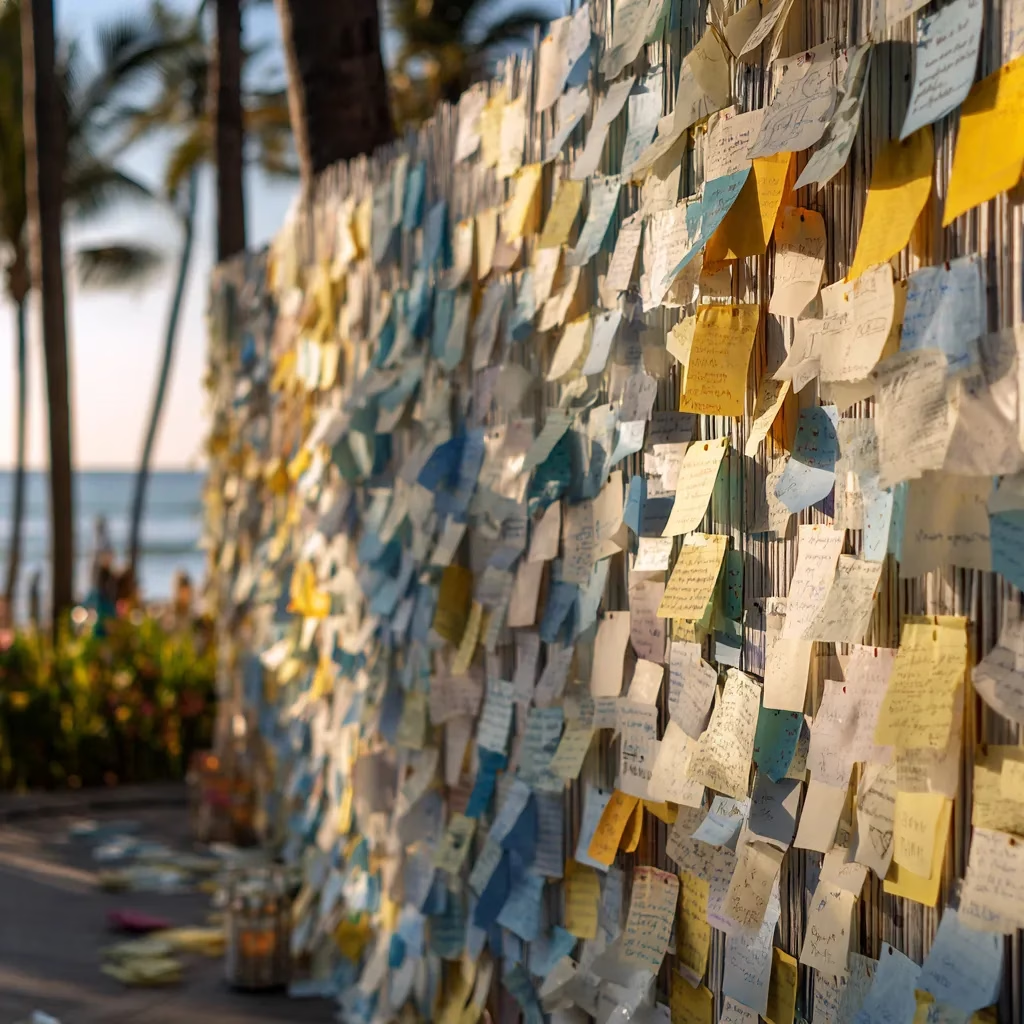
In Bataan, a community group created a “Wall of Unspoken Prayers”, a memorial where people can write prayers their ancestors couldn’t voice during the war. It’s profoundly moving. Thousands of notes flutter in the wind, finally giving voice to decades of spiritual silence.
A Manila-based therapist, Dr. Maria Lourdes Reyes, pioneered “narrative reconstruction therapy” specifically for spiritual injury. She helps clients rebuild meaning-making frameworks shattered by trauma. Her work acknowledges that you can’t always restore original faith, but you can construct new frameworks that honor what was lost.
“Some patients never return to their pre-trauma beliefs,” she told me. “And that’s okay. The goal isn’t restoration, it’s integration. You don’t need to recover your head. You need to learn to be whole in a new configuration.”
Supporting Loved Ones Through Spiritual Wounds
If someone you love is wrestling with spiritual injury, whether from military service, historical trauma, or personal catastrophe, here’s your downloadable action guide. Print this. Save it. Share it.
DO:
- Listen without trying to fix or restore their faith
- Validate that spiritual injury is real and profound
- Offer presence without pushing religious solutions
- Support meaning-making in whatever form it takes
- Connect them with specialized resources (not just traditional therapy)
- Be patient with the non-linear healing process
DON’T:
- Say “God has a plan” or “everything happens for a reason.”
- Push religious practices they’ve rejected
- Minimize their loss of faith as a “phase.”
- Compare their spiritual injury to your own doubts
- Expect them to “get over it” or “move on.”
- Treat them as broken or less-than for losing faith
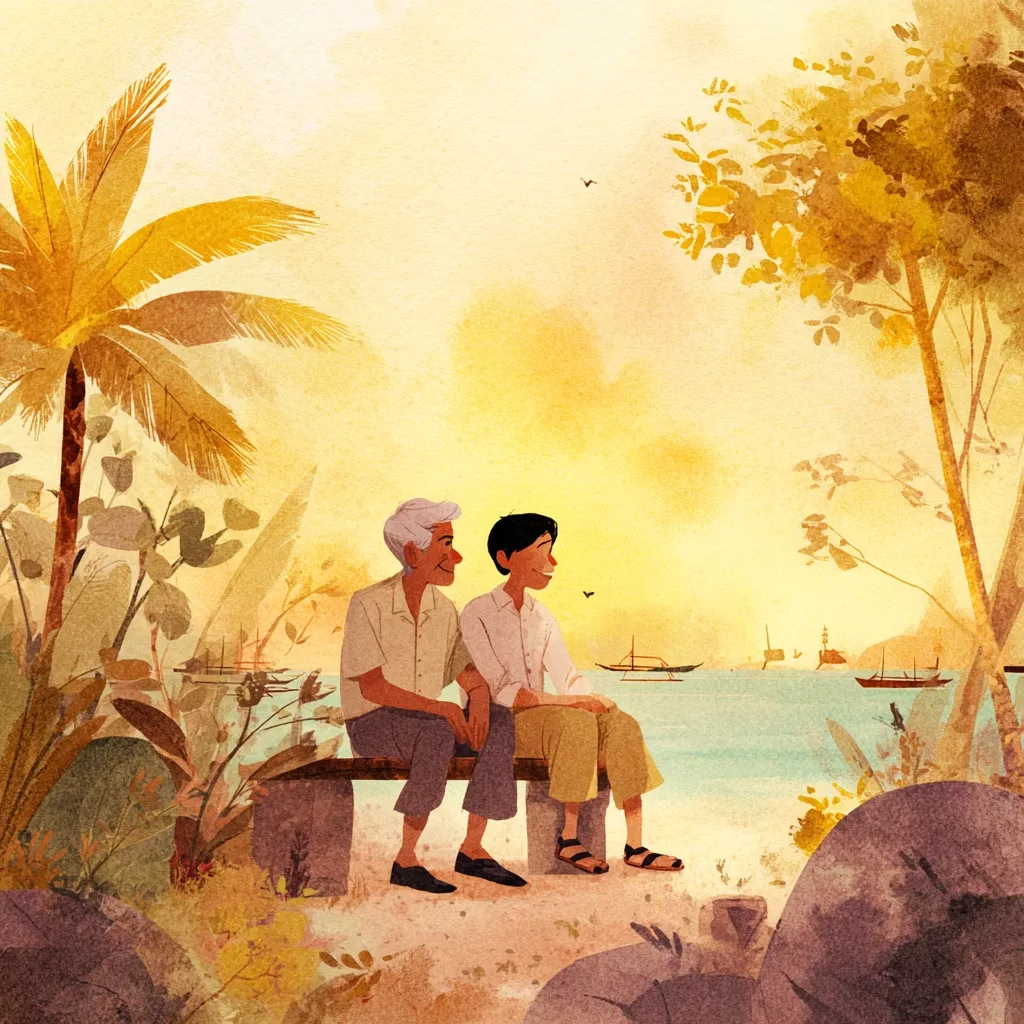
Most importantly: understand that spiritual injury sometimes doesn’t heal. It transforms. The person may never return to their original faith framework. That’s not failure, it’s survival and adaptation. Honor the new shape of their spiritual life, even if it’s nothing like the old one.
Why Some Shadows Should Remain
So here we are, back at Corregidor with our headless priest. He’s still walking. Still silent. And, still raising those hands in endless, incomplete blessing. And I’m arguing we should let him.
Not because I’m ghoulish or because I think suffering is noble. But because some stories are too important to banish. Some wounds bear witness. Some ghosts carry memories that matter more than our comfort.
The headless priest reminds us that war’s casualties include faith itself. That spiritual infrastructure crumbles under bombardment just like physical infrastructure. That some people’s beliefs were decapitated so cleanly they could never grow back. These truths matter.
When we honor the ghost instead of trying to vanquish it, we honor every person who lost their faith in trenches and bomb shelters. We honor the priests who held others’ hands while their own slipped from God’s grip. We honor the honest struggle with doubt instead of demanding false certainty.
This doesn’t mean staying stuck in trauma. It means integrating historical and spiritual truth into how we move forward. It means building new frameworks for meaning that acknowledge the costs of war, including those we can’t measure in body counts or territory.
The Invitation: From Horror to Honor
If you’ve made it this far, you’re not here for cheap scares. You’re here because the headless priest represents something you recognize in yourself, your family, your community, or your understanding of what humans endure.
So, here’s what I’m asking: engage with this story differently. Don’t just shiver and move on. Sit with what it reveals about faith under fire, about spiritual injury, about the long shadows cast by war.
If you have family stories of spiritual struggle during wartime, write them down. Record them. Share them. These narratives are endangered species, vanishing with each generation. They’re also medicine for current struggles with meaning and belief.
If you’re carrying spiritual injury yourself, from military service, childhood trauma, or life’s devastating curveballs, know that you’re not alone. You’re not broken. Your faith wasn’t weak because it couldn’t survive intact. You’re a survivor of something that breaks faith. That’s different. That matters.
If you work with veterans, clergy, or trauma survivors, educate yourself about spiritual injury. It’s as real as broken bones and just as debilitating. Ignoring it doesn’t make it disappear. It just makes it transmit to the next generation.
The Call to Witness
The headless priest doesn’t need your belief. He needs your witness. He walks whether you acknowledge him or not. But when you do acknowledge him, not as a monster but as a mirror, not as a problem but as a truth-teller, something shifts.

You’re no longer fighting ghosts. You are beginning to honor memories. By doing so, you’re no longer being haunted. Instead, you’re being invited to remember honestly. You’re not experiencing horror; rather, you’re encountering the cost of faith lost, finally given form and recognition.
What does Corregidor’s headless priest stir within your own understanding of faith and loss? Not rhetorical, I genuinely want to know. Have you or your family members struggled with spiritual injury? Or perhaps, you’ve witnessed faith fractured by trauma? Maybe you found ways to rebuild meaning after belief was beheaded?
Share your thoughts in the comments. Tell your family stories. Name the spiritual wounds that don’t usually get named. Let’s create space where these silent scars can finally be voiced. Where headless priests, literal and metaphorical, can be honored instead of hidden.
Save this article for times when faith feels fragile. Share it with someone whose belief has been shattered and who needs permission not to glue it back together exactly as it was. Follow for more Philippine history that goes beyond dates into the heart’s depths, where the real battles always were.
A Final Blessing from the Headless
Here’s something I learned from fifteen years of writing about dark history: the stories that haunt us most are the ones we most need to hear. If the headless priest has stayed with you, if you can’t quite shake the image of those hands raised in perpetual, incomplete blessing, that’s not an accident. That’s recognition.
Maybe you’re walking around a little headless yourself. Faith is separated from certainty. Practice disconnected from meaning. Going through motions that used to make sense but now just hang in the air, unfinished.
If so, the priest isn’t haunting you. He’s walking with you. Saying, in his silence, “I see you. This happened to me, too. We’re still here. Still raising our hands. Still trying to bless what can be blessed, even with heads missing.”
And maybe that’s enough. Maybe survival in altered form is its own kind of resurrection. Perhaps, being a walking question is holier than pretending to be an unshakeable answer. Maybe the headless have their own wisdom, and it sounds like this:
“You don’t need your whole head to know what your heart carries, and you don’t need perfect faith to walk forward. You don’t need to be unbroken to bless the broken. And you’re not a ghost. You’re still here. Still walking. Still raising your hands toward something, even if you’ve forgotten what.”
That’s the true cost of faith lost in wartime, and why some shadows can’t be banished. They shouldn’t be. They’re carrying us home.
Frequently Asked Questions
1. Is the headless priest of Corregidor a real, documented ghost or just folklore?
The legend has been passed down through generations since WWII, with numerous tour guides and visitors reporting sightings. While there’s no “official documentation” of paranormal activity, the story is deeply embedded in Corregidor’s cultural memory. More importantly, whether literally true or metaphorically true, the legend represents real spiritual trauma experienced by clergy and communities during the war. The “truth” of the ghost matters less than what the story reveals about collective spiritual injury.
2. What exactly is spiritual injury, and how is it different from PTSD?
Spiritual injury, also called moral injury, involves damage to a person’s core beliefs, values, and sense of meaning. PTSD primarily involves fear-based responses and hypervigilance. Spiritual injury centers on guilt, shame, loss of faith, and existential emptiness. A person can have one without the other, though they often occur together. The key difference: PTSD says, “I’m not safe,” while spiritual injury says, “nothing means what I thought it meant.” Both require specialized treatment approaches.
3. Can someone recover from spiritual injury, or is it permanent?
Recovery varies significantly by individual. Some people reconstruct meaning frameworks similar to their original beliefs. Others build entirely new spiritual frameworks. Still others learn to live meaningfully without the faith structures they previously held. “Recovery” doesn’t always mean restoration; it often means integration and transformation. The injury may leave permanent changes, but those changes don’t prevent wholeness, purpose, or even joy. Think of it like recovering from a physical injury that leaves you permanently changed but still capable of a full life.
4. How can I support a veteran or family member experiencing spiritual injury?
First, educate yourself about moral/spiritual injury so you understand what they’re experiencing. Listen without trying to fix their faith or restore their beliefs. Avoid platitudes like “God has a plan.” Connect them with specialized resources, such as therapists trained in moral injury, veteran support groups that address spiritual wounds, or faith communities that welcome doubt and questioning. Most importantly, validate that their experience is real and profound, not a weakness or phase. Sometimes, presence matters more than solutions.
5. Are there specific therapies or treatments for spiritual injury?
Yes, several specialized approaches exist. These include narrative reconstruction therapy, which helps rebuild meaning-making frameworks; adaptive disclosure therapy, specifically designed for moral injury; acceptance and commitment therapy (ACT), which works with values and meaning; and spiritually integrated psychotherapy. Many VA hospitals now offer moral injury programs. Faith-based organizations increasingly provide spiritual injury retreats and counseling. The key is finding practitioners who understand that spiritual wounds require different treatment than trauma or depression alone.
6. Why do you argue against “banishing” the headless priest ghost?
Because trying to eliminate the ghost misses its significance as cultural memory and collective witness. The legend keeps conversation open about war’s spiritual costs, preventing us from forgetting what faith under fire actually looks like. Banishing the ghost is like burning uncomfortable history books; it doesn’t erase what happened, it just makes us less equipped to understand and address ongoing spiritual injury. The haunting is valuable memory-keeping, not a problem to be eliminated. Honor the shadow rather than fighting it.
7. Is spiritual injury only related to war, or can it come from other experiences?
Spiritual injury can result from any experience that shatters core beliefs and values. This includes clergy sexual abuse, medical trauma, betrayal by trusted institutions, witnessing injustice, being forced into moral compromises, or experiencing natural disasters that break faith in a benevolent universe. War is a common cause because it concentrates on so many faith-shattering experiences, but any profound betrayal of meaning-making frameworks can cause spiritual injury. The mechanisms are similar regardless of the source.
8. How can communities address intergenerational spiritual trauma?
Communities can create dedicated memorials acknowledging spiritual casualties alongside physical ones. Develop storytelling spaces where difficult faith narratives can be shared without judgment. Organize healing rituals that name moral injury and spiritual loss. Support oral history projects that preserve complicated faith stories. Train religious leaders to recognize and address spiritual injury rather than dismiss it. Most importantly, stop treating loss of faith as a failure and start treating it as a legitimate wartime casualty that requires acknowledgment and support. Community validation creates space for individual healing.
9. Where can I find resources specifically about the Philippine WWII spiritual trauma?
Start with the Philippine Veterans Affairs Office, which now includes chaplains trained in moral injury. The National Historical Commission of the Philippines maintains archives of wartime testimonies, including spiritual struggles. Several Manila universities have oral history projects that document faith during the occupation. Catholic dioceses in areas heavily affected by WWII (Manila, Bataan, Corregidor) increasingly offer intergenerational trauma resources. Academic works by Filipino historians, such as Ricardo Jose, provide historical context. Local historical societies near battle sites often maintain collections of personal accounts, including spiritual experiences.
10. Can visiting Corregidor help with understanding or healing spiritual injury?
For some people, visiting sites of historical trauma creates powerful opportunities for connection and understanding. Walking where your ancestors walked, seeing what they saw, and physically standing in spaces of suffering can make abstract history viscerally real. However, this isn’t appropriate for everyone; it can be retraumatizing for some. If you choose to visit, go with intention rather than as a tourist. Research the specific history. Consider going with a guide knowledgeable about wartime spiritual experiences. Create space for reflection. And remember you’re walking on sacred ground where faith was both tested and lost. Honor that.
Other Articles that may be of Interest
You may also find the following articles interesting.
Suggestions For Lodging and Travel
Lodging is widely available throughout the Philippines. However, you may want to consider getting assistance booking tours to some of the Philippines’ attractions. I’ve provided a few local agencies that we’ve found to be very good for setting up tours. For transparency, we may earn a commission when you click on certain links in this article, but this doesn’t influence our editorial standards. We only recommend services that we genuinely believe will enhance your travel experiences. This will not cost you anything, and I can continue to support this site through these links.
Local Lodging Assistance
Guide to the Philippines: This site specializes in tours across the Philippines, offering flexible scheduling and competitive pricing. I highly recommend them for booking local arrangements for a trip like this one. You can book flights and hotels through the Expedia link provided below.
Hotel Accommodations: I highly recommend The Manila Hotel for a stay in Manila. I stay here every time I travel to the Philippines. It is centrally located, and many attractions are easily accessible from there. Intramuros and Rizal Park are within walking distance. I have provided a search box below for you to use to find hotels (click “Stays” at the top) or flights (click “Flights” at the top). This tool will provide me with an affiliate commission (at no additional cost to you).
Kapwa Travel is a travel company focused on the Philippines. It specializes in customizing trips to meet customers’ needs.
Tourismo Filipino is a well-established company that has been operating for over 40 years. It specializes in tailoring tours to meet customers’ needs.
Tropical Experience Travel Services – Tours of the Philippines: This company offers a range of tour packages, allowing you to tailor your trip to your preferences. Lastly, we recommend booking international travel flights through established organizations rather than a local travel agent in the Philippines. I recommend Expedia.com (see the box below), the site I use to book my international travel. I have provided a search box below for you to use to find flights (click “Flights” at the top) or Hotels (click “Stays” at the top). This tool will provide me with an affiliate commission (at no cost to you).