
Stranded on an Unfamiliar Shore
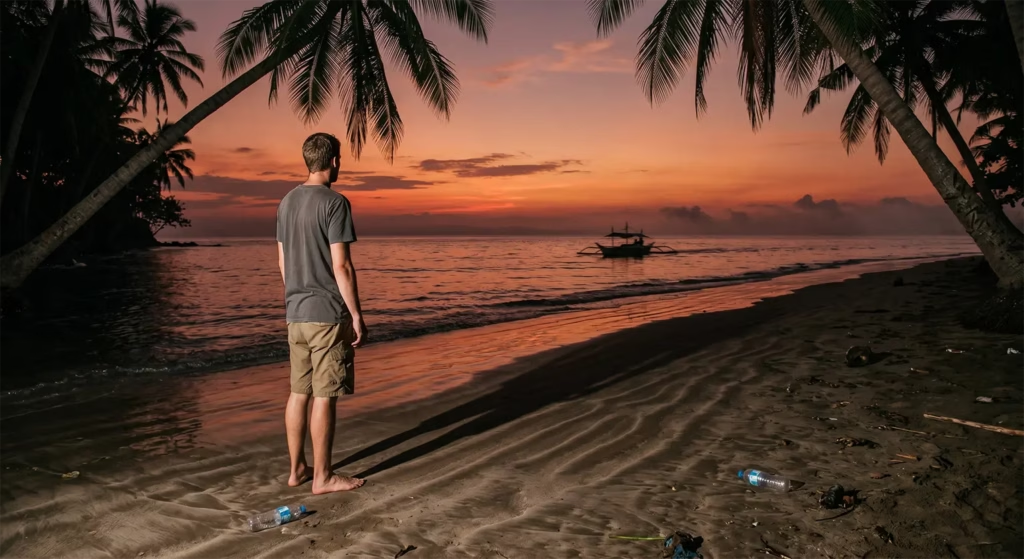
The sun was dropping fast, painting the water orange and red. I stood on a narrow beach I couldn’t name, watching the last bangka motor away. The engine noise faded into the wind. My guide wasn’t there. My phone had no signal. The water bottles I’d packed were empty.
I’d imagined island hopping as postcard-perfect. Crystal water. White sand. A cold San Miguel at sunset. Instead, I got mosquitoes, confusion, and the sinking realization that no one was coming back for me.
That moment on that unnamed island taught me more about the Philippines than a thousand glossy travel blogs ever could. It taught me the difference between tourism and truth. Between paradise as advertised and paradise as actually lived by the people who call these islands home.
Island hopping in the Philippines is sold as effortless magic. Book a tour, snap your photos, sip from a coconut, and post to Instagram. Clean. Simple. Fascinating. What they don’t tell you is that the magic depends on infrastructure that barely exists, goodwill that gets exploited, and travelers who mistake hospitality for invincibility.
Key Takeaways
- The author shares experiences of getting stranded and scammed while island hopping in the Philippines, highlighting the disparity between marketed paradise and local realities.
- The myth of paradise often leads travelers to expect perfection, causing them to neglect essential preparations and local insights.
- Tour operators frequently exploit vague terms, leading to scams in the Philippines tourism sector that leave travelers disappointed and without recourse.
- To travel ethically, one should support local businesses, learn basic language phrases, and avoid taking advantage of the local community.
- The article emphasizes that real adventure comes with discomfort, mistakes, and growth, encouraging travelers to respect local cultures and be mindful of their impact.
This is the story of how I got stranded, scammed, and humbled. And why those experiences matter more than every perfect sunset I’ve ever photographed.
The Myth of Paradise and Why It Matters
The Philippines has long been marketed as a paradise. Seven thousand islands. Endless beaches. Turquoise water that looks Photoshopped even when it’s not. Travel agencies sell it. Influencers perform it. Governments tout it as economic salvation.
But the word “paradise” does something dangerous. It erases the people who live there and turns complex communities into scenery. It sets travelers up to expect perfection and locals to deliver it, whether they have the resources to do so or not.
I met a fisherman named Mang Rudy on Bantayan Island three years after my stranding incident. I asked him what he thought about all the tourists flooding in for island-hopping tours. He laughed, but it wasn’t a happy sound.
“They come here and say it’s paradise,” he told me in Bisaya, which my wife later translated. “But they don’t see the storms. They don’t see the empty nets. They don’t see us fixing boats with rope because we can’t afford new engines.”
He wasn’t bitter. He was just honest. Paradise is a marketing term. It sells plane tickets and hotel rooms. But it traps travelers in a fantasy where nothing should go wrong, boats should always run on time, and locals exist only to serve.
The Cost of the Myth
When you expect paradise, you stop preparing for reality. You don’t ask about weather patterns or check whether your tour operator is licensed. You don’t pack extra water or learn basic Tagalog phrases, and you assume the myth will carry you.
Then the myth breaks. A boat engine fails. A guide doesn’t show. A storm rolls in faster than anyone predicted. And suddenly you’re stranded, angry, and blaming people who are just trying to survive in an economy built on your expectations.
The myth also pressures locals to hide the truth. To smile through exploitation. To accept pay because challenging a foreigner might cost them their reputation or livelihood.
I’ve watched it happen. A boatman apologizing for the waves he didn’t create. A guide pretending the toilet on the island works, even though it hasn’t worked for months. A family served fish they caught for their own dinner because the resort didn’t deliver the food they promised to the tour group.
That’s not paradise. That’s people absorbing the gap between what was sold and what can actually be delivered. And travelers like me, back then, were too wrapped up in our own disappointment to notice.
Coron Island Hopping and the Guide Who Disappeared

Coron island hopping was busy that season. Every dock worker and guesthouse owner seemed to know someone with a bangka for hire.
His name was Joel. At least that’s the name he gave me. He approached me at the port in Coron with a laminated photo album of islands, snorkeling spots, and lagoons. He quoted a price that seemed fair and spoke enough English to answer my questions. Overall, he seemed legit.
Three hours into the tour, he told me he needed to check on something at the next island. He’d be right back, he said. Just wait by the beach. I watched him climb into the bangka with the boatman. They motored away.
They didn’t come back.
I waited two hours. The sun moved across the sky. Other boats came and went. I asked a family grilling fish if they knew Joel. They shook their heads. I asked if another boat was coming. “Maybe later,” one of them said. “Maybe tomorrow.”
How I reacted
Panic is a specific feeling. It starts in your chest and moves to your throat. It makes you do foolish things like shout at strangers who didn’t cause your problem. I almost did that. Then I stopped myself and asked a better question.
“Is there a barangay captain here? Someone in charge?”
The family pointed to a small house up the hill. I walked up, rehearsing my Tagalog in my head, knowing it wasn’t good enough. An older man stepped out before I reached the door. His name was Kapitan Ernesto. He listened to my story without interrupting.
“Your guide is not from here,” he said. “We don’t know him. But you can stay tonight. My nephew will take you back to Coron tomorrow morning. Five hundred pesos for fuel.”
That night, I slept on a bamboo bench under a mosquito net Kapitan Ernesto’s wife lent me. I ate rice and dried fish that they shared, and I didn’t sleep much. I kept replaying my decisions, looking for the moment when I should have known better.
What I Learned About Informal Tourism
Joel wasn’t a criminal mastermind. He was probably just a guy hustling tourists, maximizing trips, and juggling more clients than he could actually manage. Maybe an emergency came up, or he got a better offer. Maybe he just miscalculated and couldn’t make it back before dark.
The problem isn’t individual bad actors. The problem is a tourism system built on informal networks with no accountability. Guides operate without licenses. Boats run without safety checks. Prices fluctuate based on how foreign you look. Scams in the Philippines tourism sector rarely look dramatic. They look like disorganization. They look like bad luck. And when something goes wrong, there’s no company to call, no insurance to claim, no record that you were ever there.
It’s survival economics. Locals patch together income from tourism because there aren’t any other options. Travelers book cheaply because they don’t understand what legitimate operational costs look like. Everyone’s improvising. And when the system breaks, the traveler gets stranded, and the local gets blamed.
Here’s what I do now, after years of island hopping done right. I ask for the guide’s full name and barangay, and I take a photo of their ID if they have one. I ask other travelers at the port who they used, and I verify that the boat has life jackets and a working radio. If I pay a deposit, it’s not the full amount upfront.
Finally, I also ask the guide directly: “What happens if the weather changes?” Their answer tells me if they’ve thought past the sale.
Lessons from Being Duped

El Nido tours are among the most sought-after in the Philippines. They’re also among the most inconsistently delivered.
The island-hopping scam I fell for wasn’t violent or dramatic. It was just dishonest in a way that felt personal. A tour operator in El Nido sold me a private tour package. Three islands. Snorkeling gear included. Lunch provided. Six thousand pesos.
What I got was a shared bangka with 12 other tourists, no snorkeling gear, and a lunch of three pieces of grilled bangus and rice on a plastic plate. When I confronted the operator, he shrugged.
“Private tour means private reservation, sir. Not a private boat. Snorkeling gear is rental, extra fee. Lunch is included; you got lunch.”
Technically, I couldn’t prove he lied. The terms were vague enough to twist. I paid for a feeling, and he delivered a technicality. That’s the anatomy of a soft scam. No guns. No threats. Just weaponized ambiguity.
I was angry, but not just at him. I was angry at myself for not asking harder questions. For assuming “private” meant what I thought it meant. For not getting anything in writing. Because I was so eager to book the dream, I skipped the details.
How Island Hopping Scams Actually Work
Most scams in Philippine island hopping aren’t elaborate. They’re shortcuts taken by operators working on thin margins who’ve learned that tourists rarely complain effectively. Overbook the boat. Swap in cheaper food. Skip the distant island because fuel costs more than expected. Blame the weather, language, or “miscommunication.”
Why does it persist? Because the tourism economy in many islands is informal and competitive. Operators undercut each other to win bookings. Prices drop below sustainable levels. Corners get cut. Quality suffers. The traveler leaves disappointed, writes a negative review, and books the next trip elsewhere.
The operator doesn’t feel accountable because the relationship was transactional and temporary. The traveler doesn’t feel empowered because they don’t know who to report to or whether it will matter. The cycle continues.
What Actually Works
I now book island-hopping tours through registered operators with physical offices and online reviews I can verify. I read the one-star reviews first. They tell the truth. I ask for a printed itinerary with specific islands named. I clarify every inclusion: Is the gear provided or rented? Is the boat shared or private? What happens if the weather cancels the trip?
I also pay attention to price. If a tour costs half as much as others charge, there’s a reason. Either they’re cutting safety, cutting quality, or they’re not going where they said they’d go. Cheap isn’t a deal if it’s a scam.
And I’ve learned to tip well when service is honest. When a guide goes out of their way, when a boatman navigates rough water safely, when someone admits a mistake and fixes it, I pay extra. Not because I’m generous, but because I want that behavior to be rewarded more than the scam artist’s shortcut.
Ethical Travel in the Philippines: The Outsider’s Footprint

There’s a question I didn’t ask myself early enough: When does my presence as a traveler become a burden instead of a benefit?
I remember watching a group of tourists on a small island near Siquijor. They arrived on three bangkas, maybe twenty people total. They swarmed the beach, taking photos, shouting to each other, moving a fishing net out of the frame because it “ruined the aesthetic.” One of them asked a local kid to hold a starfish for a photo. The kid did it. He smiled. He probably got a tip.
But his grandfather sat nearby, mending that same net they’d moved. He didn’t smile or say anything. He just watched. And I wondered what he was thinking. Whether he resented us. Whether he felt powerless to say no. Whether tourism had become something his community endured rather than embraced.
The Local Perspective
I asked a woman named Aling Rosa about it later that year. She ran a small sari-sari store on Camiguin. I bought a Coke and asked her what she honestly thought about tourists coming to her island.
“Some are kind,” she said. “They ask permission, and they buy from us, not just the resorts. They learn a few Bisaya words. Those ones we like. But some just take. They take photos, take shells, take our time, and they don’t spend money in the barangay. They stay in the big hotels and treat us like decorations.”
She wasn’t angry. She was just naming reality. Tourism is supposed to bring money and opportunity. But when the money flows to outside investors, and the opportunity means performing for strangers, the deal isn’t as good as it sounds.
Respect Isn’t Passive
Respect requires action. It’s not enough to “mean well.” You have to spend money where it directly benefits locals and obtain permission before photographing people or their property. Learn basic phrases in the local language, even if you butcher them. You have to leave the shells, the coral, the starfish where you found them.
Don’t mistake hospitality for approval, and certainly don’t confuse a smile with permission. Don’t assume silence means everything is fine.
Filipinos are deeply hospitable. It’s cultural. But hospitality can also mask discomfort, frustration, or quiet resistance. Just because someone serves you doesn’t mean they’re happy about it. Just because they don’t confront you doesn’t mean you’re not crossing a line.
Pay attention. Watch body language. Notice when you’re the only foreigner in a space and ask yourself if you belong there or are intruding. And when in doubt, ask. “Is it okay if I take a photo?” “Am I allowed to swim here?” “Is this a good time?”
The answers will teach you more than any guidebook.
Transformation: From Victim to Advocate
Getting stranded changed how I travel. Getting scammed changed how I book. But the real transformation came from accepting that I was part of the problem. That shift is what ethical travel in the Philippines actually demands.
I used to think being a “good traveler” meant being polite and tipping well. But I didn’t realize that good intentions don’t erase bad systems. I didn’t understand that my money, my presence, and my expectations were all part of a larger pattern that often harms the places I claimed to love.
That’s uncomfortable to admit. It’s easier to play the victim. To blame the guide who disappeared or the operator who scammed me. To post a warning on TripAdvisor and move on.
But I stayed, and kept coming back. I married into a Filipino family and lived in the provinces. I worked sugarcane harvests and fished with locals who taught me their rhythm. And I learned that the only way to travel ethically is to see yourself clearly first.
Vulnerability as Credibility
I’m the cautionary tale. I’m the foreigner who got stranded because he didn’t ask enough questions. He got scammed because he valued the experience more than the truth. He treated an entire country like a backdrop for his adventure until reality taught him otherwise.
Admitting that doesn’t make me noble. It makes me honest. And honesty is the only foundation for change.
Now I write about the Philippines not as an outsider documenting the unfamiliar, but as someone whose family lives here. Whose in-laws work and that tourists never see. Whose credibility comes from being wrong, learning slowly, and caring enough to correct course..
If you’re planning to island hop in the Philippines, learn from my mistakes. Ask the hard questions. Pay the fair price. Hire the registered guide. Respect the community. And when something goes wrong, because it will, don’t just blame the system. Ask what you contributed to it.
Real Adventure is Messier Than You Want to Admit
We’ve built an entire industry around sanitizing adventure. Controlled risk. Curated chaos. Danger with a safety net and an Instagram filter. Island hopping has become part of that machinery. It’s an adventure as a product. Wilderness as amenity.
But real adventure is uncomfortable. It involves confusion, mistakes, and moments where you genuinely don’t know what happens next. It’s not glamorous, but it i,s sweating through your shirt on a boat with no shade. It’s eating fish you didn’t order because that’s what the family caught, and it’s sleeping on a bamboo bench because the last boat left without you.
Those moments are where growth happens. Not in the postcard sunset. Not in the perfect dive. In the screw-up and the apology. In the moment you realize your assumptions were wrong, and you have to adjust or fail.
Discomfort is the Teacher
The travelers I respect most aren’t the ones with the best photos. They’re the ones who admit when they were scared, wrong, or out of their depth. The one who learned the local word for “thank you” after someone helped them. That person who paid extra because they understood the value of the service, not because they were trying to prove something.
Adventure isn’t a checklist. It’s not something you buy or complete. It’s the accumulation of moments when you were present, uncertain, and willing to let the experience teach you rather than perform it for an audience.
Island hopping in the Philippines will test you. It will challenge your expectations, your patience, and your assumptions about how the world works. If you let it, it will change you too. But only if you’re willing to sit with the discomfort rather than run from it.
The Provocative Verdict

Five years after I got stranded, I went back to Bantayan Island to visit Mang Rudy again. He was repairing his boat on the same stretch of beach where we first talked. I brought him a bottle of Tanduay and asked if he remembered me.
He smiled. “The tall Amerikano who asks too many questions. Yes, I remember.”
We sat on the sand and watched tourists getting ready for an island-hopping tour. Matching life jackets. Waterproof phone cases. Excited chatter. They looked exactly like I used to look.
“Do you think they’ll learn anything?” I asked him.
Mang Rudy shrugged. “Some will. Most won’t. They’ll take their photos and leave. That’s fine. We’ll still be here.”
He wasn’t resigned. He was just realistic. Tourism comes and goes. Storms come and go. Travelers arrive with high expectations and leave with half-truths. The community remains.
I thought about that a lot on the flight home. About the difference between visiting and understanding. Between taking and receiving. Between seeing paradise and seeing people.
The choice, always, is yours. You can island hop through the Philippines as a consumer, checking off islands like items on a list. Or you can show up as a guest who respects the invitation. The visitor who learns the words and who shows respect. That person who receives the welcome not as an entitlement, but as a gift.
Learn the words. Show the respect. Receive the welcome.
The Philippines will teach you if you let it. But the lessons aren’t gentle, and the truth isn’t on the postcard. Come prepared for that. Or don’t come at all.
Now it’s Your Turn
If you’ve island-hopped in the Philippines, you have a story. Maybe you got scammed or found a guide who went above and beyond. Maybe you made a mistake that taught you something you’ll never forget.
Share it. Not the highlight reel. The real story. The messy one. The one that makes you uncomfortable to admit. Because those stories, the honest ones, are what the next traveler needs to hear.
Comment below with your island-hopping confession. What went wrong, and what did you learn as a result? What would you do differently?
And if you know someone planning a trip to the Philippines, pass this on. Not to scare them. To prepare them. To remind them that the best travel happens when you respect the place enough to see it clearly.
Let’s stop selling paradise and start sharing the truth. The islands deserve that. So do the people who call them home.
An Afterthought
Here’s something I didn’t mention in the article but wish I’d known earlier: Keep a small notebook and write down the names of every guide, boatman, and local who helps you along the way. Not for reviews. For memory and gratitude. For the next traveler you meet who asks for a recommendation. Those names are worth more than any itinerary you’ll find online. Pass them forward. That’s how good travel becomes better travel.
Frequently Asked Questions
Yes, if you take precautions. Book with registered operators. Verify boats have life jackets and working radios. Check weather forecasts before departure. Avoid unlicensed guides who approach you at ports. Safety isn’t guaranteed by location. It’s built through preparation and smart choices.
Prices vary by region and group size. In El Nido or Coron, expect to pay between 1,200 and 2,500 pesos per person for a shared group tour. Private tours cost significantly more, typically 6,000 to 12,000 pesos, depending on the boat and itinerary. If the price seems too low, investigate why. Cheap often means corners are being cut.
Pack more water than you think you need. Bring sunscreen, a hat, and a rash guard for sun protection. Waterproof bags protect your phone and valuables. Pack snacks in case lunch is delayed or underwhelming. A basic first aid kit is smart. And bring cash, small bills, because many islands don’t have ATMs or card machines.
Scams in the Philippines tourism industry rarely begin with a lie. They begin with terms left deliberately vague. Get everything in writing. Ask for a printed itinerary listing the specific islands and inclusions. Read online reviews carefully, especially negative ones. Book through operators with physical offices you can return to if problems arise. Clarify terms before paying. Ask what “private” or “inclusive” actually means. And trust your instinct. If something feels off, it probably is.
The dry season runs from November to May, with March and April the calmest and hottest months. Avoid June through October when typhoons are most common, and seas are rough. That said, shoulder months like November and May offer fewer crowds and still-decent weather. Always check local forecasts before booking.
Possible, but not always practical or safe. Some islands have regular public ferry schedules you can use independently. Others require chartered boats and local knowledge of currents, weather, and landing sites. If you’re experienced and speak basic Tagalog or Bisaya, independent travel is doable. If you’re new to the Philippines, hire a reputable guide for your first few trips.
Overtourism damages coral reefs, beaches, and marine ecosystems. Boats leak fuel. Tourists touch or remove coral and shells. Trash accumulates on remote islands with no waste infrastructure. You can minimize your impact by choosing eco-certified operators, avoiding single-use plastics, not touching marine life, and packing out everything you bring in. Respect means leaving no trace.
Learn basic Tagalog or Bisaya phrases like “salamat” (thank you) and “Pwede ba?” (Is it okay?) Ask permission before photographing people or private property. Spend money at local sari-sari stores and eateries, not just resorts. Dress modestly when visiting communities, especially outside tourist zones. And listen more than you talk. Local voices know the place better than any guidebook ever will.
Stay calm. Find the barangay captain or local authority and explain your situation. Most communities will help if you approach respectfully. Offer to pay for fuel or accommodation. Don’t panic or blame locals for circumstances they didn’t create. Have a backup communication plan, like a downloaded offline map or a portable phone charger. Prevention is better: always confirm return-trip times and have contingency plans in place before departing.
Some islands are over-touristed to the point of environmental collapse or community displacement. Research before you go. Boracay, for example, was temporarily closed for rehabilitation following tourism-related damage. Smaller islands with fragile ecosystems may lack the infrastructure to accommodate large groups. Choose islands that manage tourism sustainably and avoid contributing to overcrowding. Quality over quantity. See fewer islands, see them better.
Other Articles You Might Like
- Secret Beaches Philippines: How to Find Hidden Gems
- Why Samar Island Is the Philippines’ Ultimate Travel Test
- What Actually Happens When You Lose Everything Abroad
- Responsible Tourism in the Philippines: How to Travel Respectfully
- Philippines Luxury Beach Resorts Cheaper Than Bali (And Better, If We’re Being Honest)
SUGGESTIONS FOR LODGING AND TRAVEL
Lodging is widely available throughout the Philippines. However, you may want to get some assistance booking tours to some of the Philippines’ attractions. I’ve provided a few local agencies that we’ve found to be very good for setting up tours. For transparency: We may earn a commission when you click on certain links in this article, but this doesn’t influence our editorial standards. We only recommend services that we genuinely believe will enhance your travel experiences. This will not cost you anything, and I can continue to support this site through these links.
- For Hotel Accommodations in the Manila area, I highly recommend The Manila Hotel. It is centrally located and within walking distance of Rizal Park and Intramuros. Many other attractions are easily accessible from there as well. I have provided a search box below to help you find hotels (click “Stays” at the top) or flights (click “Flights” at the top). This tool will provide me with an affiliate commission (at no cost to you).
Local Travel & Lodging Assistance
- Guide to the Philippines: This site specializes in tours throughout the Philippines. They seem to have some flexibility in scheduling, and pricing is very competitive.
- Kapwa Travel is a travel company focused on the Philippines. It specializes in customizing trips to meet customers’ needs.
- Tourismo Filipino is a well-established company that has operated for over 40 years. It focuses on tailoring tours to meet customers’ needs.
- Tropical Experience Travel Services – Tours of the Philippines: This company offers a range of tour packages, allowing you to tailor your trip to your preferences.
Lastly, we recommend booking international travel flights through established organizations rather than a local travel agent in the Philippines. I recommend Expedia.com (see the box below), the site I use to book my international travel. I have provided a search box below for you to search for flights (click “Flights” at the top) or Hotels (click “Stays” at the top). This tool will provide me with an affiliate commission (at no cost to you).

