
The Island That Outsiders Fear
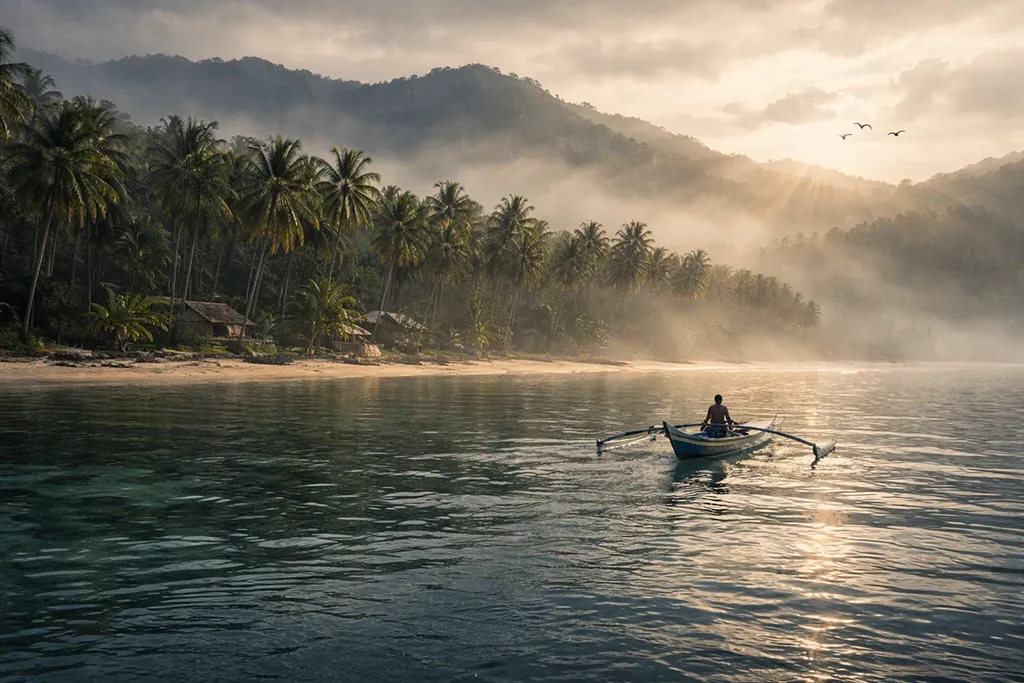
Step off the ferry to Siquijor, Philippines, and the first thing you might notice is how quiet everything feels. Not eerie quiet—but a thick, respectful silence, like the island is observing you before saying hello. This is the Siquijor folklore at work. Fishermen haul their nets in the distance. The scent of sea salt mingles with the smoke of burning coconut husks. Somewhere inland, the rustle of trees might make you wonder: is that the wind—or something else? Lastly, I would suggest that you use this article as your Siquijor Tourism guide: it will help keep you grounded as you go through your trials and tribulations about Siquijor.
This is how it begins for many who visit Siquijor Island in the Philippines. It’s not just another beach stop. It’s “the Island of Witches”—a name that sticks, no matter how untrue it might be. You’ll hear it from Filipinos themselves, some of whom will joke nervously about curses or forbidden trees. Some won’t even get off the boat.
But here’s the thing: Siquijor’s reputation says more about outsiders than it does about the island itself.
Ever been judged unfairly? Labeled something you’re not—because of how you look, where you’re from, or what people think they know about you? Then you already understand Siquijor.
For centuries, Siquijor Island in the Visayas has been the target of spooky folklore, whispered warnings, and cultural bias. Outsiders—colonizers, urbanites, even domestic tourists—cast it as haunted, cursed, or “other.” Yet the people of Siquijor have endured, not by denying their roots, but by owning them. What was once used to isolate them is now a badge of identity and pride.
This story isn’t really about witches. It’s about projection, prejudice, and what happens when a community turns fear into fuel.
How Siquijor Folklore Got Its Start
Siquijor’s mystical identity didn’t just appear out of nowhere—it’s rooted in deep, ancient practices that predate colonization. Before Spanish ships landed on Philippine shores in the 1500s, the islands were spiritual territories. Communities were led not just by chiefs but by babaylan—shaman-like women (and sometimes men) who acted as healers, mediums, and guides. Siquijor, dense with forest and mountains, was a haven for this spiritual work.
What happened when the Spanish colonizers arrived? Like in many colonized places, indigenous practices were painted with a demonic brush. The babaylan—once revered—were rebranded as witches. Healing herbs became “witchcraft.” Sacred rituals were labeled “pagan.”
In Siquijor, the combination of local healing traditions, mysterious glowing fireflies from the molave trees, and the island’s natural isolation made it an easy target for superstition. The Spanish coined it the “Island of Fire” because of the bioluminescent bugs that lit up the woods at night. Imagine seeing that with no explanation—it’s easy to understand why fear grew.
By the time the Americans came, and later during the rise of modern tourism in the mid-20th century, Siquijor’s image was sealed. Horror films portrayed it as the go-to setting for supernatural stories. Tourists whispered about midnight rituals during Holy Week, when healers gathered herbs and concocted oils under moonlight.
Siquijor’s folklore spread faster than the truth ever could.
Instead of being known for its waterfalls, churches, or white-sand beaches, Siquijor became the “cursed island” in every ghost story. Urban dwellers avoided it. Parents warned their kids not to look a local healer in the eye.
But Siquijor folklore isn’t always bad—it can preserve identity. And the people of Siquijor? They’ve learned how to wear the myths like armor.
Fear as Projection: Why Outsiders See Monsters
Let’s get real: fear of the unknown is deeply human. We build entire horror genres around things we don’t understand. The dark. Forests. Remote islands. Foreign rituals. Siquijor checks all those boxes.
But fear, often, is a mirror. What you’re afraid of might reflect something about you. The tourists who clutch their necklaces walking past a healer’s hut—are they really sensing danger? Or are they uncomfortable with traditions they don’t understand?
There’s also a deeper, unspoken tension: the urban vs rural divide. Many of Siquijor’s visitors come from cities—places where science, technology, and modern religion have created a rigid view of what’s “acceptable.” Rural practices like herbalism or folk healing? They’re dismissed as superstitions. Or worse, demonized.
Locals recall the strange things tourists ask:
- “Can you curse my ex for me?”
- “Where do you keep the witches?”
- “If I step on the wrong plant, will I die?”
And yes, there’s laughter. One tricycle driver told us, “They ask if I have a voodoo doll under my seat. I say, only if it helps with gas prices.”
But there’s also frustration. Because behind the jokes is a constant need to explain that no, they’re not evil. No, they don’t boil cats in the forest. No, that old woman isn’t a witch—she’s your grandmother if you look close enough.
So, let’s flip the script. What if the real superstition isn’t on the island—but in the minds of those who won’t let go of colonial-era myths?
The Truth About “Witchcraft”: Healing, Ecology, and Ritual
Albularyo
But what outsiders might call “witchcraft” in Siquijor is really something far more down-to-earth, and deeply human. It’s not: Summoning demons or casting dark spells under the full moon. It’s about healing, legacy, and living in harmony with nature.
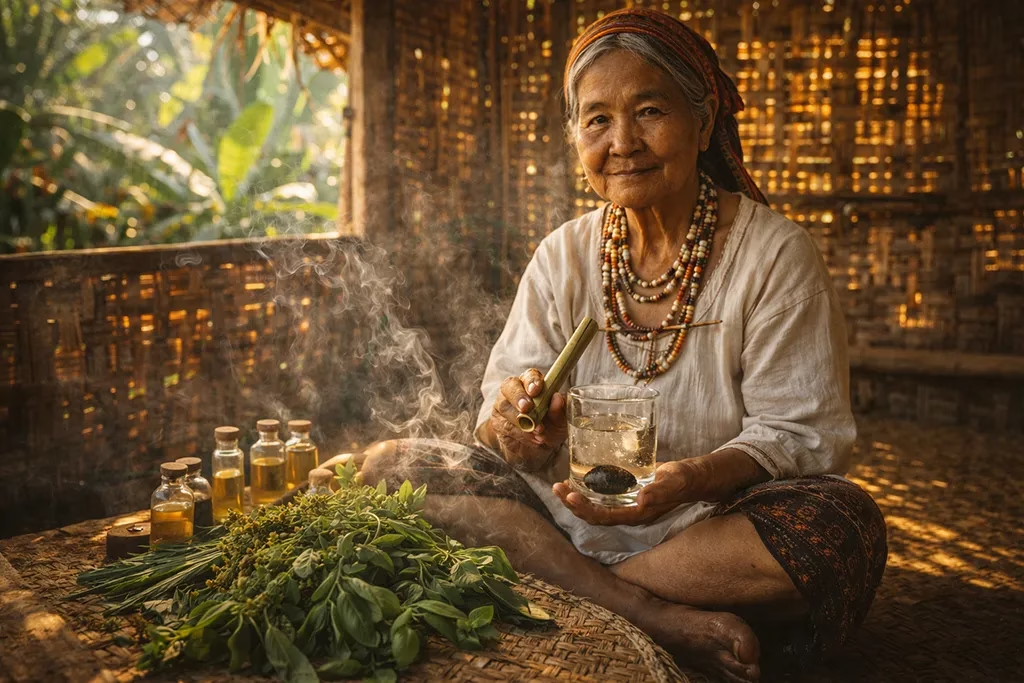
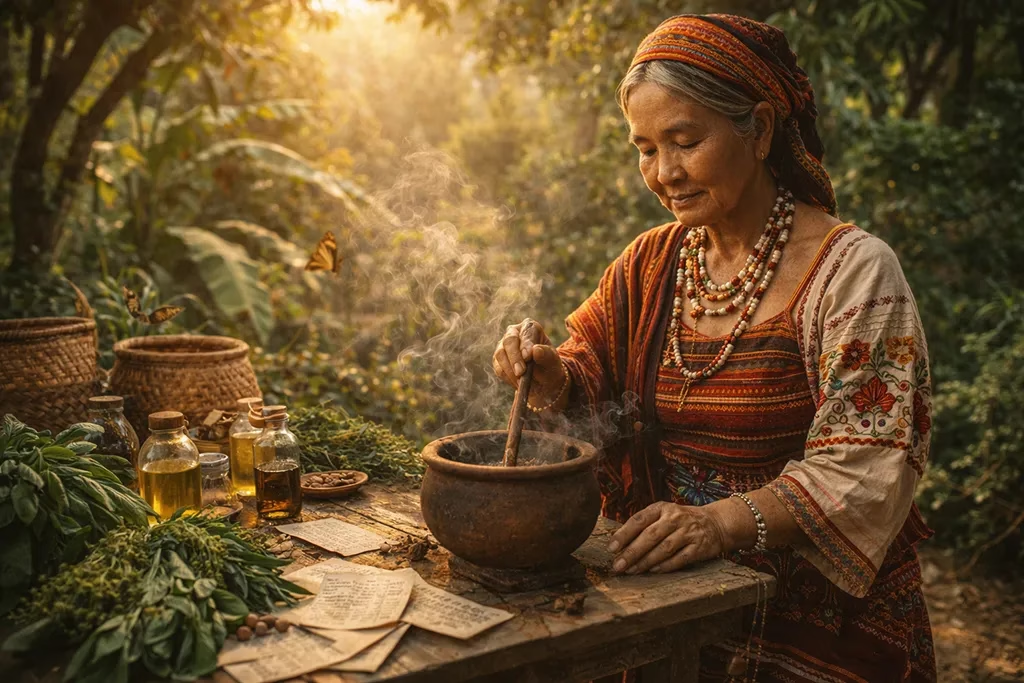
This is the albularyo, or folk healer, of the Philippines. In Siquijor, they are revered and indispensable. They’re the first line of defense for the community when somebody gets sick, is injured, or is even out of emotional and spiritual balance. Whereas Western medicine often divides the body and the soul, the albularyo attends to both. And no, they do not brandish wands. Their tools? Coconut oil, herbs, blessed water, and generations of passed-down wisdom.
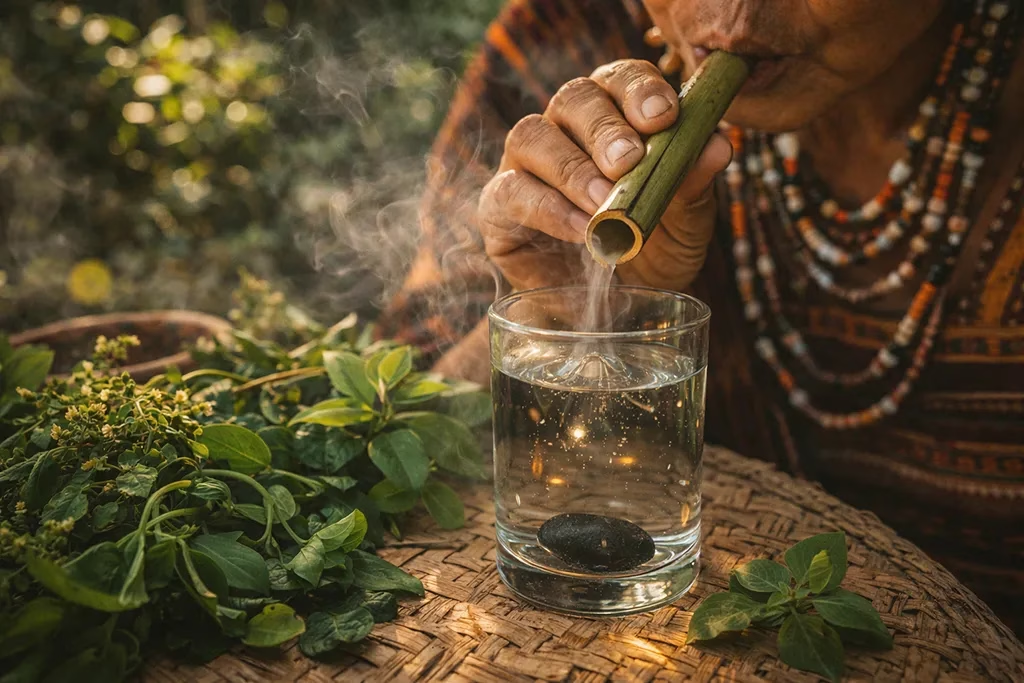
One healing technique you may hear about is bolo-bolo — a ritual that includes a glass of water, a stone, and a bamboo straw. The healer chants prayers as he blows through the straw into the water. If the water bubbles or becomes cloudy, it is believed a spiritual manifestation has been removed. The goal? Cleansing—not cursing.
Hilot
There is also hilot, the Filipino form of healing touch. It’s a combination of bodywork, diagnostic intuitiveness, and herbal use. Consider it ancient physical therapy plus emotional care. It’s not magic—it’s mastery.
There are also the renowned Siquijor healing oils made during Holy Week. Extracted from certain plants, roots, and tree saps, these oils are charged with prayers and rites to confer on them the status of sacred oils. Others are employed to heal wounds. Others, to protect energy. And sure, at least a few locals may tell you not to abuse them. But that’s not a curse — it’s respect for the sacred.
What’s seldom, if ever, mentioned is that these practices are profoundly ecological. Healers use herbs from the area, such as tanglad (lemongrass), lagundi, sambong, and others. Their expertise safeguards biodiversity and preserves local ecosystems. There is no mass harvest, no synthetic ingredients, and no waste. It’s sustainability at its most real.
But here’s the danger: when well-intentioned outsiders come looking for these healers as “experiences” or Instagrammable content, something sacred becomes spectacle. There’s a thin line between interest and exploitation. Asking a healer to play for you is like asking a priest to pray only for your amusement. You don’t eat someone’s culture; you use it for a bite.
Siquijor’s “witchcraft” isn’t evil. It’s what medicine, ritual, nature, and ancestry do when they’ve had a few dances together — and it deserves respect, not ridicule.
Outsider Fear → Local Resilience
Here’s the most beautiful twist in Siquijor’s story: what was once a curse has become a kind of blessing.
For decades, the island’s “haunted” reputation kept it at arm’s length from mainstream tourism and rapid development. While resorts, nightclubs, and over-commercialization transformed other Philippine islands, Siquijor remained largely untouched. And that isolation? It preserved more than just beaches—it safeguarded culture.
Locals tell stories of healers whose knowledge goes back five generations. Of rituals still performed during Holy Week, not for show, but for spiritual maintenance. Of mountains and forests still home to sacred plants and guarded trails.
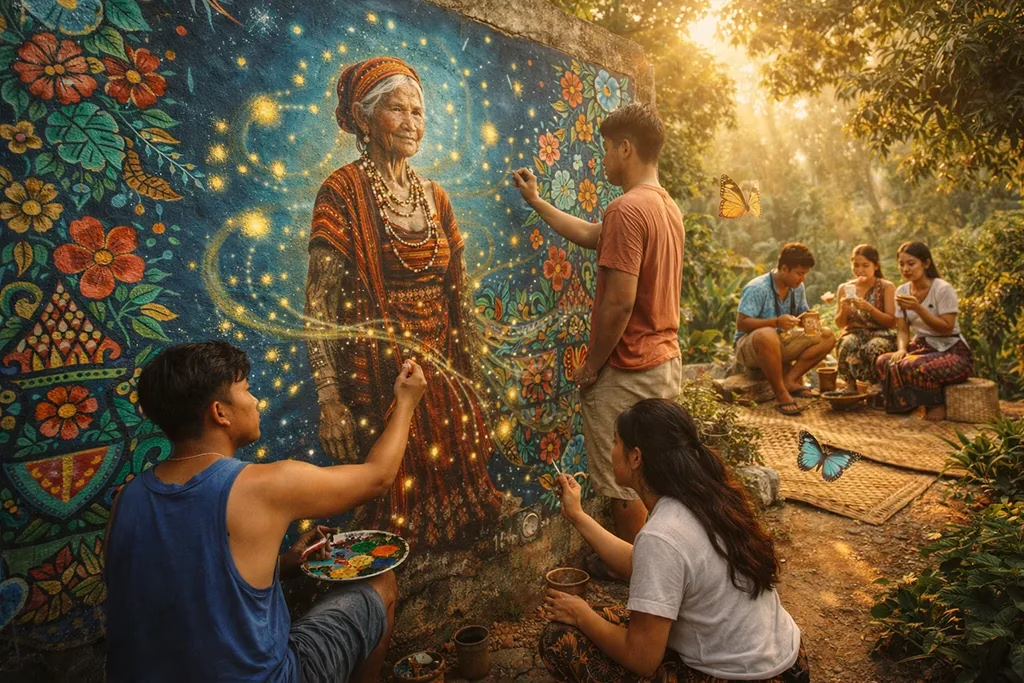
But it’s not just about the old ways. Siquijor’s youth are reclaiming their identity with pride. You’ll find young artists using the island’s mythology in street art and music. Small businesses sell healing oils, woven crafts, and teas—not as novelties, but as cultural products infused with meaning. Even local schools teach children the importance of their folklore, urging them to see it not as shameful, but as a strength.
Resilience, in Siquijor, looks like a teenage girl learning bolo-bolo from her grandmother. Like a café that serves herbal infusions while playing Visayan folk music. Like an entire community saying, “We know what they call us—but we know who we really are.”
The island didn’t need to reject the label “witch island”—they repurposed it. They made fear their fortress. And in doing so, they protected something far more potent than a spooky reputation: their sense of self.
Tourism With Respect: Visit Without Colonizing
Siquijor is open to visitors but not at the cost of its dignity. The local community welcomes curious travelers, especially those who want to learn, not just look. But there are unwritten, often unspoken rules that every respectful tourist should follow.
First: don’t treat healers like theme park attractions. They’re not your entertainment. If you want to meet an albularyo, ask a local guide to arrange it. Be clear about your intentions. Some healers will say yes. Others may refuse. Either way, accept their decision with grace.
Second: stop asking about curses. It isn’t very kind. It reduces centuries of sacred knowledge into a cheap scare tactic. You wouldn’t ask a doctor if they could jinx your boss. Apply that same logic here.
Third: no photos without permission, especially during rituals or in rural villages. A moment of curiosity for you might be someone else’s deep personal or spiritual experience. When in doubt, don’t take the shot.
Fourth: support locals, not outsiders profiting from them. Stay in family-run homestays—book tours led by Siquijodnons. Buy oils and crafts directly from the makers. Your pesos should flow into the hands of those preserving the island, not those exploiting it.
And always remember, you’re a guest. This isn’t your playground, or your set for a horror reel, or your next TikTok viral moment. Treat Siquijor like a sacred place—not a spooky punchline.
What to Do in Siquijor (No Demon-Shambling Necessary)
OK, now that we’ve got that out of our system: No, you will not be hexed in your sleep. Yes, Siquijor is a beautiful island with a soul: one that’s mystical to be sure, but authentic as well. And get this: There are so many things to do here that have nothing at all to do with witchcraft (unless you call nature’s magic).
Let’s begin with the natural wonders you have to see:
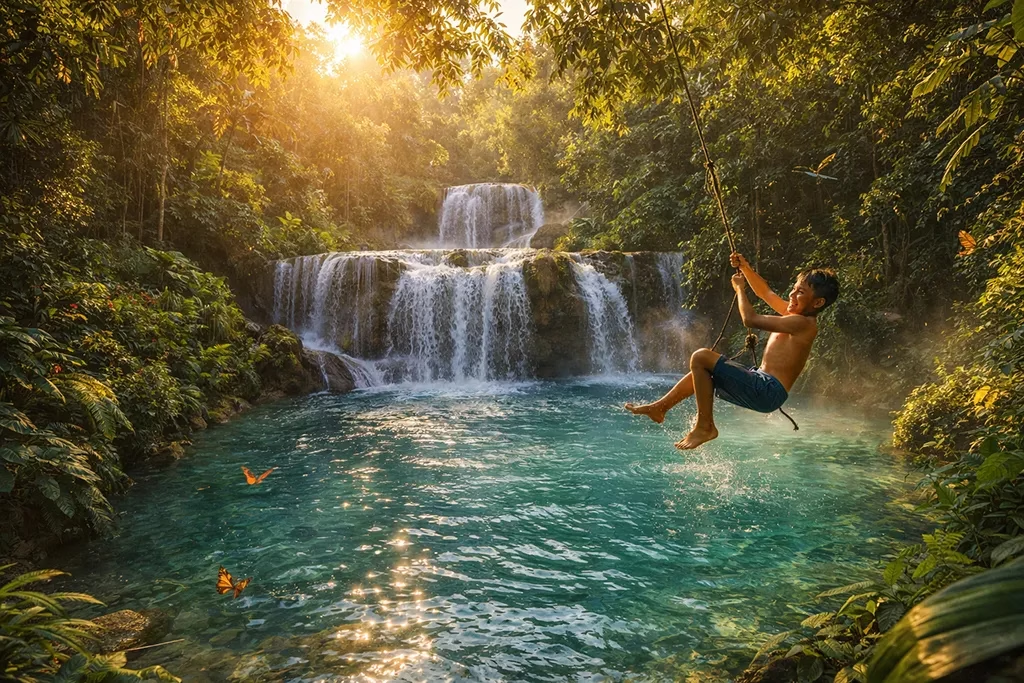
Cambugahay Falls: Imagine three beautiful, turquoise cascading tiers set among wild jungle. You swing into the water from rope vines like a forest Tarzan or float in the sun. It’s picture-postcard perfect and utterly free from friendly ghosts, Scout’s Honor.
Salagdoong Beach: This site has crystal-clear waters and cliff-jumping for the adventurous. There are well-kept facilities and great coral life for snorkeling, which make it a hot spot among thrill seekers and chill seekers.
Cantabon Cave: This is a real adventure. With its underground river, crystal formations, and bat colonies, this guided cave trek provides a taste of Siquijor’s wild, untouched beauty.
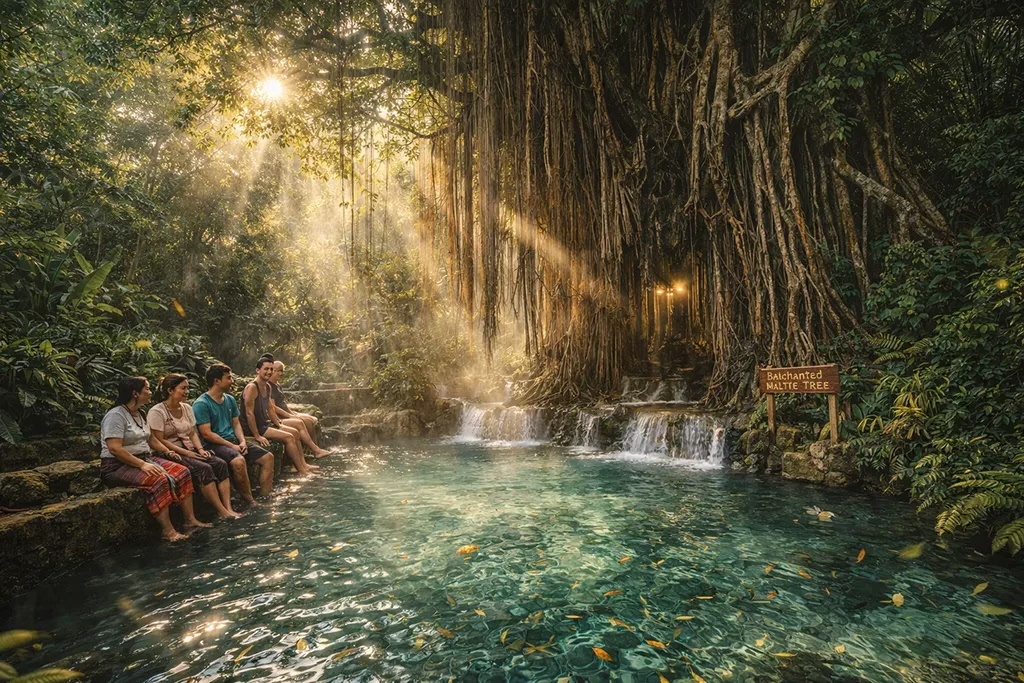
The Enchanted Balete Tree: Yeah, that centuries-old tree has a magical sense. Residents maintain it’s haunted, but tourists come for the fish spa at its base. Place your feet in the water and have cute, tiny fish chew at them while you contemplate the legends whispered by the wind.
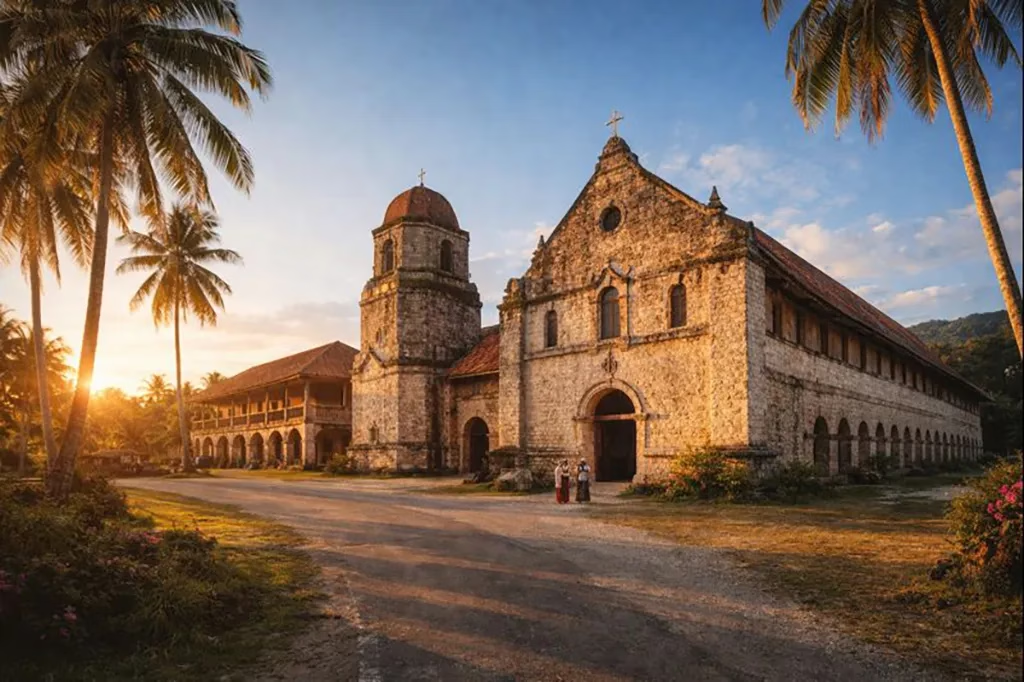
Lazi Church and Convent: A reminder of the Spanish era in the Philippines, this huge stone church (San Isidro Labrador) and its convent, the largest in the Philippines, is a manifestation of mysterious grandeur. Now, it’s a peaceful, very pristine-seeming place, and it is worth noting that it is a candidate for UNESCO World Heritage status.
More than Siquijor has something sensible to offer beyond sightseeing:
Healing oil workshops: Near Holy Week, some families host others to demonstrate how the sacred oils are produced. It’s an opportunity to witness, not interfere. And if you’re lucky, they may present you with a small vial, not of power but of protection.
Wellness travel: Many eco-resorts and wellness centers offer yoga, guided meditation, and detox retreats that mix local spirituality with global wellness trends.
Cultural immersion: Participate in fiestas, banig (mat-making) and hilot (massage) workshops.
Need a plan? Here are sample itineraries:
2-Day Adventure Trip
- Day 1: Cambugahay Falls + Lazi Church + Sunset at Salagdoong
- Day 2:Canatabon Cave Trek + Cliff Jumping + Balete Tree fish spa
3-Day Spiritual Detox
- Day 1: Healing Oils workshop + Beach Meditation
- Day 2: Yoga + plant medicine talk + sunset silence at Lazi Convent
- Day 3: Walk in the woods with herbs + Guided energy cleansing
5-Day Cultural Immersion
Everything above, plus a market tour, a cooking class with a local family, and a private audience (if respectfully requested) with a healer.
There’s nothing to call forth here; you show up with an open heart and being genuinely curious. Siquijor doesn’t demand just your attention; it deserves your comprehension.
Voices from the Island
To properly understand Siquijor, you need to get the lowdown from those who live there. They’ve endured the myths, the insults, and the slow turn toward acceptance. Here are just some of their stories.
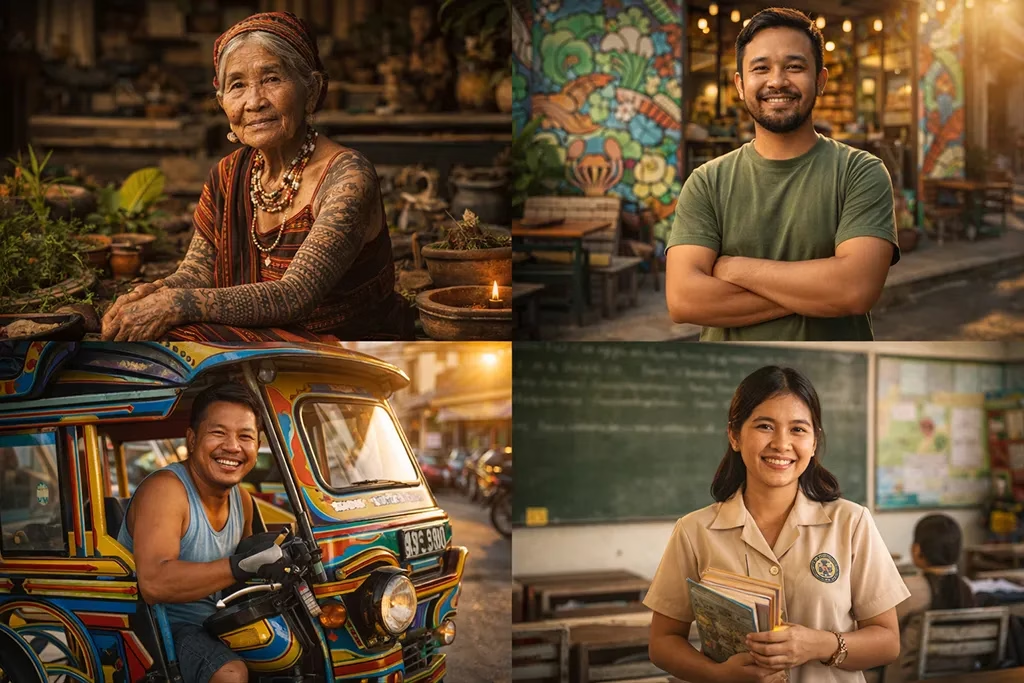
Tatay Lito – The Healer
Tatay Lito is in his 70s, but he is as sharp as a razor blade. He has been practicing bolo-bolo and herbal healing since the age of 14. “My father taught me. His father taught him,” he says. “They were hiding from the Spanish. Now people look for us, but they don’t always listen.”
How does he feel about being called a witch? “That word: it’s not ours. We’re not witches. We know who we are.”
Mila – Café Owner and Artist
Mila came back from Cebu to open a small cafe with multicolored walls hand-painted by her and herbal teas sworn to have been made according to recipes handed down by her grandmother. “I wanted to take tourists someplace real. Not a haunted house but a home.” Her art is replete with moons, plants, and women in ritual poses. “We’re not scary. We’re sacred.”
Jomar – Tricycle Driver
Jomar earns a living ferrying folks around the island on his colorful tricycle. “Sometimes they’ll ask if I know where to find a ‘real witch. I say to them, ‘Maybe she rode in this tricycle already and blessed your trip. They laugh. But maybe it’s true.”
Riza – High School Teacher
Riza is at war with the stereotypes that enter her classroom. “Before, kids would be ashamed to say they are from Siquijor when they go abroad. Now, they produce TikTok shorts about healing plants and rituals. They’re claiming it. That’s the real magic.”
All these voices have one thing in common: they are proud. Not defiance. Not shame. But a rooted, lasting pride in who they are, where they’re from, and how they’re at last writing their story.
Why The World Needs Its “Witch Islands”
In a world obsessed with sanitizing and selling culture, places like Siquijor serve a vital purpose. They remind us that not everything needs to be understood by the modern world to be valuable.
The myths that shroud the island have, in some ways, protected it. Developers hesitate. Mass tourism hasn’t taken over. And for a community trying to hold onto its soul, that’s not a curse: it’s a blessing in disguise.
Siquijor stands as a metaphor for every misunderstood community, every tradition dismissed as “backward,” every place that dares to resist the tide of cultural sameness. When you protect what makes you different, you also protect what makes you whole.
This island is more than a curiosity. It’s a counter-narrative. A reminder that the things we fear are often the things we need to face—not because they’re evil, but because they hold truth that threatens our comfort zones.
Siquijor isn’t just a destination. It’s a mirror. And sometimes, what we see in that reflection isn’t a witch at all, but our own fear of the unknown.
Final Reflection: What If the Monsters Were Never Here?

Take a moment and sit with this: What if Siquijor was never haunted? What if the darkness we projected onto this island never lived in its forests, its caves, or its people, but in us?
The real ghosts, perhaps, are the ones we carry, the colonial mindset that mistrusts what it doesn’t recognize. The fear of ancient wisdom that isn’t written in textbooks. The unease with spiritual systems that don’t match our own. We’re trained to label what’s unfamiliar as dangerous, wild, or wrong.
But Siquijor doesn’t flinch. It doesn’t try to erase its past or polish its present for tourists. It stands rooted, like the ancient balete tree, twisted, beautiful, mysterious, and strong. Its people walk between tradition and modernity with a quiet kind of confidence, unbothered by what outsiders think.
Maybe that’s what unsettles some visitors, not the stories of curses or shadowy figures, but the resilience of a people who never needed external validation. In a world that pressures communities to “modernize” or “rebrand” themselves for the tourist dollar, Siquijor chose something rarer: authenticity.
So, if you come here, come curious, but come humble. Leave your ghost stories at the shore. Listen more than you talk. Ask yourself: What was I afraid of?
Because in the end, Siquijor doesn’t need to prove it isn’t haunted.
The real question is: why were you so sure it was?
FAQs
- Why is Siquijor known as the Island of Witches?
[The word] comes from the Spanish colonial narratives that misread and demonized indigenous healing techniques and spiritual rituals. Folklore and pop culture helped to perpetuate this myth over the years, but locals have long considered these traditions sacred—not sinister.
- Is it safe to visit Siquijor?
Absolutely. Siquijor is actually one of the safest and most tranquil islands in the Philippines. The “haunted” reputation is folklore, not fact. Visitors are treated with great hospitality, and respect is held in high regard.
- Are tourists allowed to apply the services of traditional healers in Siquijor?
Yes, but we must show respect. A few healers might allow visits, primarily through local guides. Just ask always and never make it a spectacle. Respect their boundaries and traditions.
- What are the best things to do in Siquijor?
Don’t miss Cambugahay Falls, Salagdoong Beach, Cantabon Cave, the Balete Tree (with a fish spa at its base), Lazi Church and Convent, as well as many eco-friendly resorts and healing centers. The island is also ideal for snorkeling, cultural tours, and spiritual retreats.
- What are the ways that I could be a responsible tourist when visiting Siquijor?
- Don’t make crass inquiries about witchcraft or curses.
- Don’t take photos without permission.
- To support local guides, artisans, and industry.
- Be careful when doing spiritual or healing ceremonies.
- Think of the island not as a Spooky place, but as alive and kicking.
Other Articles that may be of Interest
You may also find the following articles interesting.
- Amazing Filipino Resilience In the Aftermath of Typhoons Kalmaegi & Fung-Wong
- Where to Take the Most Instagram-Worthy Photos in the Philippines
Suggestions For Lodging and Travel
Lodging is widely available throughout the Philippines. However, you may want to consider getting assistance booking tours to some of the Philippines’ attractions. I’ve provided a few local agencies that we’ve found to be very good for setting up tours. For transparency, we may earn a commission when you click on certain links in this article, but this doesn’t influence our editorial standards. We only recommend services that we genuinely believe will enhance your travel experiences. This will not cost you anything, and I can continue to support this site through these links.
Local Lodging Assistance
- Guide to the Philippines: This site specializes in tours across the Philippines, offering flexible scheduling and competitive pricing. I highly recommend them for booking local arrangements for a trip like this one. You can book flights and hotels through the Expedia link provided below.
- Hotel Accommodations: I highly recommend The Manila Hotel for a stay in Manila. I stay here every time I travel to the Philippines. It is centrally located, and many attractions are easily accessible from there. Intramuros and Rizal Park are within walking distance. I have provided a search box below for you to use to find hotels (click “Stays” at the top) or flights (click “Flights” at the top). This tool will provide me with an affiliate commission (at no additional cost to you).
- Kapwa Travel is a travel company focused on the Philippines. It specializes in customizing trips to meet customers’ needs.
- Tourismo Filipino is a well-established company that has been operating for over 40 years. It specializes in tailoring tours to meet customers’ needs.
- Tropical Experience Travel Services – Tours of the Philippines: This company offers a range of tour packages, allowing you to tailor your trip to your preferences.
Lastly, we recommend booking international travel flights through established organizations rather than a local travel agent in the Philippines. I recommend Expedia.com (see the box below), the site I use to book my international travel. I have provided a search box below for you to use to find flights (click “Flights” at the top) or Hotels (click “Stays” at the top). This tool will provide me with an affiliate commission (at no cost to you).