Welcome to Paradise (With Excellent Wi-Fi and Questionable Traffic)
The first time I tried to explain the Philippines to my skeptical uncle at Thanksgiving dinner back in 2009: “It’s like… Hawaii, but with 7,641 islands instead of eight, incredible food that doesn’t cost $47 for a mediocre poke bowl, and people who will literally invite you into their home for lunch because you looked hungry.” His response? “Is that even safe?” This is where I decided to put this Philippines Travel Guide together for 2026.
Fast-forward to today, and that same uncle just texted me for hotel recommendations in Siargao. (I told you so, Uncle Jerry.)
Here’s the thing about the Philippines: it’s been having a moment for the past few years, but 2026 is shaping up to be THE year to visit. New international airports in Clark and Panglao are finally operating at full capacity, the infrastructure boom is making island-hopping smoother than a fresh coconut smoothie, and, get this, the tourism department has actually streamlined visa requirements instead of making them more complicated. I know, I almost fell off my chair too.
After fifteen years of writing about travel and seven trips to the Philippines (including one where I got stranded on a tiny island because I misread the boat schedule, it’s a long story), I’ve learned a few things. And lucky you, I’m about to download all that knowledge directly into your brain without the sunburn and confused tricycle rides I endured to get it.
Why the Philippines Should Be Your Next Destination
7,641 Reasons (And Yes, Someone Actually Counted All Those Islands)
When someone asks me why they should choose the Philippines over, say, Thailand or Bali, I usually respond with: “How much time do you have?”
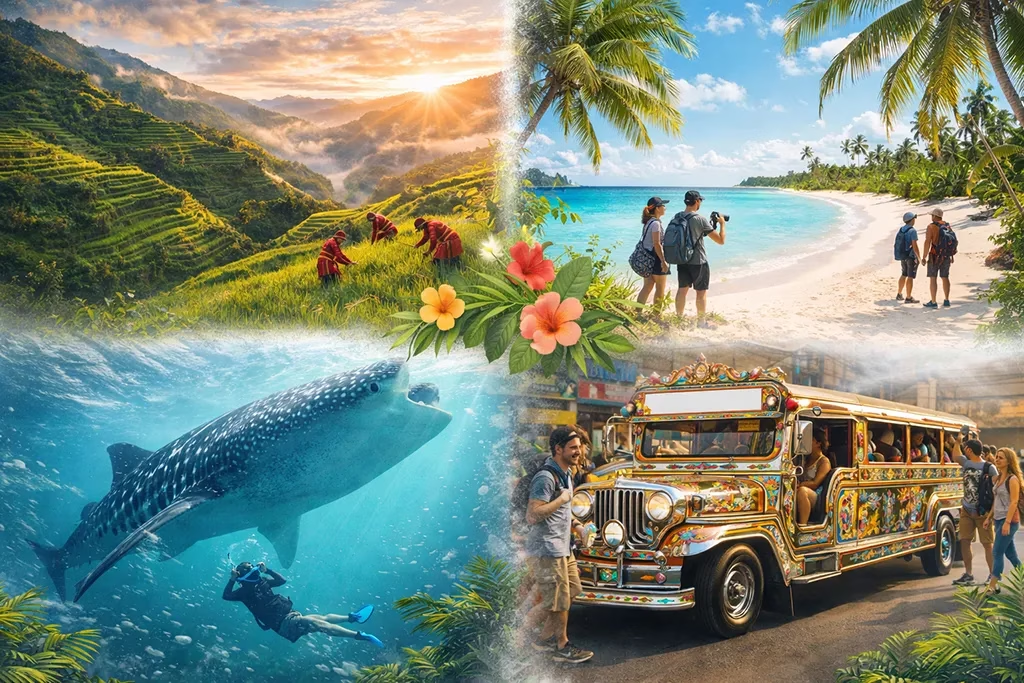
Because honestly, this country is like Southeast Asia’s most excellent hits album, but with its own distinctive remix. You’ve got pristine beaches that make the Maldives jealous, rice terraces that look like they were carved by ancient Instagram influencers, underground rivers, chocolate hills that are neither chocolate nor hills (discuss), whale sharks you can swim with, and world-class diving spots where sea turtles practically photobomb your underwater selfies.
But here’s what really sets the Philippines apart: the people and the culture. I’m not just saying this because it’s what travel bloggers are supposed to say. I mean it. During my second trip, I got hopelessly lost trying to find a waterfall in Cebu. My phone was dead, my map was useless, and I was starting to have a minor panic attack when a local family literally stopped their Sunday drive, turned around, and led me directly to the waterfall. Then they invited me to lunch at their house afterward.
“Hindi pwedeng mag-gutom ka dito,” the grandmother told me, piling more food onto my plate. (Translation: “We can’t let you go hungry here.”)
That’s the Philippines in a nutshell—extraordinary natural beauty wrapped in extraordinary human kindness, with a soundtrack of karaoke that ranges from impressive to “please make it stop” but is always, always enthusiastic.
Culture, Nature, Beaches, and… Yes, Mandatory Karaoke
Speaking of karaoke: it’s not optional. I learned this the hard way at a beach resort in Boracay when I politely declined the mic being thrust into my hands. The genuine disappointment on everyone’s faces made me feel like I’d just kicked a puppy. So, I sang “Bohemian Rhapsody” (badly), and suddenly I had seventeen new Filipino friends who all agreed I needed more San Miguel to “improve my voice.”
The cultural diversity here is mind-blowing. With over 175 languages spoken across the archipelago, each region has its own festivals, food traditions, and ways of celebrating life. You could spend a year here and barely scratch the surface—though honestly, even a week will leave you changed.
When to Visit the Philippines (Without Melting or Getting Washed Away)
The Great Weather Gamble
Let’s talk about Philippine weather, which is basically a choose-your-own-adventure book, but sometimes the book lies.
The dry season runs from November to May, which is when everyone and their mother decides to visit. December to February is peak perfection—sunny days, cool evenings, and humidity levels that won’t make you question all your life choices. March to May cranks up the heat like someone’s turning the Philippines into a convection oven, but the beaches are still spectacular.
June to October is the wet season, a.k.a. typhoon season, a.k.a. “maybe check that weather forecast twice” season. But here’s an insider secret: September and early October often have beautiful weather, fewer tourists, and significantly cheaper accommodation. I visited El Nido in early October 2019, and it was absolutely perfect—just a couple of brief afternoon showers that felt refreshing rather than ruinous.
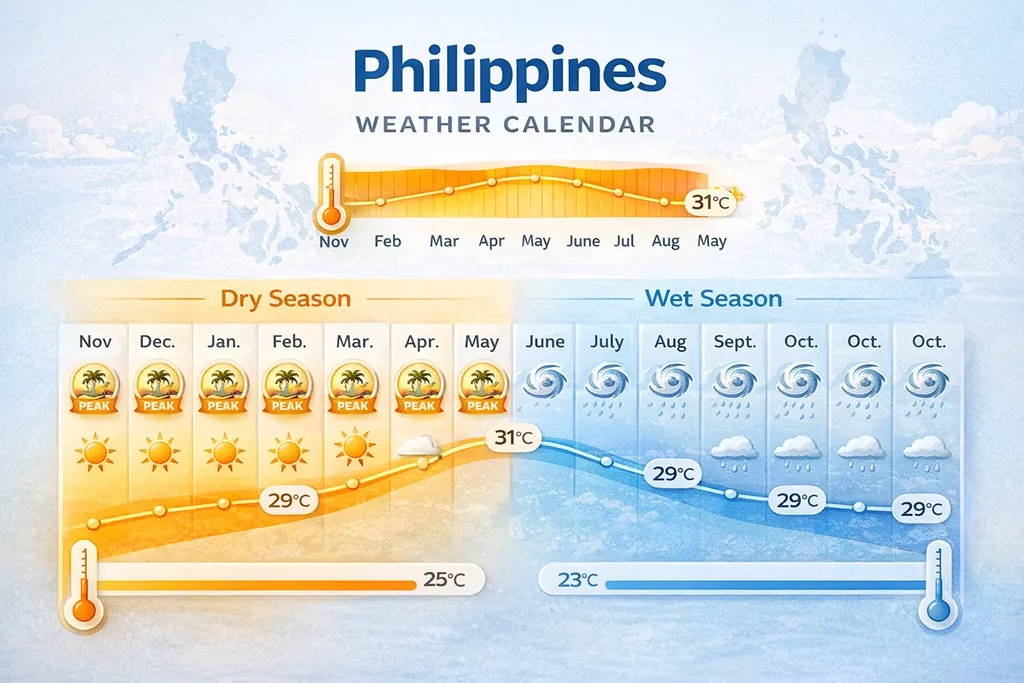
Best months for your 2026 Philippines adventure:
- January-February: Perfect weather, but book early because everyone knows about this
- March-April: Hot but gorgeous, ideal for beach-bumming and finding your new happy place
- Late November-December: Post-typhoon season magic, Christmas festivals everywhere, and the energy is absolutely electric
Pro tip: The Philippines has diverse microclimates. When it’s raining in Manila, it might be sunny in Palawan. When Siargao is getting hit with storms, Boracay might be perfect. This is where having a flexible itinerary becomes your superpower.
Visa Drama? Not Here! Entry Requirements for 2026
Remember the dark days of 2020-2022 when traveling anywhere required approximately 47 forms, three PCR tests, a blood sacrifice, and your firstborn child? Yeah, those days are blissfully over.
As of 2026, the Philippines has adopted what I call “radically sensible” entry requirements. Citizens from 157 countries can enter visa-free for 30 days. That includes the US, UK, Canada, most of Europe, Australia, and basically anywhere you’re probably reading this from.
The e-Travel System (Actually User-Friendly, Shockingly)
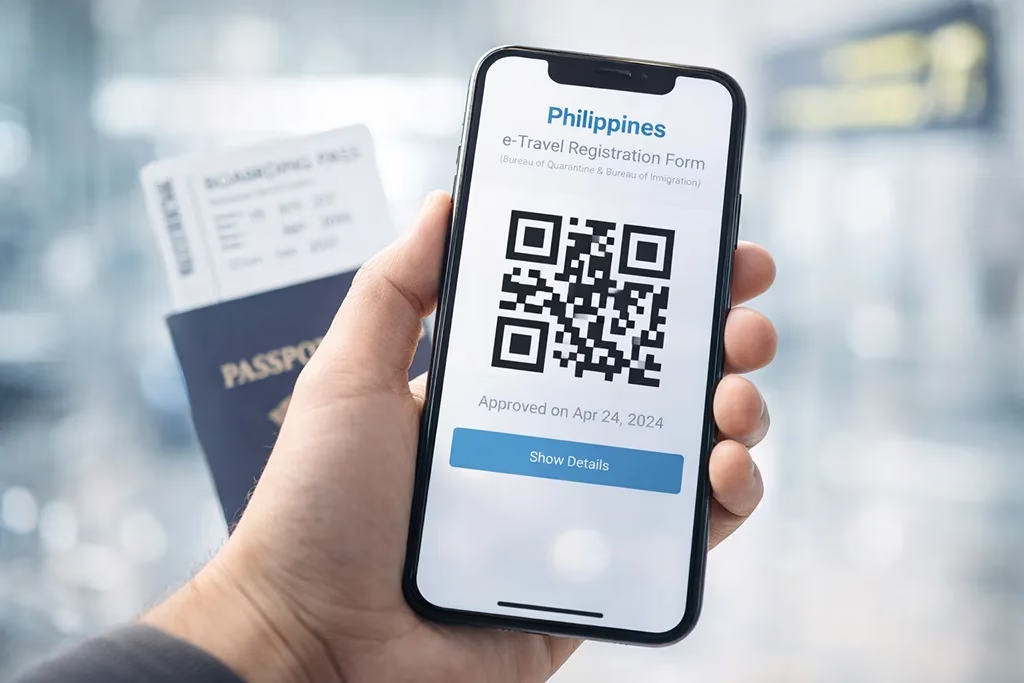
The government has rolled out an updated e-Travel registration system that takes about five minutes to complete. You fill it out within 72 hours of your arrival, provide your basic info, accommodation details, and health declaration, and you’re done. No printing required—show the QR code on your phone when you land.
I remember the old arrival cards where you had to write your exact hotel address, and the pen would inevitably run out of ink halfway through. The e-Travel system is like the iPhone of immigration processes—it just works, and you wonder why it wasn’t always this simple.
Health Updates
The COVID-era health requirements have been completely dropped. No vaccination cards, no test results, no nasal swabs that make you question your life choices. Just basic health screening if you’re visibly sick, which is… normal? Revolutionary? Both?
Standard disclaimer: Requirements can change, so double-check the official Philippine Bureau of Immigration website before you fly. But as of early 2026, it’s refreshingly straightforward.
Top Islands to Visit (a.k.a. Places You’ll Brag About on Instagram)
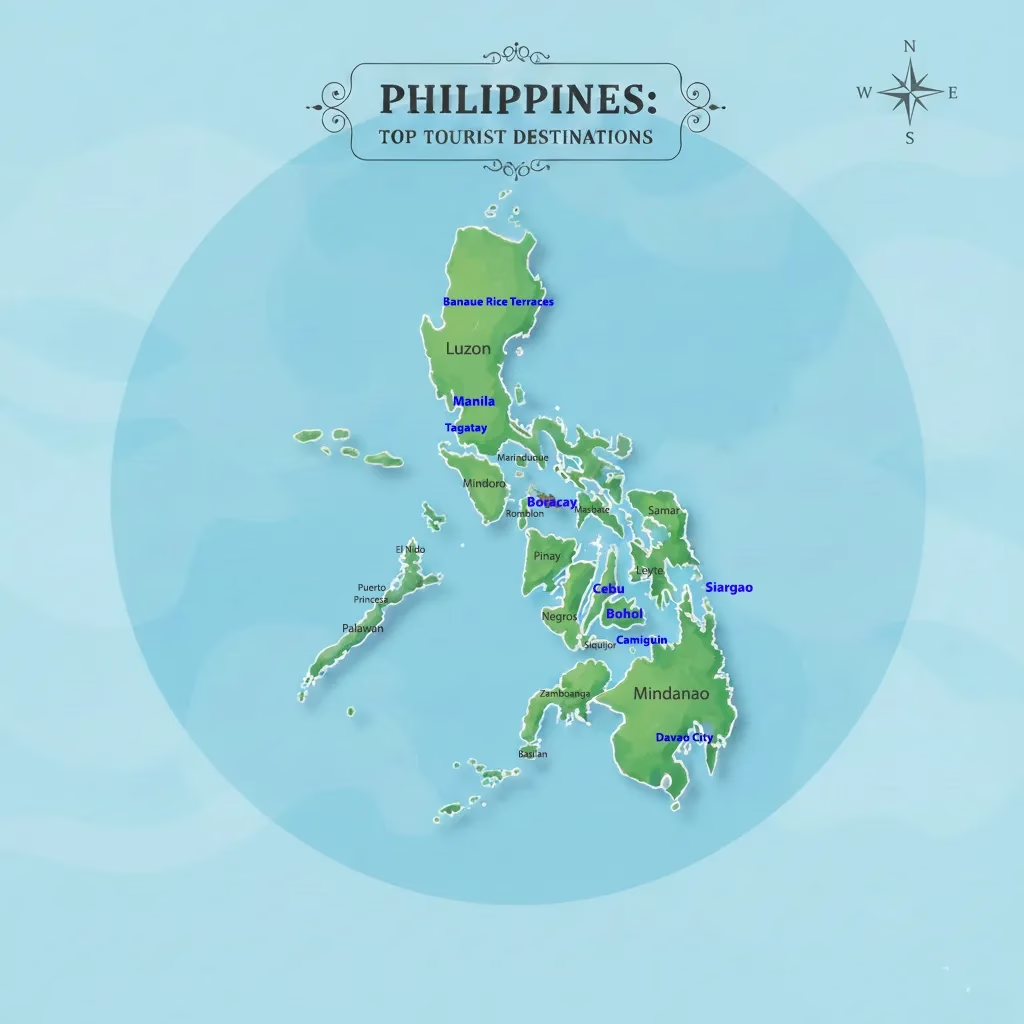
Choosing which Philippine islands to visit is like trying to pick your favorite child—theoretically possible, but emotionally complicated, and someone always ends up crying. Let me break down the heavy hitters:
Luzon: The Big One with Everything
Manila: Chaotic, traffic-choked, polluted, and somehow essential. The capital gets a bad rap, but it’s where history collides with modern Asia in the most fascinating ways. Spend a day in Intramuros (the old walled city), eat your way through the street food scene, and experience the SM Mall of Asia, which is less a mall and more a small town where you could legitimately get lost for hours.
My favorite Manila memory? Getting stuck in legendary traffic for two hours sounds awful until you realize the driver turned it into an impromptu cultural exchange, where he taught me Tagalog phrases I definitely can’t repeat here and shared his entire life story. Plus, his uncle’s friend’s cousin’s restaurant recommendation, which turned out to be the best adobo I’ve ever had.
Tagaytay: About two hours south of Manila (or four hours if traffic is spicy), Tagaytay offers cool mountain air and views of Taal Volcano—a volcano inside a lake, on an island, inside another volcano’s caldera. Yes, it’s as ‘inception-level’ cool as it sounds.
Banaue Rice Terraces: The eighth wonder of the world, carved 2,000 years ago by the Ifugao people. It’s a long journey from Manila (8-10 hours by bus), but standing there looking at those ancient terraces, you’ll understand why some things are worth the bumpy ride.

Visayas: The Sweet Spot
Cebu: Think of Cebu as the Philippines’ sweet middle child—successful, well-connected, but doesn’t brag about it. Great diving, beautiful beaches, excellent food scene, and Oslob, where you can swim with whale sharks (though do your research on ethical operators).
Bohol: Home to the Chocolate Hills, tiny tarsiers with enormous eyes that look like they’re judging your life choices, and gorgeous beaches. Panglao Island, connected to mainland Bohol by a bridge, has some of the best beach resorts in the country. I spent four days here in 2018 and approximately 87% of that time in the water.
Boracay: The comeback kid of Philippine tourism. After a controversial six-month closure in 2018 for environmental rehabilitation, Boracay returned better than ever. White Beach remains stunning, the sunsets are still Instagram-melting gorgeous, and the party scene has been toned down just enough to be fun without being obnoxious.

Fair warning: Boracay knows it’s beautiful and prices itself accordingly. But for a few days of powdery white sand and water that’s so clear you can see your toes, it’s worth the splurge.
Mindanao: The Adventurous One
Siargao: Surfer paradise, digital nomad haven, and the island that launched a thousand “I’m never leaving” Instagram posts. Cloud 9 is the famous surf break, but even if you can’t surf (like me), the island’s laid-back vibe, incredible island-hopping, and the famous Magpupungko Rock Pools make it absolutely worth visiting.

I met a guy in Siargao who came for a two-week vacation in 2017 and was still there when I visited in 2022. “The island just… keeps you,” he explained, which sounded like the plot of a horror movie but was actually just a very chill observation.
Davao: Mt. Apo (the Philippines’ highest peak), Philippine Eagles, and durian fruit that you’ll either love or hate with the passion of a thousand suns. No middle ground exists with durian—trust me, I’ve tried to find it.
Camiguin: A tiny island with more volcanoes than towns, which should probably be concerning, but instead is just fascinating. Hot springs, waterfalls, sunken cemeteries, and the sweetest lanzones fruit you’ll ever taste.
Local Culture: How Not to Be “That Tourist”

Let’s have an honest talk about being a respectful traveler, because nothing makes me cringe harder than watching tourists act like the entire Philippines is their personal Instagram playground.
Basic Phrases That Will Make You Friends Instantly
- “Salamat” (sa-la-MAT): Thank you
- “Salamat po”: Thank you (respectful, for elders or formal situations)
- “Magkano?” (mag-KA-no): How much?
- “Masarap!” (ma-sa-RAP): Delicious!
- “Oo/Hindi”: Yes/No
The magic word is “po”—it’s a respect marker that shows you understand Filipino culture values, courtesy, and respect for others. Add it to almost anything when speaking to someone older or in a formal situation, and watch faces light up.
Do’s and Don’ts
DO:
- Take off your shoes when entering someone’s home
- Accept food when offered (refusing is considered rude)
- Use both hands or your right hand when giving or receiving items
- Point with your lips (yes, really—Filipinos gesture with their mouths, and it’s adorable once you get used to it)
- Sing karaoke when invited, even if you sound like a dying walrus
- Be patient with “Filipino time” (things rarely start exactly on schedule, and that’s okay)
DON’T:
- Raise your voice or show anger publicly (Filipinos value “smooth interpersonal relationships,” and confrontation is avoided)
- Disrespect elders or religious symbols
- Wear revealing clothes in churches or rural areas
- Assume everyone speaks perfect English (though honestly, English proficiency is impressively high)
- Get impatient with service—kindness gets you much further than attitude
The concept of “hiya” (shame/embarrassment) is huge in Filipino culture. People will go out of their way to avoid making you feel hiya or experiencing it themselves. This means Filipinos are often indirect communicators, and “no” might sound like “maybe” or “I’ll try.” Read between the lines and appreciate the cultural nuance.
What to Pack (Spoiler: You Don’t Need a Winter Jacket)
Packing for the Philippines is delightfully simple because you basically need: light clothes, sun protection, and the ability to be flexible when your luggage inevitably gets soaked during an island-hopping excursion.
Clothing for Tropical Survival
- Lightweight, quick-dry everything: Cotton is the enemy; synthetic fabrics are your friend
- Swimwear (multiple): Because one will always be wet/sandy/lost
- Sarong or light cover-up: Multipurpose magic for beach, church, impromptu picnic blanket
- One nice outfit: For fancy dinners or when you want to feel human again
- Comfortable walking sandals: Your flip-flops will get you 80% of places, but genuine sandals with support are clutch
- Light rain jacket: Because tropical rain doesn’t care about your plans
Waterproof Everything
I cannot stress this enough: waterproof bags, phone cases, and dry bags will save your vacation. I learned this the hard way when my phone took an unexpected swim during a particularly enthusiastic island-hopping boat ride. RIP to all those unsynced photos from 2016.
Weird But Useful Things
- Reef-safe sunscreen: Protect yourself AND the coral reefs
- Instant coffee packets: Filipino coffee culture is instant coffee culture, and some hotels only provide this
- Your own snacks: Sometimes you get hungry between islands, and there’s literally nothing available
- Small bills (when you arrive): Breaking a 1000-peso bill at a small stall is like showing up to a lemonade stand with a $100
- Ziplock bags: For keeping things dry, organizing, storing wet swimwear, creating emergency waterproof protection
- Portable charger: Because Wi-Fi is everywhere (though it may not always work), but outlets are not
Getting Around Like a Local (Or at Least Pretending To)
Transportation in the Philippines is an adventure in itself. Here’s your guide to navigating it with minimal confusion and maximum amusement.
Jeepneys: The Majestic Chaos Machines
Jeepneys are leftover U.S. military jeeps from WWII that have been bedazzled, lengthened, and repurposed as public transportation. They’re colorful, crowded, play loud music, and are an essential part of the Filipino experience.

How to ride one: Flag it down, tell the driver where you’re going, climb in the back, and pass your fare forward through other passengers (usually 9-15 pesos). When you want to get off, yell “Para po!” (Stop please!). Simple? Kind of. Intimidating the first time? Absolutely.
My first jeepney ride involved me accidentally sitting in the driver’s cousin’s regular spot, which I only realized when everyone started giggling and gesturing for me to move. Filipino hospitality meant they thought it was hilarious rather than annoying.
Tricycles: Motorcycles with Sidecars and Ambition
Tricycles are motorcycles with passenger sidecars, and they’re the standard short-distance transport. Always agree on the price before you get in (usually 20-50 pesos, depending on distance). They can fit an absolutely improbable number of people—I once witnessed seven people/on a single tricycle, plus groceries.
Habal-Habal: Don’t Ask, Just Ride
Habal-habal are motorcycle taxis where you ride on the back. Sometimes there are two or three passengers on one bike. Sometimes the driver is also carrying construction materials. It’s perfectly safe and totally exhilarating in that “I can’t believe this is happening” way.
Domestic Flights: Your Island-Hopping Secret Weapon
The Philippines is spread out, and flights are cheap—we’re talking $30-60 for a two-hour flight that would take 20+ hours by boat. Cebu Pacific, Philippine Airlines, and AirAsia operate extensive domestic networks.
Pro tips:
- Book domestic flights well in advance for the best prices
- Check luggage policies—budget carriers are strict about carry-on sizes
- Flights can be delayed due to weather; build buffer time into your itinerary
- Clark and Cebu airports are less chaotic than Manila’s NAIA
How Much Will It Cost? Budgeting Tips for 2026

The beautiful thing about the Philippines is that it accommodates every budget, from “I’m eating instant noodles for dinner” to “champagne in my overwater villa, please.”
Budget Traveler (₱1,500-2,500/day or $27-45 USD)
- Accommodation: Hostels, basic guesthouses (₱500-800/night)
- Food: Street food, karinderyas (local eateries), cooking some meals (₱400-700/day)
- Transport: Public transport, shared boats (₱200-400/day)
- Activities: Beaches, hiking, free attractions (₱400-600/day)
At this level, you’re living like many Filipinos do—simply, but with everything you truly need.
Mid-Range Traveler (₱3,000-6,000/day or $54-108 USD)
- Accommodation: Nice hotels, boutique guesthouses, some resorts (₱1,500-2,500/night)
- Food: Mix of local restaurants and nicer establishments (₱800-1,500/day)
- Transport: Mix of public and private, occasional Grab rides, domestic flights (₱600-1,200/day)
- Activities: Diving, tours, island-hopping, entrance fees (₱600-1,300/day)
This is the sweet spot where you’re comfortable but not extravagant. This is my personal preferred travel style.
Luxury Traveler (₱10,000+/day or $180+ USD)
The sky’s the limit here. Five-star resorts (₱5,000-15,000/night), fine dining, private boats, helicopter tours, spa treatments, and someone probably carrying your luggage for you.
Tipping, Bartering, and Haggling Like a Boss
Tipping isn’t mandatory, but it is appreciated: 10% at restaurants, round up for taxi drivers, ₱20-50 for helpful hotel staff. Some restaurants include a service charge, so check your bill.
Bartering is expected at markets and with tricycle drivers, but do it with a smile and good humor. Shaving off ₱50 might not mean much to you, but it could be significant to the seller. Don’t be the tourist who argues over 50 cents—that’s not being savvy, that’s being cheap.
Best Beaches in the Philippines (Don’t Forget Sunscreen)
Choosing the best beaches in the Philippines is like choosing your favorite star in the sky—they’re all brilliant, but some shine a bit brighter.

Boracay’s White Beach
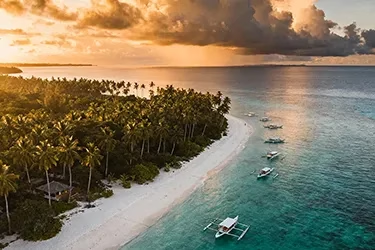
Four kilometers of powdery white sand that squeaks when you walk on it. Yes, literally squeaks. The water is absurdly clear, the sunsets are weaponized beauty, and Station 2 has the perfect balance of lively atmosphere and beach bliss.
El Nido, Palawan
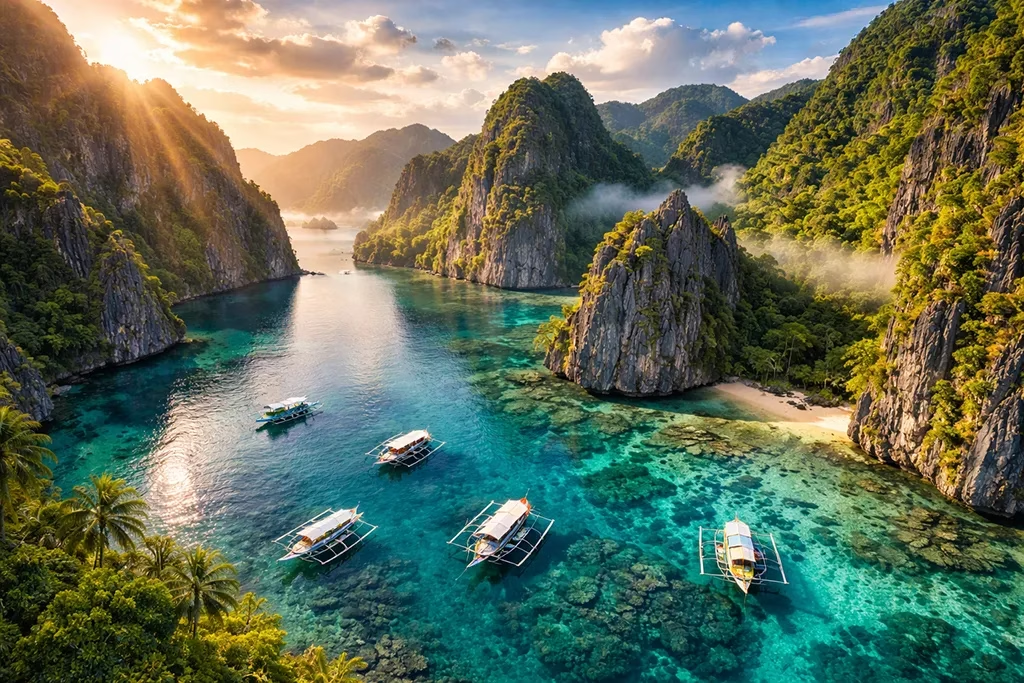
El Nido isn’t one beach—it’s a collection of jaw-dropping lagoons, secret beaches, and limestone cliffs that look like they were designed by someone who thought reality needed to be more dramatic. The island-hopping tours (A, B, C, D) will take you to places that don’t look real. Tour A includes Small Lagoon, where you kayak through a narrow opening into a hidden paradise, and I literally said “this is fake” out loud at least three times.
Panglao, Bohol
Alona Beach is famous, but venture to Dumaluan Beach or Momo Beach for fewer crowds and equally stunning water. The coral reefs here are incredible for snorkeling—I saw sea turtles, colorful fish, and a very judgmental octopus.
Secret Coves You’ll Never Want to Leave
Nacpan Beach (near El Nido): A twin beach that’s less developed and absolutely stunning. We rented scooters and drove the bumpy road there, and I’ve never felt so alive/terrified/exhilarated at the same time.
Saud Beach (Ilocos Norte): Northern Luzon’s hidden gem with golden sand and mountain backdrops.
Calaguas Islands (Camarines Norte): Reaching them requires a serious effort (a 5-hour drive plus a boat ride), which means fewer tourists and pristine beaches that look utterly untouched.
Adventures You Can Brag About for Years
Scuba Diving with Turtles (And Everything Else)

The Philippines is one of the world’s top diving destinations. Apo Reef, Tubbataha Reef, Moalboal, Coron—these names make divers weak in the knees.
I got my diving certification in the Philippines, specifically because it’s cheaper here and the dive sites are spectacular. My first post-certification dive involved a turtle that swam directly at my face, which was either friendly or aggressive, but either way, I have a photo that makes me look way braver than I felt.
Surfing in Siargao
Cloud 9 is legendary, but beginners should try the gentler breaks at Jacking Horse or Pacifico. Surf lessons run about ₱500-1,000, and the instructors have the patience of saints as they watch you repeatedly wipe out while shouting encouragement.
Volcano Hikes and Waterfall Dips
Mt. Pinatubo: Hike across volcanic ash landscapes to a stunning crater lake. The 4×4 ride there is an adventure in itself.
Mt. Mayon: Perfect cone volcano (think Mount Fuji’s Filipino cousin). You can’t summit it due to activity, but ATV rides around the base are available.
Kawasan Falls (Cebu): Turquoise waterfall pools where you can swim, cliff jump (if you’re brave), and do canyoneering that’s equal parts beautiful and terrifying.
Biggest Festivals in 2026 (Bring Dancing Shoes)

Filipinos celebrate everything, and they do it with a level of enthusiasm that makes other countries’ festivals look timid.
Sinulog (Cebu – 3rd Sunday of January)
Honoring Santo Niño (baby Jesus) with massive street parades, dancing, music, and approximately one million people wearing bright colors and moving to the “Pit Señor!” chant. The energy is absolutely electric. I attended in 2018 and thought I understood what “crowded” meant—I did not.
Ati-Atihan (Kalibo, Aklan – 3rd week of January)
The “Mother of all Philippine Festivals” features tribal dancing, face painting, and a general atmosphere of joyful chaos. It’s Mardi Gras meets indigenous celebration meets street party, and it’s absolutely wild.
Panagbenga (Baguio – February)
The Flower Festival features elaborate floats made entirely of flowers. Baguio’s cool mountain air makes it the perfect escape from coastal heat, and the flower parade is genuinely stunning.
How to Survive a Filipino Fiesta
Random towns celebrate their patron saints with fiestas throughout the year. If you stumble upon one:
- You will be invited to eat (accept graciously)
- There will be a parade (join in)
- Someone will hand you a microphone for karaoke (embrace your destiny)
- You’ll be adopted by at least one family and given their phone number “for next time.”
Filipino Food Guide (AKA: Come Hungry, Leave Stuffed)

Filipino food doesn’t get the international recognition of Thai or Japanese cuisine, which is a criminal oversight because it’s absolutely delicious and deeply underrated.
Must-Try Dishes
- Adobo: The national dish—meat (chicken, pork, or both) braised in vinegar, soy sauce, garlic, and spices. Every family has their own recipe, and yes, everyone’s grandmother makes the best one (don’t argue).
- Lechon: Whole roasted pig with impossibly crispy skin and tender meat. Cebu is famous for the best lechon, though La Loma in Manila would like to have words about that claim. I’ve eaten lechon at 11 AM and regretted nothing.
- Sinigang: Sour soup (tamarind-based) with meat and vegetables. It’s comfort food that somehow tastes even better when you’re eating it during a typhoon.
- Halo-Halo: Shaved ice dessert with about seventeen different components—sweetened beans, jellies, fruit, leche flan, ube ice cream, and more. It looks chaotic and tastes like pure joy.
- Kare-Kare: Oxtail stew in peanut sauce with vegetables, traditionally served with bagoong (fermented shrimp paste). Trust the process.
Weird Stuff You’ll Try Anyway
- Balut: Fertilized duck egg with a partially developed embryo inside. It’s the ultimate Filipino food dare. I tried it in 2017 at a street stall after several San Miguel beers for courage. My verdict? The broth part is delicious, the rest is… an acquired taste that I haven’t acquired yet.
- “Don’t think, just eat,” the vendor advised, which is, honestly, good life advice in general.
- Dinuguan: Pork blood stew. Sounds terrifying, tastes surprisingly good, especially with puto (steamed rice cakes).
- Sisig: Chopped pig face and chicken liver with onions and chili. Before you say no, know that it’s served on a sizzling plate and tastes absolutely amazing, especially with a cold beer.
Street Food Heaven

- Isaw: Grilled chicken intestines
- Fish balls/Squid balls: Deep-fried Street food perfection
- Banana cue: Deep-fried banana coated in caramelized sugar on a stick
- Turon: Fried banana spring rolls with jackfruit
- Taho: Fresh tofu with sweet syrup and tapioca pearls, sold by vendors shouting “Tahoooo!” in the morning
Staying Safe (No, Not All Islands Are Shark-Infested)
The Philippines gets an unfairly bad reputation regarding safety. Yes, like anywhere, cities have pickpockets and scams exist, but violent crime against tourists is scarce.
Travel Insurance and Tropical Survival Tips
Get travel insurance. I know it seems like an unnecessary expense, but when you need it, you REALLY need it. My friend ignored this advice and ended up with a $3,000 hospital bill after a snorkeling accident. World Nomads and SafetyWing are popular options for travel in the Philippines.

Health Info and Safety Hacks
- Water: Stick to bottled water. Your stomach will thank you.
- Food safety: Eat where locals eat—if it’s busy, it’s probably safe. Street food from stalls that have been there for years is generally acceptable.
- Mosquitoes: Dengue fever is present, so use a repellent (DEET-based works best). Wear long sleeves during dawn/dusk when mosquitoes are most active.
- Sun protection: The tropical sun is no joke. I learned this after falling asleep on a boat and waking up looking like a lobster who’d made terrible life choices.
- Heat and humidity: Stay hydrated, take breaks in air-conditioned areas, and accept that you’ll be sweaty—everyone is sweaty; it’s fine.
What to Do If You Eat Too Much Street Food
Bring Imodium. I’m not saying you’ll need it, but having it provides peace of mind and prevents the traveler’s nightmare of getting sick with no backup plan. Also pack some basic medications: antihistamines, pain relievers, and antiseptic cream.
Philippine pharmacies are excellent, and many medications are available over the counter that would require prescriptions elsewhere. Pharmacists are helpful and often speak English.
Scams to Watch For
Common scams are pretty tame compared to some countries:
- Taxi meter “broken”: Use Grab instead or agree on a price before getting in
- Overcharging tourists: Knowing rough prices helps; don’t be afraid to ask locals
- Friendly locals who lead you to their “cousin’s shop”: Politely decline
- ATM skimming: Use ATMs inside banks during business hours when possible
Honestly, the most significant “danger” in the Philippines is being so welcomed and fed by locals that you never want to leave.
Hidden Gems Most Tourists Miss

Want to experience the Philippines before the Instagram hordes arrive? These islands are still gloriously under-the-radar.
Siquijor: The “Mystical” Island
Siquijor has a reputation for witchcraft and mysticism, which mostly translates to its beauty, quiet, and some amazing healing traditions. They also have Cambugahay Falls, the Old Enchanted Balete Tree, pristine beaches, and a general atmosphere of peaceful magic.
I spent a week here in 2021 and saw maybe a dozen other tourists in total. It was spectacular.
Romblon: Marble Island
Famous for marble (90% of Philippine marble comes from here), but it should be renowned for its stunning beaches, crystal-clear water, and the fact that nobody goes here yet. Bonbon Beach has a sandbar that appears at low tide, and it’s absolutely perfect.
Catanduanes: The “Happy Island”
Remote eastern island with excellent surfing, dramatic coastlines, and virtually no tourist infrastructure (which is either appealing or terrifying, depending on your travel style). Binurong Point, Maribina Falls, and Bato Church are highlights.
Why You Should Go Before the Influencers Do
These places won’t stay secret forever. The pattern is predictable: hidden gem → one viral post → sustainable tourism → tourist overflow → price increases → infrastructure strain. Visit now while they’re still authentic, affordable, and you can actually find accommodation without booking six months in advance.
Sustainable Travel in the Philippines
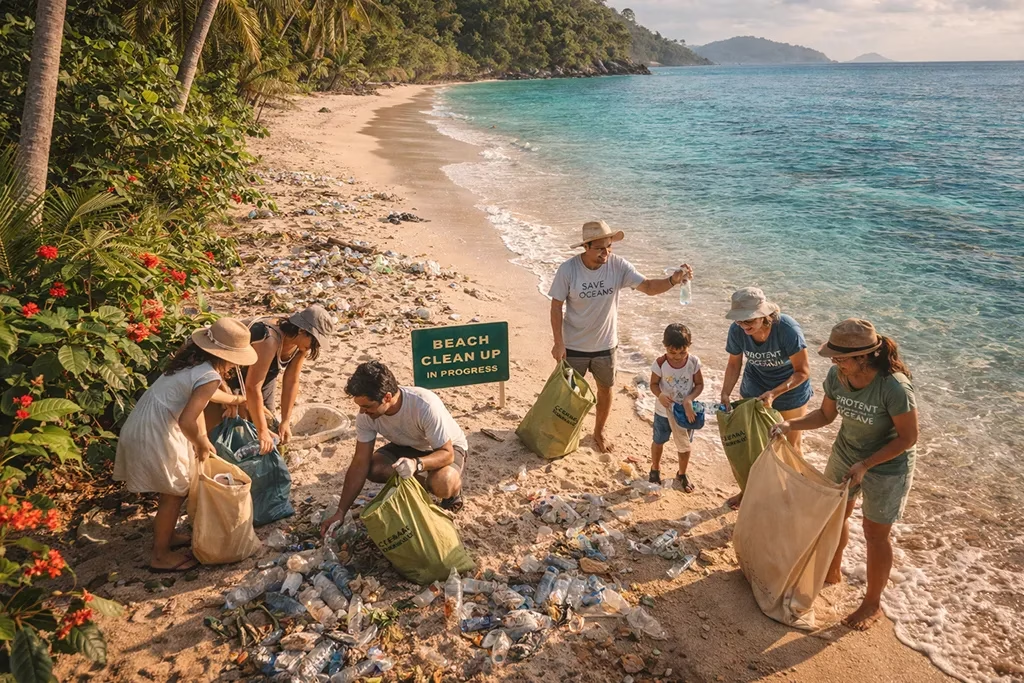
The Philippines is facing significant environmental challenges—plastic pollution, coral reef damage, and overtourism in popular destinations. As travelers, we can either be part of the problem or part of the solution.
Eco-Friendly Travel Hacks
- Bring a reusable water bottle with a filter: Grayl and LifeStraw make excellent options
- Refuse plastic bags and straws: Say “No plastic, please” or “Wala plastic, salamat.”
- Use reef-safe sunscreen: Regular sunscreen kills coral; spend the extra $5 on reef-safe options
- Choose eco-conscious tour operators: Ask about group sizes, environmental policies, and whether they follow best practices
- Support local businesses: Stay at Filipino-owned hotels, eat at local restaurants, buy from local artisans
- Don’t touch coral: Ever. Seriously. It takes years to grow back.
- Take only photos, leave only footprints (and maybe not even those): Don’t collect shells, sand, or coral
How to Avoid Single-Use Plastic Guilt
The Philippines has a plastic problem—it’s visible on beaches and in waterways. Don’t contribute to it:
- Carry a tote bag for shopping
- Bring your own utensils and a metal straw
- Choose restaurants that don’t use Styrofoam
- Participate in beach clean-ups if available
- Support businesses with environmental initiatives
On my last trip, I did a beach clean-up on Boracay and collected an entire bag of plastic in 30 minutes. It was depressing but also empowering—every piece removed is one piece that won’t harm marine life.

Conclusion: Your Philippines Adventure Awaits
So here we are, 3,000+ words later, and I’ve barely scratched the surface of what makes the Philippines extraordinary. I didn’t even mention Vigan’s colonial Spanish architecture, the underground river in Puerto Princesa, the incredible diving in Anilao, or that time I accidentally crashed a wedding. I was invited to stay for dinner (true story).
The Philippines in 2026 offers everything: improved infrastructure that makes travel easier, preserved natural beauty, authentic cultural experiences, and the famous Filipino hospitality that will restore your faith in humanity.
Will there be challenges? Sure. Transportation can be chaotic, the heat is intense, and you’ll definitely get lost at least once despite Google Maps’ best efforts. But those “challenges” become your best stories—the ones you’ll tell at dinner parties for years.
My uncle Jerry—the skeptical one from the beginning—just sent me photos from his trip to Siargao. He’s got a fresh coconut in one hand, a genuine smile, and a caption that reads: “You were right. When’s your next visit?”
That’s the Philippines effect. It gets under your skin, into your heart, and suddenly you’re researching return flights before you’ve even left.
Stop thinking about it. Book the flight. Pack the sunscreen. Say yes to the karaoke. The Philippines is waiting, and trust me, it’s going to be spectacular.
📥 FREE Download: Philippines Travel Checklist
Get your comprehensive pre-departure checklist, including:
- Complete packing list (with checkboxes)
- Week-by-week trip planning timeline
- Essential phrases with pronunciation guide
- Money-saving tips and budget calculator
- Island-hopping logistics template
- Emergency contacts and resources
Download your free Philippines Travel Planning Kit here.
The Thing Nobody Tells You About the Philippines
Here’s what I wish someone had told me before my first trip in 2009: The Philippines will spoil you for other destinations.
After experiencing Filipino hospitality—the genuine kind that comes with no strings attached, no tourist-trap agenda, just authentic human kindness—everywhere else feels slightly hollow.
That grandmother who invited you for lunch won’t accept payment. The family you chatted with on the ferry will insist on sharing their snacks. The tricycle driver will show you pictures of his grandchildren and tell you about the best sunset spot (that’s not in any guidebook). The resort staff will remember your name after one interaction and ask about your day like they actually care (because they do).
This isn’t manufactured tourist-friendly service. It’s genuine “malasakit”—a Filipino word that means deep care, concern, and empathy for others. It’s baked into the culture.
So yes, come for the beaches, the adventure, and the incredible food. But know that you’ll leave changed by the people you meet. You’ll return home and find yourself being friendlier to strangers, more patient in traffic, and more generous with your time.
The Philippines doesn’t just give you a vacation. It reminds you of what humanity can be at its best.
And that, my friend, is worth every peso, every bumpy boat ride, and every off-key karaoke performance.
See you in the islands.
— A Former Skeptic Who’s Now Been Many Times Now, and Quit Counting
FAQs: Your Philippines Questions Answered
1. Is the Philippines safe for solo travelers?
Yes, absolutely. I’ve traveled solo here multiple times (as a woman, no less), and it’s one of the friendlier destinations in Southeast Asia. Use common sense, avoid isolated areas at night, and you’ll be fine. Filipinos are generally protective of tourists and will often go out of their way to ensure you’re safe.
2. How much money should I budget per day?
Budget travelers can get by on $27-45/day, mid-range travelers should plan for $54-108/day, and luxury travelers will spend $180+/day. This includes accommodation, food, transport, and activities. Add extra for diving, special tours, or resort splurges.
3. What’s the Wi-Fi situation like?
Major cities and tourist areas have decent Wi-Fi in hotels, cafés, and restaurants. Remote islands will have slower/spotty connections. Get a local SIM card (Globe or Smart) for data—it’s cheap (₱300-500 for a tourist package with 15-30GB) and work in most places.
4. Do I need vaccinations?
No mandatory vaccines for entry as of 2026, but recommended: Hepatitis A, Typhoid, and routine vaccinations. Malaria risk is minimal in tourist areas. Consult your doctor 4-6 weeks before departure for personalized advice.
5. Can I drink the tap water?
No. Stick to bottled water, even for brushing teeth initially. Most hotels provide free bottled water, and it’s cheap to buy (₱20-40 for 1.5L). Get a water filter bottle to reduce plastic waste.
6. What’s the best island for first-time visitors?
Palawan (specifically El Nido or Puerto Princesa) offers stunning beauty with decent infrastructure. Alternatively, Cebu provides great beaches, easy logistics, and cultural sites. Avoid starting with Manila unless you’re comfortable with chaotic cities.
7. Is English widely spoken?
Yes! The Philippines has one of the highest English proficiency rates in Asia. Most Filipinos speak English, especially in tourist areas and cities. You’ll have no problem communicating.
8. How do I get between islands?
Domestic flights (cheapest when booked in advance), ferries to nearby islands, or private boat charters for island-hopping. Flights are faster and often more reliable than boats, which can be cancelled due to weather.
9. What’s the deal with typhoons?
Typhoon season runs from June to November, with August to October being the peak. The Philippines gets about 20 typhoons per year, but most don’t affect tourist areas. Check weather forecasts, plan flexibly, and get travel insurance. Dry season (November-May) is safer for travel.
10. Can I use US dollars or credit cards?
The Philippine Peso (₱/PHP) is the currency. US dollars are accepted in some hotels/resorts, but at poor exchange rates. Credit cards work in cities and friendly hotels, but ‘Cash is King’ elsewhere. ATMs are widely available in populated areas but scarce on remote islands—withdraw cash before island-hopping.
Other Articles that may be of Interest
You may also find the following articles interesting.
- Digital Nomad Life in the Philippines: The Complete 2026 Guide
- What Actually Happens When You Lose Everything Abroad
Suggestions For Lodging and Travel
Lodging is widely available throughout the Philippines. However, you may want to consider getting assistance booking tours to some of the Philippines’ attractions. I’ve provided a few local agencies that we’ve found to be very good for setting up tours. For transparency, we may earn a commission when you click on certain links in this article, but this doesn’t influence our editorial standards. We only recommend services that we genuinely believe will enhance your travel experiences. This will not cost you anything, and I can continue to support this site through these links.
Local Lodging Assistance
Guide to the Philippines: This site specializes in tours across the Philippines, offering flexible scheduling and competitive pricing. I highly recommend them for booking local arrangements for a trip like this one. You can book flights and hotels through the Expedia link provided below.
Hotel Accommodations: I highly recommend The Manila Hotel for a stay in Manila. I stay here every time I travel to the Philippines. It is centrally located, and many attractions are easily accessible from there. Intramuros and Rizal Park are within walking distance. I have provided a search box below to find hotels (click “Stays” at the top) or flights (click “Flights” at the top). This tool will provide me with an affiliate commission (at no additional cost to you).
Kapwa Travel is a travel company focused on the Philippines. It specializes in customizing trips to meet customers’ needs.
Tourismo Filipino is a well-established company that has been operating for over 40 years. It specializes in tailoring tours to meet customers’ needs.
Tropical Experience Travel Services – Tours of the Philippines: This company offers a range of tour packages, allowing you to tailor your trip to your preferences.
Lastly, we recommend booking international travel flights through established organizations rather than a local travel agent in the Philippines. I recommend Expedia.com (see the box below), the site I use to book my international travel. I have provided a search box below to find flights (click “Flights” at the top) or Hotels (click “Stays” at the top). This tool will provide me with an affiliate commission (at no cost to you).