Setting the Scene: Authentic Philippines Travel vs. Tourist Expectations
Malapascua Island sits like a tiny comma in the Visayan Sea, barely five square kilometers of white sand and promise. As I discovered, budget travel on Malapascua Island is a very realistic goal for travelers. Backpackers on a budget in the Philippines flock here for one primary reason: thresher sharks. These prehistoric creatures with tails as long as their bodies cruise the cleaning stations at Monad Shoal, twenty-five meters down, at sunrise.
I’d been dreaming about this place for three years. My Pinterest board overflowed with turquoise water photos and sunset cocktails that cost less than a Brooklyn latte. I’d read every Malapascua travel guide, bookmarked every budget resource, and memorized the Maya Port to Malapascua boat schedule.
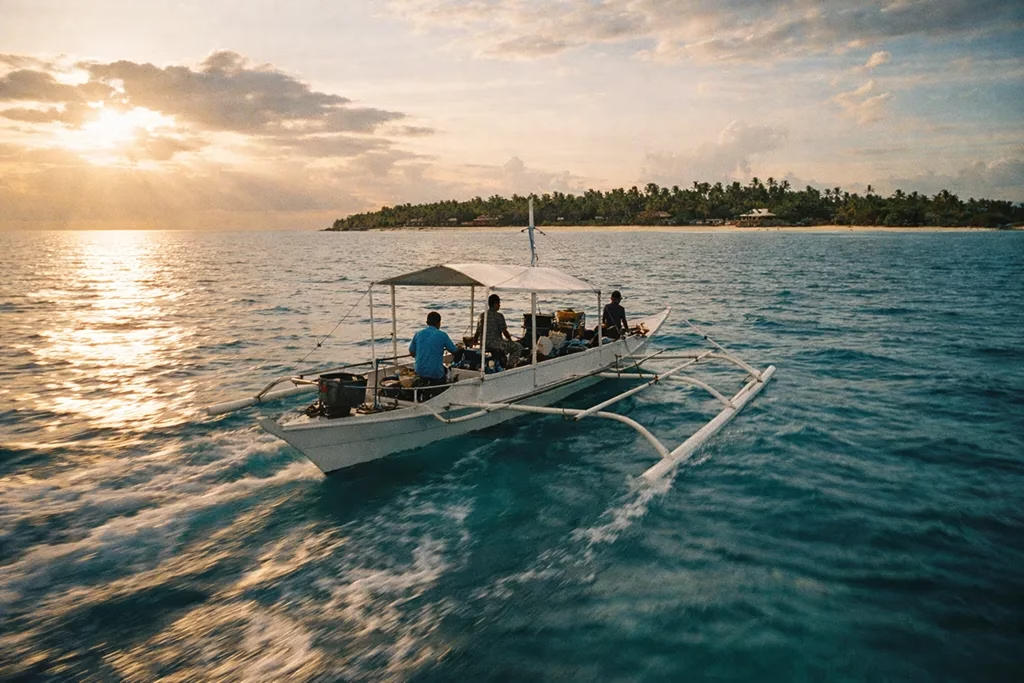
The 30-minute bangka ride from Cebu to Malapascua transport route should’ve been smooth. Instead, I found myself wedged between seventeen other tourists, backpacks, dive gear, and a woman clutching a live chicken. The boat pitched violently in the afternoon chop. Salt spray soaked everyone. Nobody complained. This was “authentic travel,” right?

Halfway across, I reached for my water bottle. That’s when my stomach dropped harder than any boat could pitch. My wallet—the one I’d specifically transferred to my front pocket for “security”—was gone. Vanished. My phone, tucked safely in my waterproof pouch, felt suddenly useless without the cash, cards, and ID that the wallet held.
“Oh god, oh god, oh god,” I whispered. The mantra of every traveler’s worst nightmare. The woman with the chicken gave me a concerned look. Even her hen seemed worried.
The Turning Point: What to Do If You Lose Your Wallet in the Philippines
Listen, I’ve traveled to forty-three countries. I’ve handled food poisoning in Morocco, missed flights in Iceland, and survived a pickpocket in Barcelona. But something about losing your wallet on a boat to a tiny island hits different. There’s no embassy nearby. No Western Union. No friend’s couch to crash on. This was becoming one of those travel disaster stories I’d always read about but never expected to live.
The boat captain, Kuya Raul, noticed my panic. “Sir, okay ka lang?” His weathered face showed genuine concern, not the transactional sympathy I’d grown cynical about. I explained in my broken Tagalog-English hybrid. He nodded slowly, then turned to the other passengers and spoke rapidly in Cebuano.
What happened next would’ve seemed impossible in my carefully planned itinerary. Three travelers offered immediate cash loans. A Swedish couple handed me 2,000 pesos without hesitation. “Pay it forward someday,” the woman said with a shrug, like it was the most obvious thing in the world.
Kuya Raul had a different plan. “My sister has room. No hotel. You stay, help in the kitchen, okay? Find wallet, maybe on the boat floor, maybe not. But you’re okay.” His broken English somehow communicated more humanity than any five-star hotel concierge ever had.
I had no choice but to surrender. My color-coded Google Doc of “must-see spots” suddenly meant nothing. The careful budget spreadsheet I’d maintained for six months? Irrelevant. For the first time in my obsessively planned travel life, I had to simply trust the moment.
And honestly? It felt terrifying. And then, unexpectedly, it felt freeing.
Discovering Real Malapascua: How to Avoid Tourist Traps in Malapascua
Kuya Raul’s sister, Ate Carmen, ran what I’d later learn was the island’s worst-kept secret: a family compound that occasionally hosted travelers who needed help. This was the Filipino homestay experience most guides never mention—not a hotel, not an Airbnb, just a spare room with a fan, a mosquito net, and house rules that included helping prepare dinner.
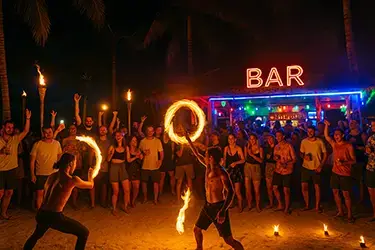
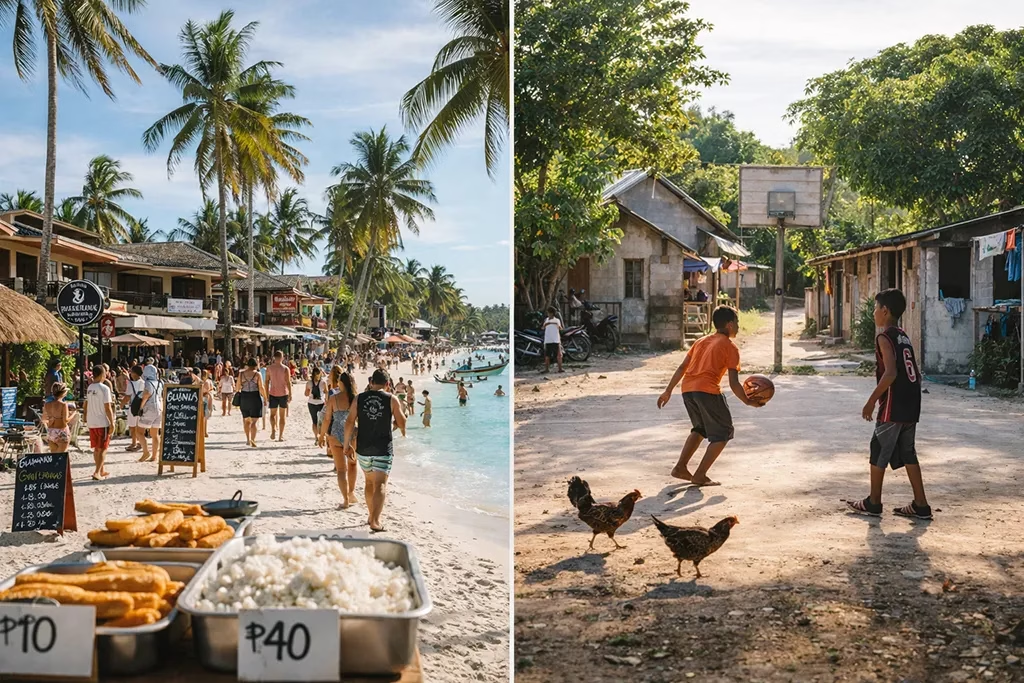
The tourist strip of Bounty Beach buzzed with dive shops, overpriced restaurants advertising “authentic Filipino food” (at triple the local price), and bars blasting EDM. These were classic Philippine tourist traps, designed for convenience rather than authenticity. Ate Carmen’s place sat ten minutes inland, where most tourists never ventured. The neighbors raised chickens. Kids played basketball in the street. Life happened at normal volume.
“Tourists only see the beach,” Ate Carmen explained while teaching me to properly cut mangoes for dinner. “They pay 300 pesos for halo-halo on Bounty. Same thing, my friend sells 60 pesos near the church. But tourists don’t walk there. Too far. Too local.” She laughed, not mockingly, just stating facts.
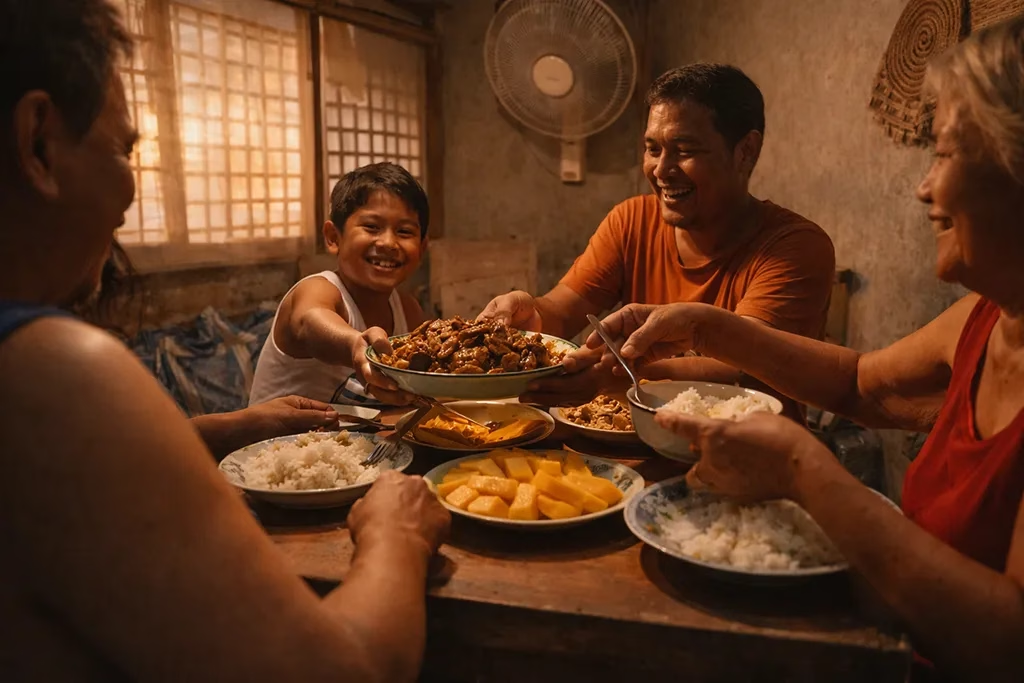
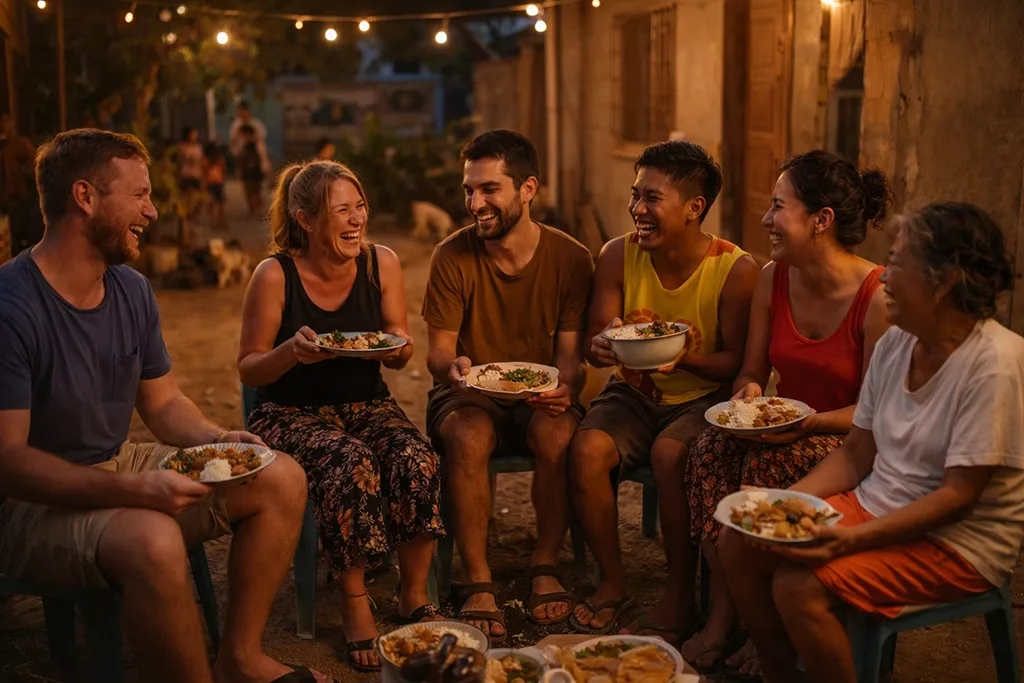
That evening, instead of the beachfront barbecue I’d bookmarked, I experienced local food Philippines style: pork adobo with Ate Carmen’s family and two other “stranded” travelers—a Filipino-Australian teacher visiting relatives, and a Japanese photographer who’d simply asked for dinner recommendations and gotten adopted into the household for the week.
The photographer, Kenji, had been on Malapascua for nine days. “I came for three,” he admitted. “But nobody on Bounty Beach talks to you. Here, Ate Carmen introduced me to fishermen. I photographed their morning routine. Real life, not performance for tourists.”
The Real Cost of Traveling to Malapascua Island: Budget vs. Reality
Over the next four days (my wallet never turned up, by the way—I filed a police report at the tiny station, more as documentation for insurance than hope), I discovered Bounty Beach Malapascua alternatives that transformed my understanding of budget travel on Malapascua Island. Ate Carmen’s neighbor, Manong Berto, took paying guests on fishing trips at dawn for 500 pesos—half the tourist rate, with actual fishing rather than Instagram poses.
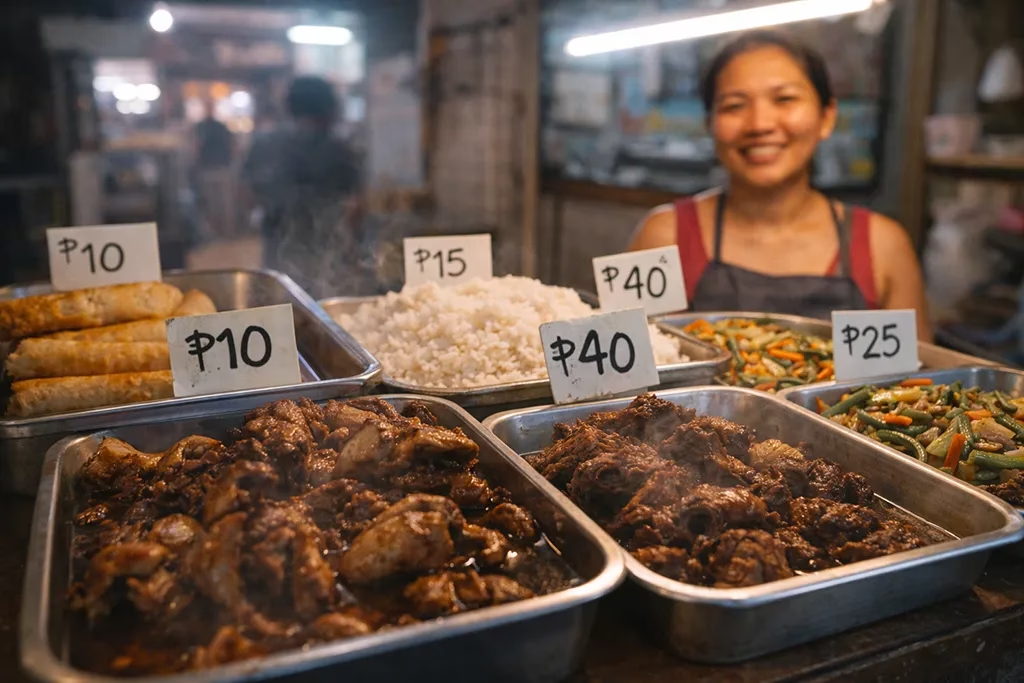
Ate Carmen’s cousin ran a carinderia where locals eat in Malapascua—five-star lumpia for 10 pesos each. The portions could’ve fed two people. When I tried to tip extra, she looked almost offended. “Price is price,” she said firmly. “You come back tomorrow, okay?”
The Hidden Economics of Authentic Philippines Travel
Here’s what nobody tells you about tourist traps: they exist because we create demand for convenience. We want “local experience” but with English menus, Wi-Fi passwords, and credit card machines. That infrastructure costs money. Locals who cater to it charge accordingly.
But authentic Philippine travel operates on a different economic model. The question of local homestays vs hotels in Malapascua goes beyond price. Ate Carmen wouldn’t let me pay for the room. “You help cook, you help clean, we’re even.” When I insisted, she negotiated: 200 pesos per night. That’s roughly $3.50. For comparison, the beachfront hostel I’d originally booked wanted 800 pesos for a dorm bed.
The math sounds too good to be true. That’s because it only works with relationships, not transactions. Ate Carmen’s hospitality came with expectations: help with dishes, be respectful, join family dinner, and practice Tagalog with her kids. Understanding Filipino family homestay etiquette meant recognizing this wasn’t a hotel—it was a home that occasionally had space.
Manong Berto explained it while we waited for fish to bite at 5:47 AM. “Tourists want everything fast. They want a guarantee. Pay for that. Local way? Maybe catch fish, maybe don’t. Maybe rain, maybe sun. You accept what comes. Cheaper, but you need patience.”
That patience unlocked doors I didn’t know existed. When Ate Carmen learned I’d planned to do the expensive island-hopping tour (1,500 pesos), she made a phone call. Her nephew had a boat. He’d take me to the same spots for 600 pesos—essential knowledge for Malapascua island hopping price negotiation—but on his fishing schedule, not mine. We’d leave at 4 AM, hit the tourist spots before crowds arrived, and I’d help check his nets along the way.

What I Learned About Philippines Tourist Traps (The Real Ones vs. The Imagined Ones)
Budget travelers develop a paranoia problem. Every friendly local becomes a potential scammer in our heads, and every price quote sounds too high. Even their smile seems transactional. I’d been that traveler, constantly calculating the “real” price, assuming everyone wanted to exploit my tourist status.
Losing my wallet forced me to depend on people. And in doing so, I discovered how rarely I’d been scammed, and how often I’d missed genuine connection because of that defensive cynicism.
Yes, some tourist-trap restaurants overcharge. They’re not scams; they’re businesses maximizing profit from customers willing to pay for convenience and ambiance. The beachfront Pad Thai for 350 pesos comes with sunset views, clean bathrooms, and English-speaking staff. That costs money to provide. The same Pad Thai from a street cart for 80 pesos? You eat standing up, no bathroom, vendor speaks limited English. Different products, different prices.
The actual scams I witnessed on Malapascua were subtle. A dive shop charges 500 pesos for “equipment cleaning fees,” which are not mentioned upfront. A boat operator quoted per-person prices, then claimed he meant per-person-one-way after you’d agreed. These weren’t dramatic heists. Just opportunistic upcharges banking on tourist ignorance.
Ate Carmen taught me her rule: “If they won’t tell you the price before you order, walk away. If they tell you one price, then change it later, make noise. Filipinos don’t like confrontation, but we respect people who stand firm.”
She also explained why some locals charge tourists more: “Tourists break things and leave. They complain online but never come back. Local customer? They’re here forever. They tell neighbors if you cheat them. Different business.” It was mercenary, but I couldn’t argue the logic.
The Complete Malapascua Travel Guide for Budget Backpacking Philippines
Let’s get practical. You want authentic travel in the Philippines without tourist-trap pricing? Here’s what actually works for Malapascua Island budget travel, learned from locals and my accidental immersion:
Where Locals Eat in Malapascua: Local Food Philippines Spots
Walk ten minutes inland from Bounty Beach. The church area has several carinderias (local cafeterias) where lunch costs 60-100 pesos, including rice and two dishes. Ate Carmen’s favorite: Nanay’s Carinderia near the basketball court. No sign, no TripAdvisor listing. Ask locals for “Nanay’s,” and they’ll point you in the right direction.
Malapascua Diving Costs and Malapascua Thresher Shark Diving Budget

Shop rates are similar across operators (around 1,300-1,500 pesos per dive), but multi-dive packages are negotiable. Book directly, not through hotels. Pay cash for 5-10% discounts; most shops won’t advertise. Ask about local dive guide rates—some charge 500 pesos less than foreign instructors and have better local knowledge of the best times to see thresher sharks.
Local Homestays Malapascua vs Hotels: The Filipino Homestay Experience
Peak season (November-May), beachfront books up. But family homestays inland rarely fill. Ask dive shops, carinderia owners, or boat operators if anyone has rooms. Expect 200-400 pesos per night for a fan room with a shared bathroom. Bring your own toiletries. Offer to help with household tasks if staying multiple nights—this is proper Filipino family homestay etiquette.
Malapascua Island Hopping Price Negotiation
Tourist package: 1,500 pesos. Negotiate directly with boat owners near the pier: 600-800 pesos is possible, especially if you’re flexible on timing or willing to share with locals who run supply runs to nearby islands.
Cheapest Way to Get to Malapascua Island: Cebu to Malapascua Transport
Don’t book overpriced van-and-boat packages (1,200+ pesos). Take a public bus from Cebu’s North Bus Terminal to Maya Port (170 pesos, 4 hours). The Maya Port to Malapascua boat runs regularly throughout the day and costs 100 pesos per person. Total: 270 pesos vs. 1200 pesos. Time investment: 5 hours vs. 3.5 hours. Your call on the cheapest way to get to Malapascua Island.
The Technology That Actually Helps Budget Backpacking Philippines
When my wallet vanished, my phone became my lifeline. But not in the ways I’d expected. The apps I’d obsessively downloaded before the trip? Mostly useless. The tools that saved me? Surprisingly low-tech.
What Worked:
Grab/Angkas apps: Not available on Malapascua (too small), but essential for getting from Cebu City to Maya Port affordably. Set your destination; no price negotiation needed. Approximately 300 pesos saved vs. tourist taxi rates.
GCash for tourists in the Philippines setup: I didn’t make this mistake. The Swedish couple who loaned me money used GCash to transfer funds between each other. Many local businesses accept it. No foreign transaction fees. Setting up GCash for tourists in the Philippines before arrival ensures seamless transactions.
Google Maps saved locations: I’d pinned Ate Carmen’s address before my phone knew I’d need it. When I inevitably got lost walking back from Bounty Beach at night, that pin saved me from wandering dark roads asking for directions.
Screenshots of confirmation numbers: My hotel booking, dive reservations, and insurance policy—all screenshotted and saved offline. When I couldn’t produce my wallet to prove my identity, these digital receipts verified who I was and what I’d paid for.
What Didn’t Work:
Currency converter apps: Mental math works fine. 50 pesos is roughly $1. Done. The app made me look at my phone during transactions instead of watching for the actual scams (price switching, wrong change).
Travel planning apps: My elaborate TripIt itinerary became irrelevant the moment the crisis hit. Flexibility beats planning in authentic travel in the Philippines.
Translation apps: Tried using Google Translate for Cebuano. Hilarious failures ensued. Manong Berto told me I’d asked if his boat was “pregnant with jealous chickens.” Hand gestures and simple English worked better for basic communication.
Essential Cebuano Phrases for Travelers and Pre-Trip Checklist
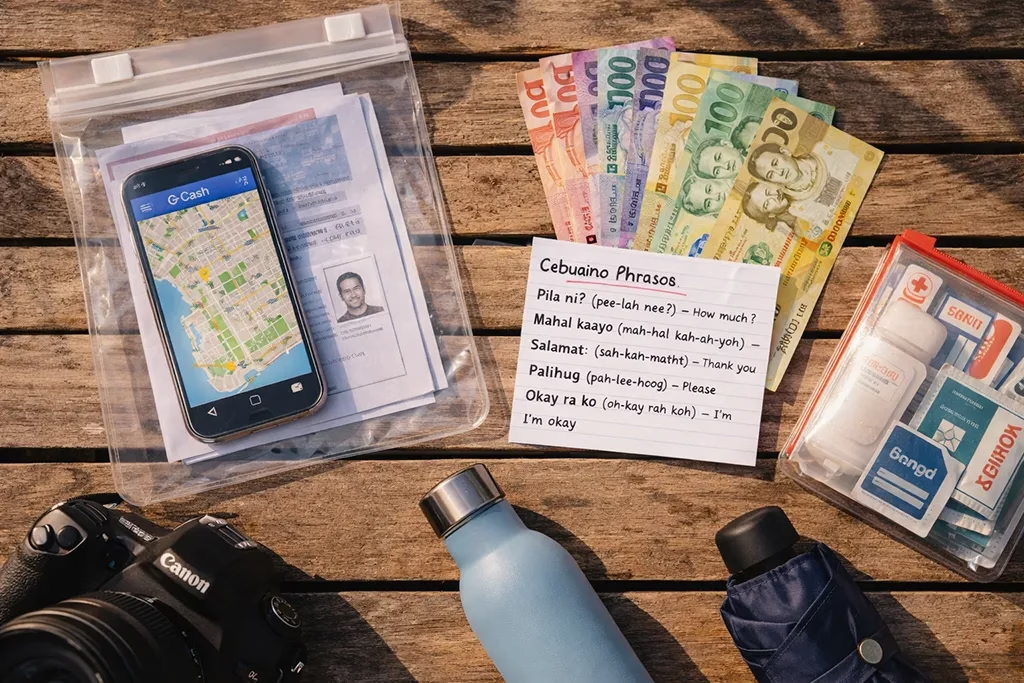
Pre-Trip Malapascua Island Budget Travel Essentials:
- Photocopy passport, cards, and insurance policy. Email copies to yourself. Leave physical copies in a separate bag from originals.
- Complete GCash for tourists in the Philippines before arrival. Load with emergency 2,000-3,000 pesos to act as backup if the wallet is lost.
- Bring more cash than you think necessary. Many places don’t accept cards. ATMs on Malapascua are unreliable.
- Download offline maps of the entire Cebu province, including Malapascua and the Maya Port area.
- Take screenshots of all booking confirmations, insurance details, and emergency contacts.
- Pack a waterproof pouch. Not water-resistant. Waterproof. Test it before you travel.
- Bring basic first aid supplies. The island has a small clinic but limited supplies. Band-aids, antiseptics, anti-diarrheal meds.
Cebuano Phrases for Travelers:
Learn these essential Cebuano phrases for travelers before your trip:
- “Pila ni?” (How much?)
- “Mahal kaayo” (Too expensive)
- “Salamat” (Thank you)
- “Palihug” (Please)
- “Okay ra ko” (I’m okay/fine)
Daily Safety Routine:
Morning: Snap a photo of your accommodation address/landmark. Easy to show locals if you’re lost.
Before boat trips: Secure everything in a waterproof bag. Zip pockets. Boats get wet. Things fall out.
Before paying: Confirm price. Repeat the price back. Hand over exact change when possible. Count the change before walking away.
Evening: Check you still have your passport, phone, and money. Sounds suspicious. Prevents disasters.
Crisis Protocol: What to Do If You Lose Your Wallet in the Philippines
Lost wallet: Report to the barangay hall (local government office) immediately. File written report. Needed for insurance claims.
Lost passport: Contact the embassy in Cebu City. Malapascua has no consulate services. May need to travel back to the city.
No money: Ask dive shop owners or established guesthouse operators first. They’re used to helping travelers in emergencies. More reliable than random strangers.
Medical emergency: Malapascua Health Center handles minor issues. Serious problems require a boat to the mainland, then an ambulance to Cebu City. Ensure your insurance covers evacuation.
Boat stranded by weather: Normal. Storms stop boats for safety. Budget extra days and money for weather delays. Not negotiable on how long to stay in Malapascua.
Is Malapascua Worth Visiting Off Season: Why Losing Control Was My Best Travel Decision

I’m a planner. My friends mock my spreadsheets. My Google Calendar has color-coded blocks for “spontaneity.” The idea of winging it gives me hives. Or it used to.
Losing my wallet ruined my carefully laid plans. My three-day Malapascua itinerary stretched to seven days. But my budget hotel became a family home. My scheduled diving got replaced by fishing with Manong Berto. My Instagram-perfect sunset cocktails turned into kitchen duty and Tagalog lessons with Ate Carmen’s kids.
And it was better. Objectively, measurably better than the trip I’d planned.
The version of Malapascua I’d researched—beachfront bars, organized dive trips, island-hopping tours—exists. It’s fine. Perfectly pleasant. Thousands of tourists enjoy it yearly. But it’s a performance. The island plays a role for visitors. Everyone gets the same script.
The version I accidentally stumbled into felt like being handed a backstage pass. Ate Carmen’s nephew taught me to fix fishing nets. Manong Berto’s wife showed me how to eat balut (a fertilized duck egg—still horrifying, but now I understand the technique). Kenji, the photographer, and I hiked to the lighthouse at dawn, not for photos, but because Ate Carmen said the sunrise view would “make our hearts quiet.”
She was right. It did.
For those wondering, is Malapascua worth visiting in the off-season? Absolutely. In fact, the off-season Filipino homestay experience might offer even more authentic connections when tourist crowds thin.
Simple Acts of Kindness Change Everything: Travel Disaster Stories That Transform
Here’s the uncomfortable truth for control-freak travelers like me: the best experiences can’t be planned. They emerge from necessity, vulnerability, and willingness to accept help. My disaster became an invitation into real life that no Malapascua travel guide could have provided.
The Swedish couple who loaned me money? We’re still in touch. They visited my city last year. I showed them the non-touristy side. Paid it forward, as they said.
Ate Carmen friend-requested me on Facebook. Her kids send me updates on their school achievements. When I finally got a replacement card and tried to pay her the proper amount for the week’s stay, she refused anything beyond the 200 pesos per night we’d agreed on. “You’re family now,” she said. “Family doesn’t charge extra.”
The Real Cost of Traveling to Malapascua Island: Budget vs. Perfect Plans
My original budget travel plan for Malapascua Island: 8,000 pesos for three days (about $145). Careful calculations covered hostels, meals, diving, and transportation. Everything is planned to the hour. No surprises, no risks, and no magic.
My actual seven-day cost after losing my wallet: 6,200 pesos (about $112). Even after replacing the money I lost and paying for unplanned extras, I spent less. The Filipino homestay experience was cheaper than hostels. Home-cooked local food in the Philippines is cheaper than restaurant prices. Manong Berto’s informal fishing and touring saved me hundreds of pesos.
But the real savings? It is harder to quantify. I saved the emotional cost of constant vigilance against scams. Saved the exhaustion of playing tourists. Saved the loneliness of traveling surrounded by strangers who stay strangers.
The “perfect plan” promised control and efficiency. It would’ve delivered both. But control is expensive. It requires constant management, decision-making, and defense against deviation. Efficiency optimizes speed and coverage, not depth or connection.
My wallet disaster forced surrender. And surrender, terrifying as it feels, costs nothing. It requires only that you trust the moment and the people in it. Not blindly, Ate Carmen taught me how to negotiate prices and detect scams. But openly, with the assumption that most humans, given the chance, would rather help than harm.
Your Invitation to Authentic Philippines Travel: Mess Up Your Plans
I’m not suggesting you intentionally lose your wallet. That was genuinely stressful, and I don’t recommend it as a travel strategy for budget backpacking in the Philippines. But I am suggesting you build space for disaster in your plans. Budget for the unexpected. Schedule empty days. Leave room for the random invitation, the missed boat, the friendly local who wants to show you their village.
The Philippine islands have 7,641 options. Most travelers hit the same ten. Boracay. Palawan. Siargao. These places are famous for their beauty. But they’re also crowded, expensive, and performed. The island is playing the role tourists expect.
The real Philippine magic happens in the gaps. The boat ride where someone offers you homemade bibingka. The wrong turn leads to a family celebration where you’re invited to join. The disaster that becomes the story you’ll tell for years.
Malapascua taught me that authentic Philippines travel isn’t about finding hidden beaches or secret restaurants. It’s about willingness to be vulnerable, helpless, and dependent on strangers’ kindness. That vulnerability opens doors that competence and planning keep locked.
So here’s my challenge: On your next trip, plan less. Budget time for nothing. When something goes wrong (and it will), pause before problem-solving. Ask for help. Accept invitations from locals. Say yes to the uncomfortable, unplanned, uncontrolled moment.
Your carefully researched itinerary might be good. But the disaster you didn’t plan for? That might be great.
How to Share Your Travel Disaster Stories (And Why You Should)
After I posted about my Malapascua misadventure on social media, something unexpected happened. Dozens of travelers shared their own travel disaster stories. The guy who missed his flight in Thailand ended up at a festival. The woman who got food poisoning in Peru was nursed back to health by a local family she now visits yearly.
We need these stories. Travel media oversells perfection. Instagram feeds show sunsets and smiles, never the diarrhea, loneliness, or panic. This creates impossible expectations. When disaster strikes, we feel like we’ve failed at traveling.
But disaster is where travel actually lives. The unplanned, uncomfortable, vulnerable moments when you’re forced to depend on strangers and trust the moment. That’s not failure. That’s the whole point.
So, share your messy travel stories. The time you got lost. The meal that made you sick. The plan that collapsed. And most importantly, share what happened next. Who helped you? What you learned. How the disaster opened doors you didn’t know existed.
These stories give other travelers permission to embrace imperfection. To see disasters as invitations rather than failures. To plan less and trust more.
I’d love to hear yours. Drop a comment with your “travel disaster turned triumph” story. What went wrong? Who helped? What unexpected door opened? Let’s build a collection of messy, authentic, perfectly imperfect travel tales.
Why Malapascua Island Budget Travel Lessons Matter Beyond Malapascua
This story is set on a tiny Philippine island most people have never heard of. But the lesson applies everywhere. Tourist traps exist in every destination in the Philippines. So do authentic local experiences. The difference isn’t the place. It’s your willingness to step outside the comfortable, planned, controlled tourist path.
Thailand’s islands, Indonesia’s villages, Mexico’s beaches, Croatia’s coast—they all have two versions. The performed version for tourists, and the lived version for locals. You can experience either. One requires money and planning. The other requires vulnerability and trust.
Neither is “better” in absolute terms. Sometimes you want the performed version. The clean hotel, English menu, and organized tour. That’s legitimate. Comfort and convenience are valuable.
But if you only ever see destinations as performed, you’ll miss the magic. The behind-the-scenes moments when places stop performing and just exist. When locals stop being service providers and become people. When you stop being a tourist and become simply a human in a place, doing your best, sometimes messing up, and often needing help.
That’s what my lost wallet gave me. Not just access to cheaper restaurants and local homestays. But permission to be helpless. To need people. To accept that I didn’t have all the answers or control over the situation.
And in that helplessness, I found a more authentic connection than my perfect plans ever provided.
The Bottom Line for Budget Backpacking Philippines
Want to travel cheaply? Here’s the actual secret: depending on people more than plans. Build relationships instead of elaborate itineraries. Accept help. Offer help. Be vulnerable enough to need community.
The cheapest travel isn’t about finding deals or negotiating prices (though those help). It’s about accessing the local economy of reciprocity that exists parallel to the tourist economy. Where prices reflect actual costs, not tourist-trap markups. Where value comes from a relationship, not a transaction.
But accessing that economy requires currency, most budget travelers don’t want to spend vulnerability, time, flexibility, and trust. You can’t demand it, research it, or book it online. You can only create conditions where it might emerge.
Losing my wallet forced me to spend that currency. Best investment I’ve made in all my years of travel.
What Happened to My Wallet: The Travel Disaster Stories Epilogue
Six weeks after I returned home, I got a Facebook message from someone I didn’t recognize. Filipino name. Profile picture of a family with three kids. Message in broken English: “Are you the American who lost a wallet on the boat to Malapascua in March?”
My wallet had fallen under a seat slat on Kuya Raul’s boat. Wedged in a gap where boat operators store life jackets. A passenger on a later trip spotted it, water-damaged and salt-crusted, and gave it to Kuya Raul. He’d held it for weeks, asking returning guests if they knew me. Finally, someone remembered my first name and found my social media profile.
The cash was gone (expected). Cards destroyed by seawater (expected). But my driver’s license and a photo of my grandmother—the only photo I carry while traveling—had survived. Kuya Raul mailed them to me without paying for postage. “You are Ate Carmen’s family now,” his message said. “Family helps family.”
The license and photo arrived in a hand-decorated envelope with drawings from Ate Carmen’s kids. Eyes watered reading the note: “Come back soon. We miss you. Next time, bring stories from your country.”
I’m planning that return trip now. Less carefully this time. More space for disaster. Because now I know: the disaster is often the best part.
Your Complete Malapascua Travel Guide: Share, Save, and Travel Smarter
If this story resonated with you—if you’ve ever had a travel disaster turn into unexpected magic, or if you’re planning a Philippine adventure and want to avoid tourist traps—I want to hear from you.
Drop a comment with:
- Your best “travel disaster turned triumph” story
- Hidden gems in the Philippines (or anywhere) that deserve more attention
- Questions about budget backpacking in the Philippines, Malapascua Island budget travel, or navigating disaster on the road
- Your own tips for avoiding Philippines tourist traps and finding authentic Philippines travel experiences
Save this complete Malapascua travel guide for your next trip. Share it with friends planning Philippine adventures. Follow for more no-BS travel stories that prioritize real experience over Instagram perfection.
And most importantly: on your next trip, plan a little less. Trust a little more. Leave space for disaster. The best travel disaster stories start with “So, everything went wrong, but then…”
Malapascua is waiting. So is the rest of the Philippines. Not the version in the guidebook—that’s fine, but forgettable. The real version. The messy, authentic, lived-in version that only reveals itself to travelers willing to mess up their perfect plans.
Pack light. Plan loosely. Bring cash and humility. The Philippine islands will take care of the rest.
Frequently Asked Questions (FAQs)

1. What should I do if I lose my wallet while traveling in the Philippines?
First, stay calm and report the loss immediately to the local barangay hall (community government office) to get a written report for insurance purposes. If you’re in a tourist area like Malapascua, ask them about your accommodation and nearby dive shops—they’re experienced at helping travelers in emergencies. Set up GCash or PayMaya before your trip as a digital backup with emergency funds (2,000-3,000 pesos). Keep photocopies of your passport and cards in a separate location, and always have screenshots of important booking confirmations saved offline on your phone.
2. How much does it really cost to travel to Malapascua Island on a budget?
The cheapest way to reach Malapascua is to take a public bus from Cebu’s North Bus Terminal to Maya Port (170 pesos, 4 hours), then a local bangka boat (100 pesos)—totaling just 270 pesos, versus 1,200+ pesos for tourist packages. Once there, family homestays cost 200-400 pesos per night compared to 800+ pesos for beachfront hostels. Local carinderias serve meals for 60-100 pesos, compared to 250-350 pesos at tourist restaurants. For a week-long stay, including diving, budget 6,000-8,000 pesos ($110-145) if you embrace the local economy.
3. How do I find authentic Filipino homestays in Malapascua instead of hotels?
Local homestays aren’t listed on booking platforms—you find them through relationships. Ask dive shop owners, carinderia operators, or boat captains if they know families with spare rooms. Understanding Filipino family homestay etiquette is essential: you’re expected to help with the dishes, respect house rules, join family meals, and interact with the household. It’s not a hotel experience; it’s a cultural exchange. The tradeoff for drastically lower costs is participating in daily life rather than being served.
4. What’s the Maya Port to Malapascua boat schedule, and how reliable is it?
Bangka boats run regularly throughout the day from Maya Port to Malapascua, typically every 1-2 hours from early morning until late afternoon, at a cost of 100 pesos per person. However, the schedule is weather-dependent—storms can cancel boats for safety, sometimes for multiple days. Always budget extra time and money for weather delays when planning how long to stay in Malapascua. During peak season (November-May), boats are more frequent and reliable, but in the off-season, longer waits between departures are common.
5. How can I avoid tourist traps in Malapascua without missing out on good experiences?
The key is distinguishing between scams and legitimate convenience pricing. Tourist restaurants on Bounty Beach aren’t scams—they charge more for English menus, beachfront views, and clean facilities. Real scams involve price-switching after you’ve agreed or hidden fees not mentioned upfront. To avoid overpaying, walk 10 minutes inland to where locals eat in Malapascua—carinderias near the church offer the same food at one-third the price. Always confirm prices before ordering, repeat them back, and count your change. For activities, negotiate directly with boat owners and dive shops rather than through hotels.
6. Is Malapascua worth visiting during the off-season?
Absolutely, and potentially even better for authentic travel in the Philippines. The off-season (June-October) means fewer tourists, creating more opportunities for genuine local connections and better prices through negotiation. The Filipino homestay experience becomes more accessible when tourist crowds thin. The main consideration is the weather—monsoon season brings storms that can strand you for extra days, so build schedule flexibility. Thresher shark diving remains excellent year-round since the sharks don’t follow tourist seasons. If you’re comfortable with rain and uncertainty, off-season Malapascua offers the most authentic experience.
7. What are the essential Cebuano phrases I should learn before visiting Malapascua?
While many locals speak some English, learning basic Cebuano phrases for travelers shows respect and often unlocks better prices and warmer interactions. Master these five: “Pila ni?” (How much?), “Mahal kaayo” (Too expensive—useful for negotiation), “Salamat” (Thank you), “Palihug” (Please), and “Okay ra ko” (I’m okay/I’m fine). Even attempting these phrases with poor pronunciation earns smiles and goodwill. Don’t rely on translation apps—they frequently hilariously mistranslate Cebuano. Simple phrases combined with hand gestures work better than technology for basic communication.
Other Articles that may be of Interest
You may also find the following articles interesting.
- Philippines Travel Guide 2026: Everything You Need to Know
- What Makes Corregidor’s Ghost Story an Unusual Philippine Tale
Suggestions For Lodging and Travel
Lodging is widely available throughout the Philippines. However, you may want to consider getting assistance booking tours to some of the Philippines’ attractions. I’ve provided a few local agencies that we’ve found to be very good for setting up tours. For transparency, we may earn a commission when you click on certain links in this article, but this doesn’t influence our editorial standards. We only recommend services that we genuinely believe will enhance your travel experiences. This will not cost you anything, and I can continue to support this site through these links.
Local Lodging Assistance
Guide to the Philippines: This site specializes in tours across the Philippines, offering flexible scheduling and competitive pricing. I highly recommend them for booking local arrangements for a trip like this one. You can book flights and hotels through the Expedia link provided below.
Hotel Accommodations: I highly recommend The Manila Hotel for a stay in Manila. I stay here every time I travel to the Philippines. It is centrally located, and many attractions are easily accessible from there. Intramuros and Rizal Park are within walking distance. I have provided a search box below to find hotels (click “Stays” at the top) or flights (click “Flights” at the top). This tool will provide me with an affiliate commission (at no additional cost to you).
Kapwa Travel is a travel company focused on the Philippines. It specializes in customizing trips to meet customers’ needs.
Tourismo Filipino is a well-established company that has been operating for over 40 years. It specializes in tailoring tours to meet customers’ needs.
Tropical Experience Travel Services – Tours of the Philippines: This company offers a range of tour packages, allowing you to tailor your trip to your preferences.
Lastly, we recommend booking international travel flights through established organizations rather than a local travel agent in the Philippines. I recommend Expedia.com (see the box below), the site I use to book my international travel. I have provided a search box below to find flights (click “Flights” at the top) or Hotels (click “Stays” at the top). This tool will provide me with an affiliate commission (at no cost to you).