

The Day the Riptide Took Everything: A Personal Story of Loss and Fear
One minute, we were laughing. Next, everything went sideways—literally. My friend Marco stood waist-deep in crystal-clear Philippine water, phone held high for that perfect sunset shot. The beach at Linapacan looked like a screensaver come to life. White sand stretched endlessly. Palm trees swayed on cue. The water? Clear enough to count your toes at shoulder depth. This is a real story about beach safety in the Philippines and survival from rip currents. We will discuss the signs of a rip current and provide safety tips.
“This is unreal!” Marco shouted back to our group on shore. His waterproof bag hung from his shoulder, bulging with wallet, passport, and keys. “You guys have to get in here!” I was twenty feet behind him, ankle-deep, when I noticed something odd. The water around my legs suddenly felt… pushy. Not waves. Something underneath, insistent and directional. “Marco, come back in!” I called out. My voice sounded weirdly urgent even to me.
He turned to answer, and that’s when it happened. His expression changed from joy to confusion to panic in three seconds flat. The water yanked him sideways like an invisible hand had grabbed his waist. He stumbled, tried to plant his feet, couldn’t. “What the—” His words cut off as he went under. My heart stopped. When he surfaced ten feet farther out, his shoulder strap was empty. The waterproof bag—gone. Swept away so fast it seemed impossible.
Two local fishermen on the beach were already running. They knew what we didn’t: that beautiful, calm-looking patch of paradise was a riptide highway. They’d seen this exact scenario play out countless times with clueless tourists like us.
The Introspection Afterward
Marco made it back to shore—the fishermen coached him through swimming parallel to the beach, not against the current. But his belongings? Never recovered. Passport, $400 cash, credit cards, hotel keys, all claimed by the South China Sea in under sixty seconds.
We sat on that beach for two hours afterward, shaking. Not just from the cold. From the realization that we’d come within minutes of a very different story. One that ended with frantic international calls and maybe a body recovery, rather than just a lost bag.
“How did I not see it?” Marco kept repeating. His teeth chattered despite the tropical heat. “The water looked perfect. There were no waves. No warning signs. Nothing.” Exactly. And that’s what terrified me most.
That night, while Marco dealt with emergency passport paperwork, I couldn’t sleep. I kept replaying the moment—how fast the ocean transformed from playground to predator. How our ignorance almost cost us everything. How many other tourists were making the same mistake right now, at this very moment, somewhere along the Philippines’ 22,549 miles of coastline?
I had to understand what happened. More importantly, I needed to know how to prevent it from happening again. That’s when I began seriously researching beach safety in the Philippines, not just for myself, but for every traveler who might face the same hidden dangers.
Understanding Riptides: Nature’s Hidden Threat Beneath Paradise

Here’s what they don’t tell you in the glossy travel brochures: riptides kill more beachgoers than sharks, jellyfish, and all other marine creatures combined. Understanding the dangers of swimming in the Philippines starts with recognizing these invisible threats.
A riptide, technically called a “rip current”, is a channel of water flowing away from shore. Think of it as a liquid treadmill running in reverse. Step onto it, and you’re going for a ride whether you planned it or not. Mastering rip current survival techniques is essential for ocean safety for tourists visiting tropical destinations.
These currents form when waves push water toward shore faster than it can naturally flow back. The water finds weak spots—gaps between sandbars, jetties, or piers. Then it rushes back out through those channels at speeds up to 8 feet per second. Olympic swimmers max out around 6 feet per second. Do that math.
The Philippines is riptide central for three reasons. First, the archipelago sits in the typhoon belt. Storms hundreds of miles away create swell patterns that generate powerful currents. Second, coral reefs and rock formations create the natural channels where rip currents form. Third, dramatic tidal changes—sometimes six feet in six hours—constantly reshape underwater topography.
Here’s the Bottom Line

But here’s the kicker: riptides look safe. Dangerously safe. Learning how to identify a riptide before swimming is crucial for beach safety in the Philippines.
That calm, flat patch between breaking waves? Probably a riptide. Is the area where the water looks darker or choppy? Riptide. That spot where foam, seaweed, or debris flows steadily outward? Definitely a riptide. Understanding why calm water can be dangerous for swimmers is one of the most important riptide safety tips.
Most tourists miss these signs entirely. We’re trained by movies and TV to fear dramatic, obvious dangers. Circling shark fins. Towering waves. Thunder and lightning. But riptides are the serial killers of ocean hazards—they look normal until it’s too late.
Additional Insights from Another Source
I met Sarah, a teacher from California, at a hostel in El Nido two days after Marco’s incident. She’d gone swimming at Nacpan Beach and found herself 200 yards offshore before she understood what was happening. “I kept swimming toward the beach, but I wasn’t getting anywhere,” she said. “In fact, I was moving backward. I genuinely thought I might die there.”
A local surf instructor eventually spotted her and coached her through swimming parallel—one of the key riptide survival tips for weak swimmers. She made it back exhausted, traumatized, and furious that nobody had warned her. The beach had no signs. No flags. No lifeguards. Just paradise with a hidden predator.
According to the Philippine Coast Guard, rip currents contribute to over 60% of beach rescues nationwide. Yet most resorts and tour operators barely mention them. Bad for business, apparently. This is why independent research on beach safety in the Philippines is so critical for travelers.
The Local Wisdom Tourists Overlook: How Filipinos Stay Safe
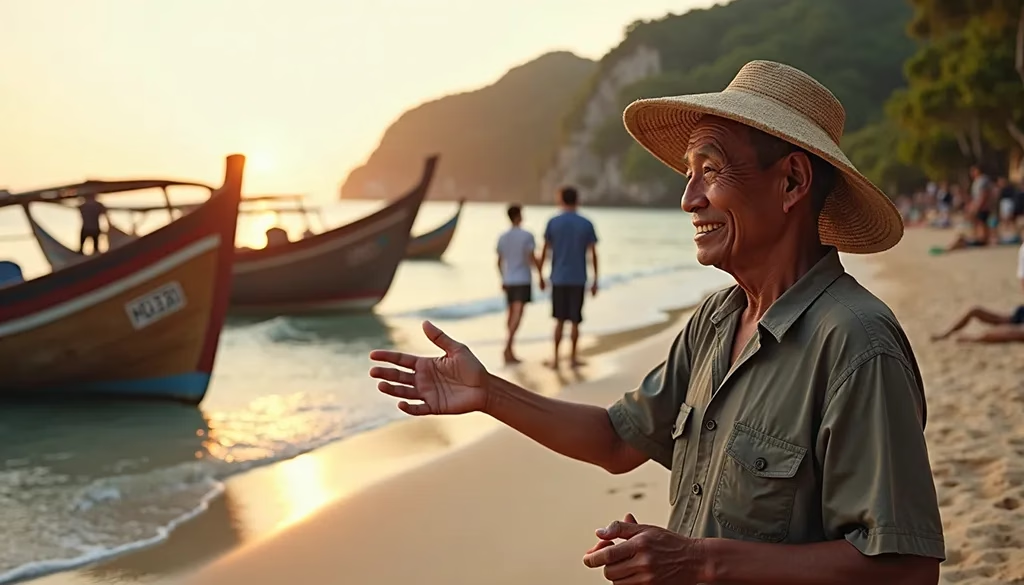
After Marco’s close call, I started asking questions. Lots of them. To fishermen, resort staff, boat operators, and anyone who’d spent decades in these waters.
What I discovered was humbling: local Filipinos have been reading these waters like newspapers for generations. They know things tourists never learn, passed down through families like precious heirlooms. What locals know about Philippine beach safety could fill entire volumes—knowledge that can save lives.
Mang Tomas, a 67-year-old fisherman in Coron, laughed when I described Marco’s incident. Not cruelly—more like someone watching a child touch a hot stove despite warnings.
“Tourists always swim there,” he said in careful English. “We tell them, ‘No, not there.’ They don’t listen. They say, ‘But it looks so nice!’ Yes, it looks nice. That’s why it’s dangerous.”

He explained how locals read the water. They look for color changes—darker blue indicates deeper channels where riptides form. The locals will watch for uneven wave patterns. They will observe where birds feed, because fish avoid riptide zones. They even smell the water—certain odors indicate churning sediment from strong currents.
Most importantly, they ask. Always.
It Never Hurts to Ask. On The Contrary, It Can Enhance Your Stay
“We never swim at the new beach without asking old people first,” Mang Tomas said. “They know where is safe, where is not safe. This knowledge is more valuable than gold.” Seeking local beach recommendations in the Philippines is one of the smartest safety strategies any tourist can employ.
I met Ate Linda, a resort owner in Siargao, who’s been managing beachfront property for thirty years. She’s pulled seventeen tourists from riptides. Seventeen. In three decades, she’s seen the same pattern repeat endlessly.
“They arrive, they see beautiful water, they run in,” she said, shaking her head. “We put up signs. At check-in, we tell them. We even point out the safe swimming area. Still, they go where they want. Then they panic.”
She taught me the local timing rules—critical knowledge for determining the best time of day to swim safely in the Philippines. Never swim during tidal changes—water movement intensifies. Avoid swimming after storms—underwater topography shifts. Be extra cautious during full and new moons—extreme tides create stronger currents.
The most contrarian insight? The prettiest spots are often the most dangerous.
That postcard-perfect cove with no other tourists? There’s probably a reason locals avoid it. That isolated stretch of pristine beach? Maybe it’s isolated because currents make it deadly. That calm water between rocky outcrops? Textbook riptide formation zone.
Tourists see an empty paradise. Locals see a death trap.
The Statistics Speak Volumes
I spent an afternoon with Kuya Ramon, a boat operator who’s lived in Palawan his entire 53 years. He showed me his mental map of El Nido’s beaches—where the spots are safe at different tides, seasons, and moon phases. The complexity rivaled air traffic control. His guidance in finding safe swimming beaches in Palawan was invaluable.
“This beach, safe morning only,” he explained, pointing to a map. “Afternoon, current too strong. This one is safe when the wind comes from the west. East wind, very dangerous. This one is never safe. Never. But tourists go anyway. They take a selfie. Then they die.”
He wasn’t exaggerating. In 2022 alone, at least twelve foreign tourists drowned in Philippine waters, many from riptides. The real number is likely higher—not all deaths get reported internationally.
The pattern is consistent and tragic: tourists ignore local advice, chase Instagram shots, underestimate the ocean, and pay the ultimate price. Their families later say, “They were strong swimmers. We don’t understand what happened.”
But locals understand perfectly. They’ve been watching it happen for decades.
Finding Paradise Again: Discovering Untouched, Safer Beaches Off the Beaten Path
Marco’s mishap could have ended our trip. Instead, it transformed it.
We stopped chasing the famous beaches featured in travel vlogs. We started asking locals, “Where do YOU swim? Where do your kids play?” Discovering hidden beaches in the Philippines that are both beautiful and safe became our new mission.
The answers led us to places we’d never have found otherwise—beaches that weren’t on Google Maps, covers that required local guides, swimming holes known only to fishing villages. And every single one was safer than the tourist hotspots.

Why? Because locals naturally gravitate toward protected waters.
In Siquijor, a tricycle driver named Kuya Ben took us to Kagusuan Beach. No resort. No restaurant. Just sand, shade, and locals celebrating a birthday. The cove’s horseshoe shape and shallow coral shelf created a natural barrier against strong currents. Kids played unsupervised in water that stayed knee-deep for fifty yards out.
“This is where we bring our children,” Kuya Ben explained. “Safe for swimming, good for learning. The big tourist beach has a strong current. We don’t go there.” His recommendation exemplified the safest beaches in the Philippines for families with children.
The contrast was striking. Famous beaches like Nacpan and Alona attract thousands because they’re stunning and accessible. But that accessibility cuts both ways. Open coastlines with deep water close to shore create ideal conditions for riptides. Meanwhile, these hidden local spots stay safe precisely because their geography protects them.

The Lesson I Learned
I learned to identify characteristics of safe beaches. Horseshoe or crescent-shaped coves that block open-ocean currents. Gradual slopes where you can walk out far while staying shallow. Natural barriers like reefs, sandbars, or rock formations break wave energy before it reaches shore. Calm water conditions, even when nearby beaches look choppy.
These weren’t always the most photogenic spots. Some had modest sand quality. Others lacked dramatic backdrops. But my family could actually relax. My kids could play without constant vigilance. We could enjoy the water rather than fear it.
Other Examples of Why It’s Good to Ask
On Bantayan Island, we found Oboob Beach, which our Airbnb host recommended. The beach clubs and resort strips were miles away. This spot served mainly local families and occasional backpackers. A small reef about thirty yards out absorbed wave energy. The water stayed calm and clear. Several older locals swam laps every afternoon, an endorsement more valuable than any five-star review. This was family beach safety in the Philippines at its finest.
The trade-off was real, though. These safer beaches lacked amenities. No beach bars, no jet ski rentals, no floating platforms for perfect Instagram shots. We brought our own food, shade, and entertainment. Toilets were often basic or nonexistent nearby.
But we gained something priceless: peace of mind. And authentic experiences.
At one beach near Catanduanes, we joined in a local volleyball game. At another place in Camiguin, fishermen returning with their catch gave us fresh tuna, which we grilled on the beach. These moments emerged naturally when we went where locals go, respected their knowledge, and embraced a different kind of paradise.
The famous beaches have their place. They’re famous for good reasons—dramatic beauty, convenient access, and developed infrastructure. But for families, especially those with children or average swimming abilities, the local alternatives offer something better: beauty you can actually enjoy without constant fear.
Paradise shouldn’t require risking your life.
Essential Safety Tips for Families Visiting the Philippines’ Beaches

Knowledge is the difference between a great vacation and a tragic news story. Here’s what I learned the hard way (and from local experts) about keeping families safe in Philippine waters. Consider this your personal beach safety checklist for your Philippines vacation.
The Non-Negotiable Safety Checklist:
1. Life Jackets for Everyone
Not negotiable for kids, highly recommended for adults. Bring your own—rental availability is inconsistent. Even strong swimmers benefit from flotation when fighting unexpected currents. I bought compact inflatable vests that pack easily. Best $60 I ever spent.
2. Waterproof Pouches (That Actually Stay on Shore)
Marco learned this lesson expensively. Bring one waterproof pouch for essential documents that NEVER leave the beach towel. Bring a separate one for phones and cash that you can wear in the water. Never combine them.
3. Emergency Contacts Programmed and Written
Philippine Coast Guard: 911 (in most areas). Local emergency numbers vary by island. Write them on a waterproof card. Program them into everyone’s phones. Share your location with someone back home using apps like Life360 or Find My Friends. Having emergency contacts for beach safety in the Philippines readily available can save crucial time.
4. The “Talk to Locals” Rule
This is your superpower. Before swimming anywhere, ask at least two locals: “Is it safe to swim here right now?” Specify that you have children. Note if they hesitate or offer alternatives. Their hesitation means more than their politeness.
5. The Visual Check Before Every Swim
Stand at the water’s edge for two minutes. Watch. Look for: foam or debris moving steadily outward, gaps in breaking waves, water that looks noticeably different in color or texture, areas where waves don’t break normally. See any of these? Don’t swim there.

Teaching Kids Without Terror:
I struggled with this. How do you explain deadly currents to a six-year-old without creating paralyzing fear? Teaching kids about ocean safety without fear requires the right approach.
We used the “Ocean River” concept. “Sometimes the ocean has rivers flowing inside it, like rivers in the forest. These rivers are invisible, but they’re very strong. That’s why we always check with local grown-ups who can see where the invisible rivers are.”
This framing worked. It validated the ocean’s power without making it a monster. It emphasized asking for help. We even made checking with locals feel like an adventure skill rather than a fear response.

We practiced the riptide escape drill on land: if pulled by the current, don’t swim toward shore (it’s exhausting and futile). Learning what to do in a riptide is essential. Instead, swim parallel to the beach until out of the pull, then angle back to shore. We literally walked it out on the beach, making it a game. “Swim sideways like a crab!”
Timing Matters More Than You Think:
Locals consistently recommended swimming between 9 AM and 2 PM. Why? Tidal changes typically occur during dawn and dusk. Weather conditions are more stable at midday. And crucially, more people are around if something goes wrong.
Avoid swimming alone. Ever. Even strong adult swimmers. The buddy system isn’t just for kids—it’s ocean survival 101.
Check local tide tables (available at resorts or online). Plan swimming during slack tide—the brief period between high and low tide when water movement is minimal.
The Respect-Nature Mindset:
The most important lesson wasn’t a technique. It was an attitude shift. We started treating the ocean like a foreign country: beautiful, welcoming, but operating under rules we didn’t fully understand. Just as we wouldn’t drive on unfamiliar roads without GPS, we wouldn’t swim in unfamiliar waters without local guidance.
This mindset eliminated the tourist arrogance that nearly killed Marco. The “I’ve been swimming my whole life” confidence that ignores local knowledge. The “It looks fine to me” assumption that overrides generations of wisdom.
Respect for nature isn’t fear. It’s intelligent. It’s the foundation of true Philippine beach safety.
How Riptide Experiences Can Enhance Family Bonds and Travel Wisdom
Here’s the weird part: Marco’s near-disaster became one of the most valuable experiences of our trip.
Not despite the fear—because of it.
That night, after the initial shock wore off, our group had the most honest conversation we’d had in years. About risks and assumptions. About how we’d been approaching travel like consumers checking off a bucket list rather than guests in someone else’s home.
“I almost died for an Instagram photo,” Marco said quietly. “How absolutely foolish is that?”
But it wasn’t foolish. It was human. We’d all been doing it—prioritizing the appearance of adventure over actual safety. Chasing photos to make friends jealous instead of experiences to enrich ourselves.
The incident reset our priorities. We started researching destinations before arrival. Learning basic phrases in Tagalog. Reading about local customs and environmental concerns. Treating locals as experts rather than service providers.
The Lasting Impact on The Kids
My kids noticed the change. “Dad, you’re talking to everybody now,” my daughter observed. She was right. I’d become that guy who chats up tricycle drivers, market vendors, and random grandmas on beaches. Because those conversations contained survival information disguised as friendly exchanges.
The shared experience of near-disaster also created unexpected bonding. We now had a story: scary, humbling, but ultimately survivable. It reminded us that we take care of each other. That listening to each other’s warnings matters. That vulnerability strengthens relationships rather than weakening them.
My son developed a ritual: before swimming anywhere, he’d announce, “I’m going to ask the local expert!” Then he’d find the nearest person and ask about safety. His earnestness charmed them. Their answers kept him safe. Win-win.
Travel transformed from an escape from reality to an education in reality. The real world contains genuine danger. It also contains genuine wisdom, freely offered, if we’re humble enough to ask.
That’s worth more than a thousand perfect sunset photos.
🎁 Free Download: Philippine Beach Safety Checklist
Save this comprehensive safety checklist for your trip:
- Pre-swim visual assessment guide with photos of dangerous conditions
- Essential phrases in Tagalog for asking locals about safety
- Emergency contact template for each island you visit
- Tide chart reading guide for beginners
- Packing list for family water safety gear
- Kid-friendly riptide escape drill instructions
Download your free printable checklist here (click the link).
Print it, laminate it, keep it in your beach bag. Share it with your travel group. This information saves lives.
The Ocean Teaches If We’re Willing to Learn

Marco eventually got his emergency passport. His trip continued. But he never forgot that moment when the ocean casually demonstrated who was really in charge.
None of us did.
The Philippines remains one of the world’s most stunning destinations. The beaches are legitimately breathtaking. The water is impossibly clear. The underwater life is spectacular. But it’s all wilderness, not a theme park. The ocean doesn’t care about your vacation plans or your swimming confidence.
This isn’t meant to scare you away from Philippine adventures. It’s meant to prepare you for them. The difference between tragedy and triumph is often just information—knowing what locals know, seeing what they see, respecting what they respect. Understanding which safe beaches Filipinos trust is essential knowledge.
Every local I interviewed emphasized the same point: tourists are welcome, but arrogance is deadly. Come with humility. Ask questions. Accept guidance. Trust the people who live with these waters every single day.
Do this, and the Philippines will reward you with experiences most tourists never have. Safe beaches where locals swim. Hidden coves that aren’t crowded. Authentic interactions happen when you approach people as teachers rather than servants. Real paradise, not just the photographed version.
Now it’s Up to You
Save this article. Seriously. Bookmark it, share it with your travel group, and refer back to it as you plan your Philippine adventure. Before every beach day, review the visual check and safety protocols. Make “talk to locals first” your family mantra.
And please, share your experiences in the comments. Have you encountered riptides or other water dangers while traveling? What local wisdom has kept you safe? What mistakes have you learned from?
Your story might save someone else’s life. Literally.
Travel safe. Ask questions. Respect the ocean. And always remember: the best adventures are the ones you survive to tell.
The Secret Nobody Tells You:
Here’s the final insider wisdom that changed everything for me: the most dangerous beach isn’t the one with the strongest current. It’s the one where you stop paying attention.
Familiarity breeds complacency. The third day at the same beach is more dangerous than the first, because you’re getting comfortable. You’ve stopped checking with locals. You’ve stopped doing visual assessments. You assume you “know” this spot now.
But the ocean changes daily—tides, currents, and underwater sandbars all shift constantly.
So, the real secret to safety is this: Treat every swim like your first swim. Check every time. Ask every time. Stay humble every time.
Because the moment you think you’ve got it figured out is the moment the ocean reminds you that you absolutely don’t.
Stay curious, stay cautious, stay alive.
Frequently Asked Questions About Beach Safety in the Philippines
1. What should I do if I get caught in a riptide?
Don’t panic and don’t swim directly toward shore—you’ll exhaust yourself fighting the current. Instead, swim parallel to the shore (left or right) until you feel the pull weaken. Then swim at an angle back toward shore. If you can’t escape, float or tread water while calling for help. Conserving energy is crucial. Most riptides are narrow channels—swimming parallel moves you out of the current within 30-50 yards.

2. Are some Philippine islands safer than others for swimming?
Generally, islands with more protected bays and lagoons (like Coron, Siargao’s sheltered beaches, and parts of Bohol) offer safer swimming conditions than open-coastline destinations. However, safety varies by specific beach rather than by island. Every island has both dangerous and safe swimming spots. Always ask locals about the specific beach you’re visiting rather than making assumptions based on the island’s reputation.
3. Do Philippine beaches have lifeguards and warning flags like beaches in the US or Australia?
Most Philippine beaches lack lifeguards or flag warning systems, especially outside major resorts. Even popular tourist destinations often lack organized beach safety infrastructure. This makes personal vigilance and local consultation even more critical. Some higher-end resorts maintain their own beach safety staff, but public beaches rarely have any official monitoring. You are essentially responsible for your own safety assessment.
4. What’s the best way to identify a safe swimming beach when I first arrive?
Look for these indicators: crescent- or horseshoe-shaped coves that provide natural protection, shallow water extending far from shore, local families swimming (especially children), calm, consistent wave patterns, and no visible channels or gaps in wave breaks. Most importantly, ask your accommodation host, local restaurant staff, or nearby residents: “Where is the safest place to swim with children?” Their answer is worth more than any online review.
5. Should I bring my own life jackets or rent them locally?
Bring your own if possible, especially for children. Rental availability is inconsistent across Philippine beaches, and quality varies widely. Compact inflatable life vests designed for travel are inexpensive (around $15-30 online) and pack easily. For children and weak swimmers, a properly fitted life jacket transforms risk management. Even if rentals are available at your destination, having your own ensures proper fit and immediate availability.
6. How can I teach my children about ocean dangers without making them afraid of the water?
Frame it as adventure knowledge rather than fear. Use concepts like “invisible rivers” in the ocean that we learn to spot and avoid. Make checking with local experts a game or treasure hunt—”Let’s find someone who knows the ocean’s secrets!” Practice the swim-parallel escape technique on land as a fun drill. Emphasize that the ocean is powerful and amazing, not evil—we learn its rules just like we learn traffic rules. Knowledge creates confidence, not fear.
7. Are there certain times of day or year that are safer for swimming?
Midday (roughly 9 AM to 2 PM) is generally safest because tidal changes are less extreme and more people are present in case of emergencies. Avoid swimming during dawn and dusk when tides are typically changing. Full and new moons create stronger tides and therefore potentially stronger currents—exercise extra caution during these periods. After storms or typhoons, underwater topography can shift dramatically, creating new hazards. Always check current local conditions before swimming.
8. What emergency contacts should I have programmed before visiting Philippine beaches?
Program these essential numbers: 911 (works in most Philippine areas for coast guard and emergency services), your accommodation’s direct number, the local barangay (village) hall number (ask your host), and the nearest hospital or clinic. Write these on a waterproof card as backup. Also, program your embassy’s emergency contact. Share your daily location with someone back home using location-sharing apps. Having contacts programmed before an emergency is critical—cell service can be spotty on islands.
9, Is it safe to swim alone in the Philippines, even if I’m a strong swimmer?
No. Even expert swimmers drown in riptides when alone because there’s no one to notice they’re in trouble or call for help. The buddy system isn’t optional—it’s a survival strategy. If traveling solo, swim only at beaches with other people present and let someone on shore (resort staff, other tourists) know you’re going in. Strong swimming skills matter less than you think when fighting a current that moves faster than Olympic swimming speeds.
10. How do I find those “secret” local beaches that are safer and less crowded?
Ask locals where they take their own families swimming. Tricycle drivers, market vendors, small restaurant owners, and older residents are goldmines of information. Phrase it specifically: “Where do you take your children to swim?” or “Where is your favorite safe beach that tourists don’t know about?” Offer to hire them as guides—many will gladly show you their special spots for a small fee. These conversations often lead to the most memorable and safest beach experiences of your entire trip.
Other Articles that may be of Interest
You may also find the following articles interesting.
- Responsible Tourism in the Philippines: How to Travel Respectfully
- Limasawa Diving: A Rare Black Coral Forest in the Philippines
Suggestions For Lodging and Travel
Lodging is widely available throughout the Philippines. However, you may want to consider getting assistance booking tours to some of the Philippines’ attractions. I’ve provided a few local agencies we’ve found very good for setting up tours. For transparency, we may earn a commission when you click on certain links in this article, but this doesn’t influence our editorial standards. We only recommend services that we genuinely believe will enhance your travel experiences. This will not cost you anything, and I can continue to support this site through these links.
Local Lodging Assistance
Guide to the Philippines: This site specializes in tours across the Philippines, offering flexible scheduling and competitive pricing. I highly recommend them for booking local arrangements for a trip like this one. You can book flights and hotels through the Expedia link provided below.
Hotel Accommodations: I highly recommend The Manila Hotel for a stay in Manila. I stay here every time I travel to the Philippines. It is centrally located, and many attractions are easily accessible. Intramuros and Rizal Park are within walking distance. I have provided a search box below for you to use to find hotels (click “Stays” at the top) or flights (click “Flights” at the top). This tool will provide me with an affiliate commission (at no additional cost to you).
Kapwa Travel is a travel company focused on the Philippines. It specializes in customizing trips to meet customers’ needs.
Tourismo Filipino is a well-established company that has been operating for over 40 years. It specializes in tailoring tours to meet customers’ needs.
Tropical Experience Travel Services – Tours of the Philippines: This company offers a range of tour packages, allowing you to tailor your trip to your preferences.
Lastly, we recommend booking international travel flights through established organizations rather than a local travel agent in the Philippines. I recommend Expedia.com (see the box below), the site I use to book my international travel. I have provided a search box below for you to use to find flights (click “Flights” at the top) or Hotels (click “Stays” at the top). This tool will provide me with an affiliate commission (at no cost to you).


Good job Rich. Very informative. Also good info for back home in Great Lakes. Hope you’re doing well. I miss talking with you. Bret.
Hey Thanks Bret. We should get together for lunch one day soon and do a little cartching up!
I’m truly enjoying the design and layout of your site. It’s a very easy on the eyes which makes it much more pleasant for me to come here and visit more often. Did you hire out a designer to create your theme? Great work!
Thanbk you for the feedback. I am proud to say that I did all the design work myself. I would also suggest you keep an eye on the site. I’m going through a migration planning exercise right now and I will be changing the design somewhat in the not too distant future. T expect the basic look will remain pretty consistent but I’m expecting the organization and navigation to change pretty extensively. Stay tuned!