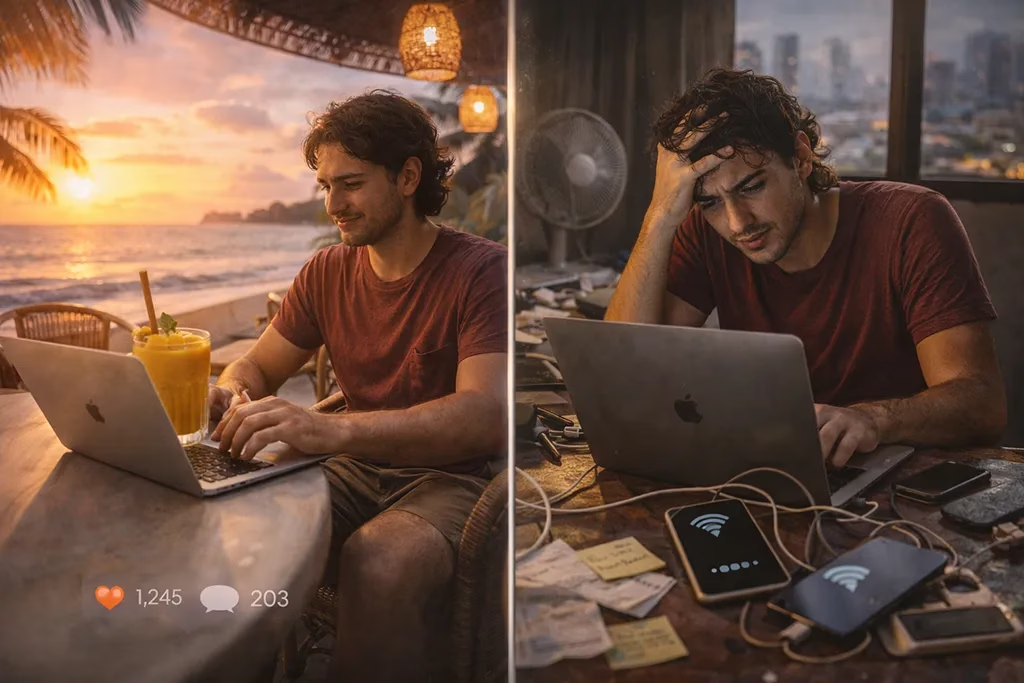
If you’re considering working remotely in the Philippines or embracing digital nomad life in Southeast Asia, this is the reality check you need. After five years of watching dozens of remote workers navigate digital nomad life in the Philippines, I’ve learned that the Instagram aesthetic rarely matches the reality
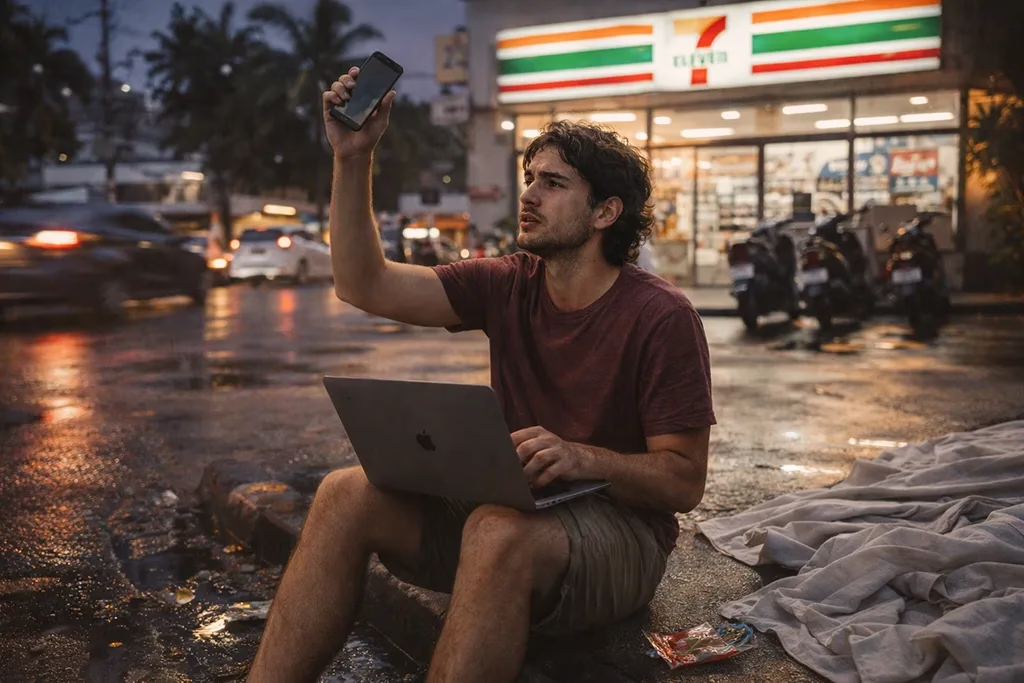
I’ll never forget the message my friend Jake sent me three days after he touched down in Manila, his laptop bag slung over his shoulder, dreams of coconut-fueled productivity dancing in his head. “Dude. The Wi-Fi at my Airbnb just went out for the fourth time today. I have a client call in twenty minutes. I’m literally sitting in a 7-Eleven parking lot right now trying to hotspot off my phone. This is NOT the laptop-on-the-beach life they sold me.” This is where the Instagram aesthetic meets the sweaty, complicated, beautiful, frustrating, life-changing reality that nobody posts about.
After spending the last five years watching dozens of friends, colleagues, and strangers leap into remote work in Southeast Asia (and making a few extended trips myself), I’ve collected enough stories, cautionary tales, and surprising plot twists to write a novel. Or at least this brutally honest article that I wish someone had handed me before I booked my first one-way ticket.
Because here’s the thing: the digital nomad lifestyle isn’t a fantasy. It’s something infinitely more complex, more human, and—if you approach it with eyes wide open—potentially more rewarding than any curated feed could ever capture.
The Dream Sold: How the Philippines Became a Digital Nomad Hotspot
Let’s rewind to understand how we got here. The Philippines didn’t become a remote work darling by accident—it was a perfect storm of timing, economics, and, yes, absolutely killer marketing.
When the pandemic transformed “work from home” from a perk into a global experiment, countries started competing for the newly mobile workforce. The Philippines quickly emerged as one of the best countries for digital nomads, with Manila, Cebu, and Siargao each offering unique advantages for remote work in the Philippines. It’s already famous for pristine beaches, relatively low cost of living, and widespread English proficiency, and saw an opportunity. Though they haven’t rolled out a dedicated digital nomad visa like some neighbors (looking at you, Thailand and Indonesia), the existing visa options, tourist visas that can be extended for up to 3 years, create a practical workaround.
But the real accelerant? Instagram. TikTok. YouTube vlogs titled “I Spend $800/Month Living My DREAM LIFE in the Philippines!”
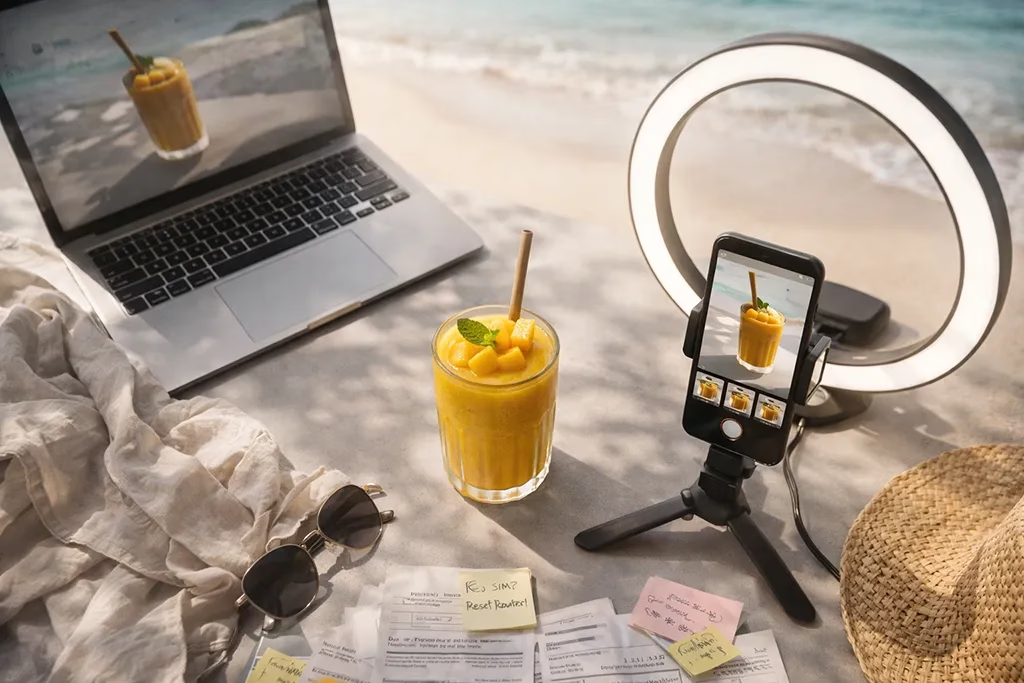
You know precisely what I’m talking about. Those impossibly beautiful shots: a person in linen clothing (always linen, somehow always wrinkle-free) typing on a MacBook at a beachfront café, a fresh mango smoothie strategically placed in the corner of the frame. The sunset is always golden-hour-perfect. The locals in the background are always smiling. The caption reads something like “Another day in paradise 🌴💻✨ #digitalnomad #remotework #blessed.”
But I’m getting ahead of myself
What don’t you see? The thirty takes it required to get that shot because a rooster wouldn’t stop screaming in the background. The fact that the “beachfront café” has a single electrical outlet that six people are politely fighting over. The reality is that salt air and laptops have a contentious relationship.
The Philippines appeals to remote workers for legitimate reasons: the cost of living is genuinely lower than in most Western countries (though that gap is shrinking fast). Filipino culture is remarkably warm and hospitable—the concept of “pakikisama” (harmonious getting along) isn’t just a word; it’s a way of life. The climate is tropical year-round, and for anyone escaping a Midwestern winter, that alone can feel like winning the lottery. Plus, there’s a thriving community of expats and digital nomads in hubs like Siargao, Cebu, and parts of Metro Manila, so you’re not entirely blazing a lonely trail.
All of this is true. And all of this is also incomplete without the rest of the story.
The Initial Reality Check: First Weeks and Culture Shock
My friend Sarah, a graphic designer from Portland, landed in Cebu on a Tuesday. By Friday, she was crying on a video call with her sister.
“I thought I was adaptable,” she told me later, laughing at herself but with a shadow of that initial panic still visible. “I’ve traveled before. I’ve done hostels in Europe. But this… this was different. I wasn’t backpacking for two weeks. I was trying to work, to maintain my entire life and career, in a place where I couldn’t figure out how to pay my electric bill.”
The first few weeks of digital nomad life in the Philippines are where the fantasy collides head-first with logistics. These digital nomad challenges are universal, but they hit differently when you’re trying to maintain your career halfway around the world.
The Internet Situation (Or: A Love Story of Frustration)
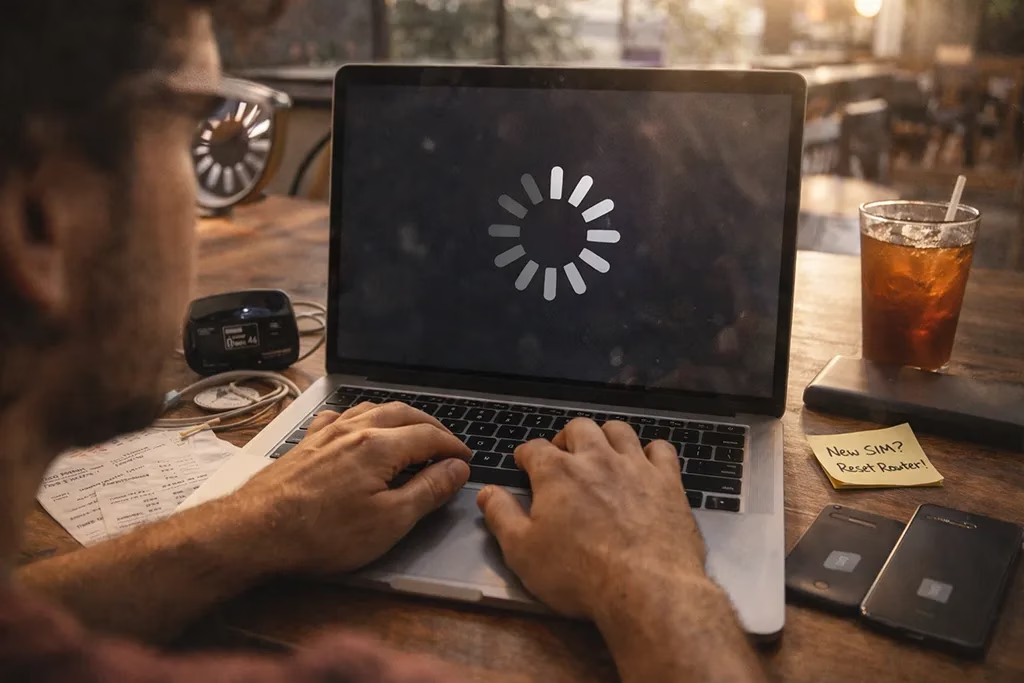
Let’s address the elephant in the room—or more accurately, the buffering wheel on your screen. The Internet in the Philippines is notoriously inconsistent. In major cities and established co-working spaces, you can find reliable connections. Outside those zones? It’s genuinely a gamble.
Marcus, a software developer I met at a co-working space in BGC (Bonifacio Global City, the gleaming business district of Manila), had a backup plan for his backup plan. “I have my apartment connection, a pocket Wi-Fi device, two different SIM cards for data, and I’ve mapped out every café within walking distance with decent speeds. It sounds unreasonable until you’ve had a production deployment go wrong while your internet decides to take a siesta.” Internet reliability in the Philippines remains the number one complaint across digital nomad communities, Philippine forums, Facebook groups, and coworking space conversations.
Power outages—euphemistically called “brownouts”—are another adventure. They’re less common in metro areas but can be regular occurrences in more remote locations. That idyllic beach town with cheaper rent? It might also have scheduled rolling blackouts that nobody thought to mention in the listing.
The Bureaucracy Ballet
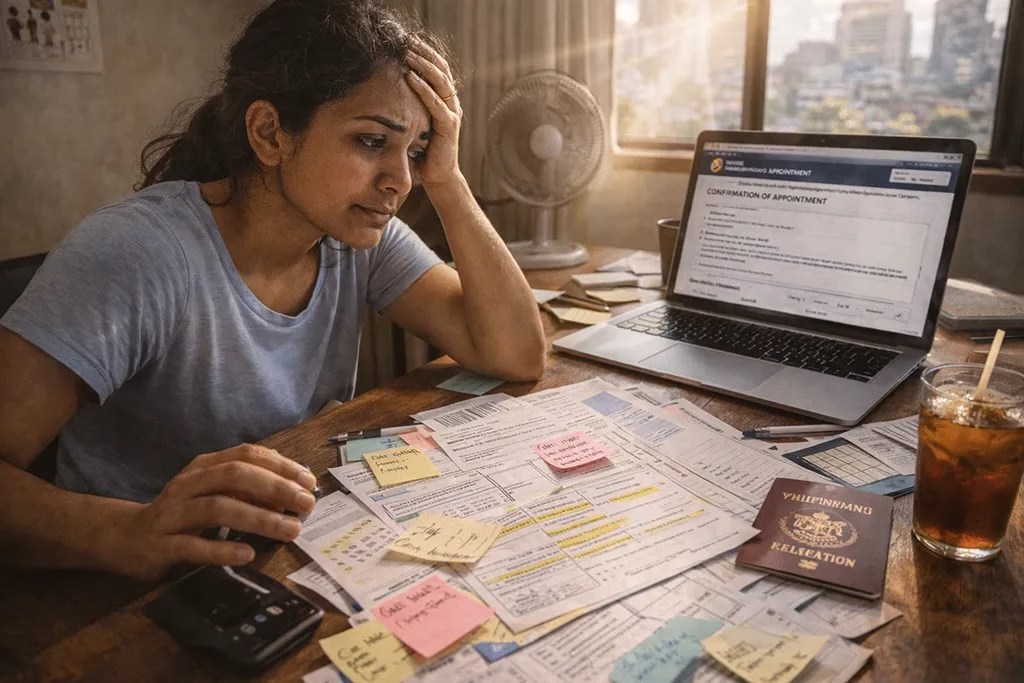
Then there’s local systems navigation. The Philippine bureaucracy operates on its own logic and timeline. Getting an ACR I-Card (Alien Certificate of Registration), opening a local bank account, or even registering a local SIM card can require patience that would make a Buddhist monk fidget.
“I spent an entire day—an ENTIRE day—getting paperwork together just to extend my tourist visa,” Jake told me, the same Jake from the 7-Eleven parking lot incident. “Different offices, multiple photocopies, specific photo sizes. And everyone I asked gave me slightly different information about what I needed. By the end, I had a folder that looked like I was applying for top-secret clearance.”
Practical Tip: The Pre-Move Reality Checklist
Before you book that one-way ticket, do this groundwork:
- Test your remote work setup by spending a week working from different locations in your home city—cafés with spotty Wi-Fi, libraries, anywhere that simulates unpredictability
- Join Facebook groups and forums for expats in your target Philippine city (Digital Nomads Philippines, Cebu Expats, etc.) and lurk for at least a month, reading real problems and questions
- Book your first accommodation for short-term—two weeks maximum—so you can location-scout in person before committing
- Have a financial buffer of at least 3-6 months of expenses; things will cost more than you expect initially
- Research visa requirements exhaustively and bookmark official government sites, not just blogs
Reality-check your expectations by asking: “If the internet goes out for a full day, if I can’t figure out how to do basic tasks, if I feel utterly alone—can I handle that without spiraling?” If the honest answer is “probably not,” that’s valuable information, not a character flaw.

The Financial Tightrope: Cost of Living Philippines Digital Nomad Reality, Beyond the Surface
Let’s talk about money because this is where the “$800/month dream life” claims start to unravel like a cheap t-shirt in humid weather. When researching how much does it cost to live in Philippines as a digital nomad, most budget guides show the absolute minimum. But here’s the digital nomad Philippines budget breakdown based on actual experiences—not aspirational minimums.
Can you live in the Philippines on less than you’d spend in New York, London, or Sydney? Absolutely. Can you do it for $800 a month while maintaining the lifestyle, health standards, and work environment you need? That’s… a much more complicated question.
The Hidden Costs Nobody Mentions
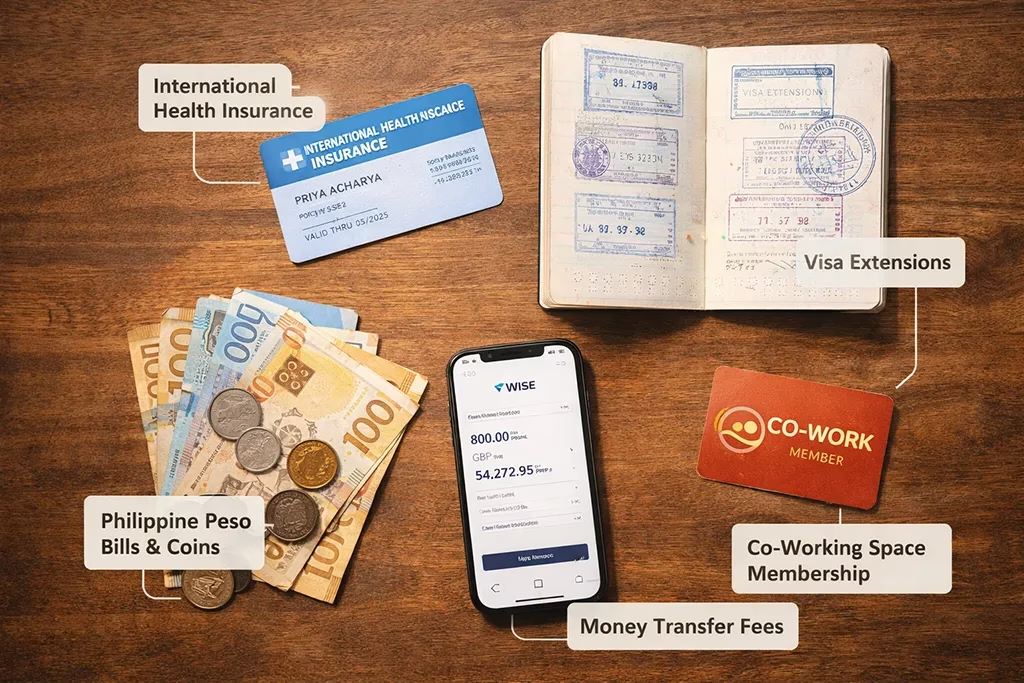
International health insurance. If you’re serious about this lifestyle, you need proper coverage—not just travel insurance, but comprehensive international health insurance. Budget $150-400/month, depending on your age and coverage level. Yes, local healthcare can be affordable, but major emergencies or ongoing conditions require real insurance.
Visa fees and runs. Extending your tourist visa isn’t free, and if you’re doing visa runs to neighboring countries, you’ll have to factor in flights, accommodation, and the time you’ll lose from work.
Workspace costs. Sure, you could work from your apartment. Still, if your apartment is a $300/month studio with unreliable internet and no air conditioning, you’ll quickly find yourself paying for co-working space or café rent (the unspoken cost of buying enough coffee to justify occupying a table for six hours).
The “tourist tax.” You’ll pay more than locals for many things—housing, transportation, sometimes even food. This isn’t always about being scammed; it’s economic reality. Your local friend pays 20 pesos for a jeepney ride; you might pay 50 because you’re still figuring out the system.
Currency fluctuation anxiety. When your income is in dollars or euros, but your daily life is in pesos, exchange rate movements directly impact your purchasing power. I watched someone’s comfortable budget become tight when the peso strengthened by 15% over six months.
An Example
Lindsey, a content writer who’d been working as a Manila digital nomad for two years when I interviewed her, provided a realistic breakdown: “My actual monthly budget is around $2,000, and I live comfortably but not extravagantly. That includes a decent apartment in a safe area ($600), co-working membership ($150), health insurance ($200), food ($400), transportation, entertainment, and a buffer for unexpected costs. Could I cut that down? Sure. But at what cost to my mental health, productivity, and safety?”
Pro Tip: Financial Tools That Actually Help
Based on conversations with dozens of remote workers in the Philippines, here’s the financial toolkit that successful digital nomads swear by:
- Wise (formerly TransferWise) for currency exchange and holding money in multiple currencies with minimal fees
- YNAB (You Need A Budget) or a detailed spreadsheet that tracks spending in both local currency and your home currency
- GCash or PayMaya—local Philippine digital wallets that make life infinitely easier once you’re settled
- Trail Wallet app for daily expense tracking in multiple currencies
- A separate “emergency fund” in an easily accessible account—because emergencies don’t care about your nomad lifestyle
The real cost of “living cheap” is often paid in time, stress, and compromises that aren’t Instagrammable. Spending less on housing might mean an hour-long commute. Skipping health insurance works great until it catastrophically doesn’t. The goal isn’t to live as cheaply as possible—it’s to live as sustainably as possible.
Loneliness and Community: The Emotional Reality of Digital Nomad Life Abroad
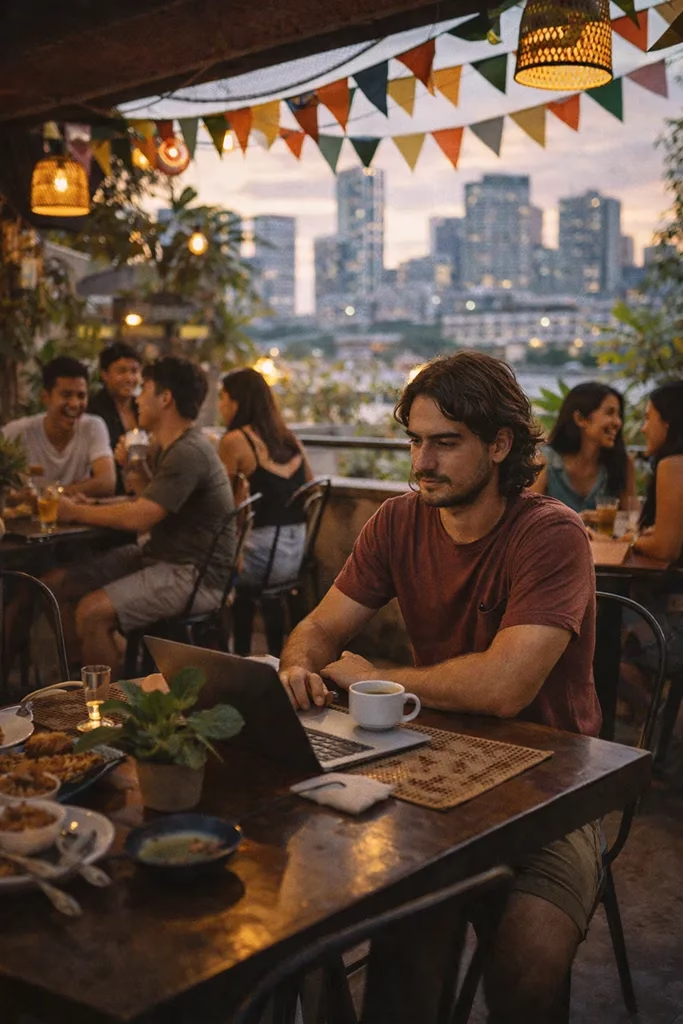
Here’s what nobody prepared me for: the specific flavor of loneliness that comes from being surrounded by people and culture but somehow feeling like you’re watching life through a glass wall. Loneliness as a digital nomad abroad isn’t unique to the Philippines, but the specific challenges of being a remote worker in Southeast Asia—the time zones, the cultural distance, the transient community—create a particular flavor of isolation.
It hit me on a random Tuesday evening, about five weeks into an extended stay in Dumaguete. I was sitting in a beautiful café, the sunset was doing its thing, I’d had a productive workday, and suddenly I felt crushingly, inexplicably lonely. Not for lack of people—the café was full. But for lack of my people. For conversations that didn’t require extra mental translation, for references that landed, for the specific comfort of being understood without effort.
“I miss being casually funny,” my friend Rachel confessed to me. She’d been in Siargao for eight months. “Like, I’m funny in English. I have timing. But here, even though people speak English, the cultural context is different. My jokes need footnotes. It’s exhausting in this tiny, specific way I never anticipated.”
The Isolation Factor Is Real
Remote work is already isolating—you lose the water cooler conversations, the casual lunches, the physical presence of colleagues. Now add being in a different country, possibly a different time zone from your team, away from your established support network. Video calls with family and friends back home help, but there’s a lag—not just internet lag, but life lag. You’re having experiences they can’t quite relate to, and their daily dramas feel distant as you navigate your own cultural adjustment.
The time zone thing is no joke. When you’re 12-16 hours ahead of your family and friends in the US, finding overlapping waking hours for calls becomes Tetris. Your morning is their evening yesterday. Your crisis at 2 pm is happening when everyone you know is asleep.
But Also: The Unexpected Joy of Rebuilt Community
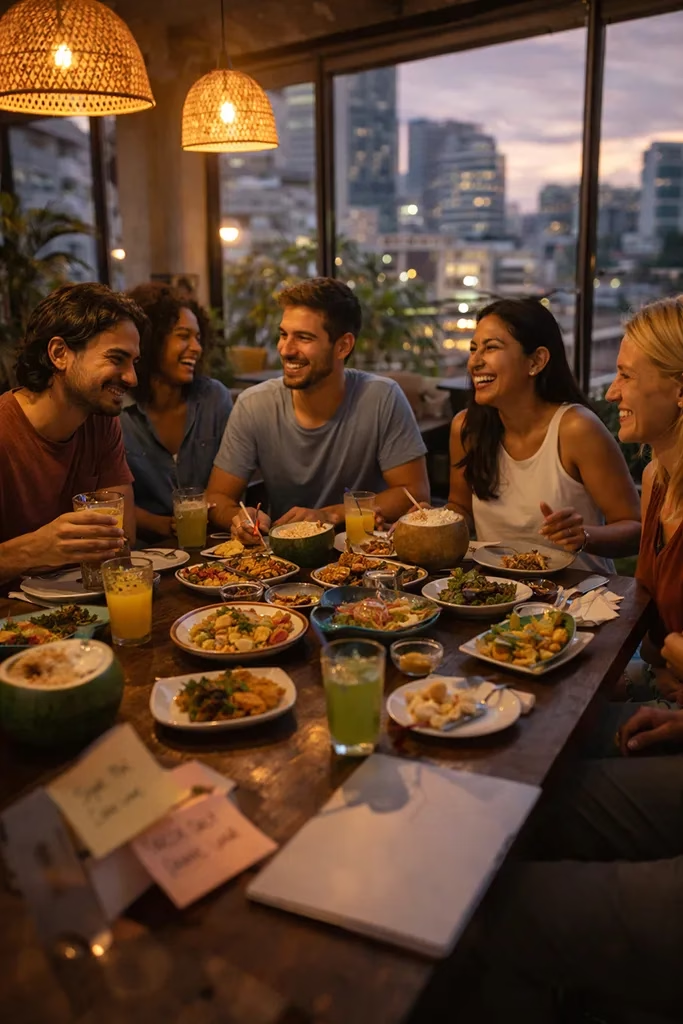
Here’s the plot twist: some of the deepest friendships I’ve witnessed formed in these exact circumstances. There’s something about shared displacement that creates a sense of fast intimacy. The digital nomad and expat community in Philippine hubs is surprisingly tight-knit.
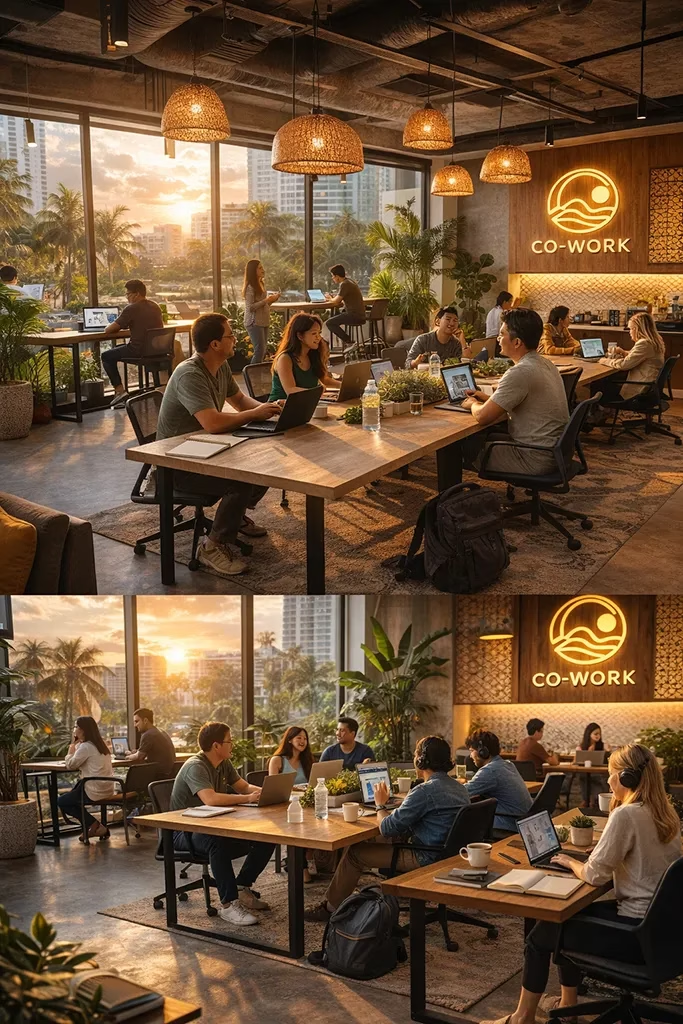
Co-working spaces in the Philippines, like KMC Solutions in Manila, The Company in Cebu, and Tribal Coworking in Siargao, become more than work venues for the digital nomad community in the Philippines; they become your third place, your community center. You bond over shared experiences: internet outages, visa confusion, the collective joy of finding a restaurant that serves decent tacos (a rare commodity that becomes disproportionately exciting).
And then there are the local friendships. Raffy, a Filipino entrepreneur I met through a mutual friend, taught me more about navigating life in his country than any guidebook could. His family invited me to celebrations, patiently explained cultural nuances I was messing up, and teased me mercilessly about my terrible Tagalog pronunciation—which is precisely the kind of authentic relationship I needed.
“Filipino hospitality isn’t a tourism slogan,” an American expat named Tom told me. “It’s genuinely real. But you have to be open to it. You have to be willing to show up, to be a learner, not a judge, to appreciate things on their own terms.”
The Contrarian Take: Sometimes Loneliness Is Actually Focus
I’m going to say something that might be unpopular: some of my most creatively productive periods came during the lonelier stretches abroad. Without the constant social obligations, the familiar distractions, the easy comfort of my regular life, I had space, a mental and emotional space, to actually think.
Rebecca, a writer who spent a year in the Philippines working on her novel, put it this way: “I was lonely, yeah. But I was also undistracted in a way I’d never been. No brunch invitations are pulling me away from my desk. No pressure to attend every social event. Just me, my work, and the conscious choice about when to engage with the community. The loneliness forced me to get comfortable with myself, and ironically, that made me better at connection when I wanted it.”
This isn’t about romanticizing isolation; prolonged loneliness is genuinely harmful. But the voluntary solitude that comes with stepping out of your comfort zone can be clarifying, even transformative.
Work-Life Balance Digital Nomad Philippines Edition: Managing Time Zones and Tropical Heat
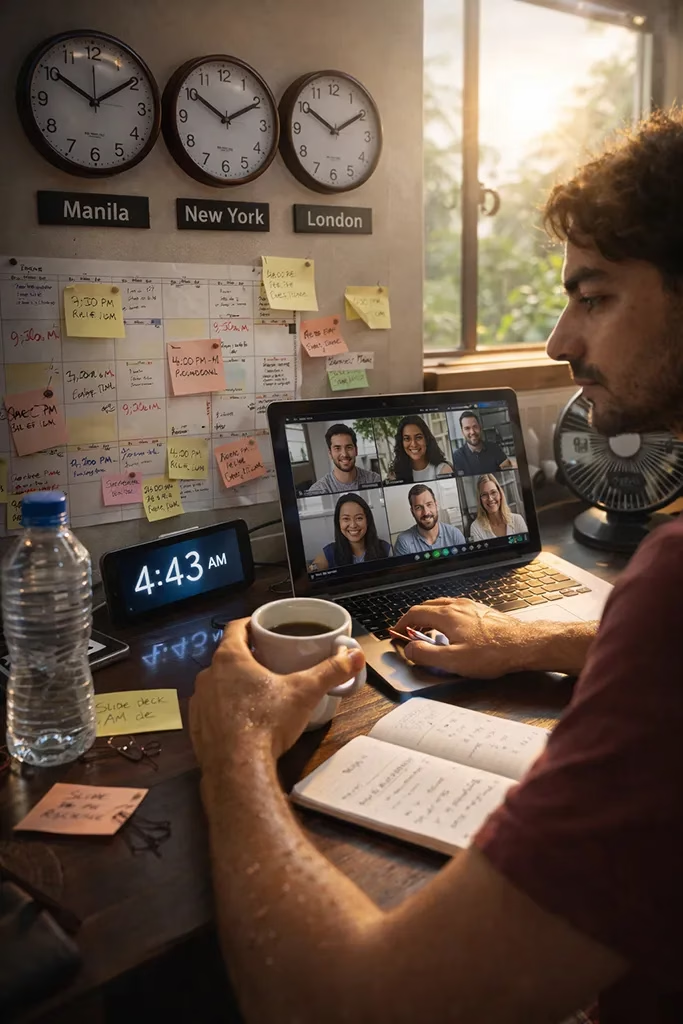
Let’s address the beautiful lie at the heart of the digital nomad fantasy: that you’ll seamlessly balance exploration and productivity, that work and life will blend in some Instagram-perfect harmony. Finding work-life balance as a digital nomad in the Philippines requires more discipline than traditional employment, not less. The challenge isn’t just about time management; it’s about navigating the remote work landscape in the Philippines, where your home is your office and your vacation destination.
Spoiler alert: the “balance” is more like controlled chaos, and figuring it out takes trial, error, and more error.
The Gray Zone Problem
When your home is your office and your vacation destination, boundaries don’t just blur; they disintegrate entirely. You’re in a tropical paradise, theoretically you could go to the beach any day, so you think, “I’ll just work a bit longer today and go tomorrow.” Tomorrow comes, same logic. Suddenly, you’ve been in the Philippines for three months and barely left your apartment except to buy groceries and nurse a café con leche.
Or the opposite happens—you’re so excited to explore that work becomes the annoying thing interrupting your adventure. You take client calls from a tricycle, answer emails at island viewpoints, and your work quality suffers because you’re not fully present for either experience.
James, a digital marketing consultant, admitted his first two months were a disaster: “I basically tried to do both and succeeded at neither. My clients got mediocre work because I was distracted. My exploration was anxious because I was always thinking about work. I was living in paradise, feeling stressed and guilty constantly.”
The Tropical Environment Cuts Both Ways
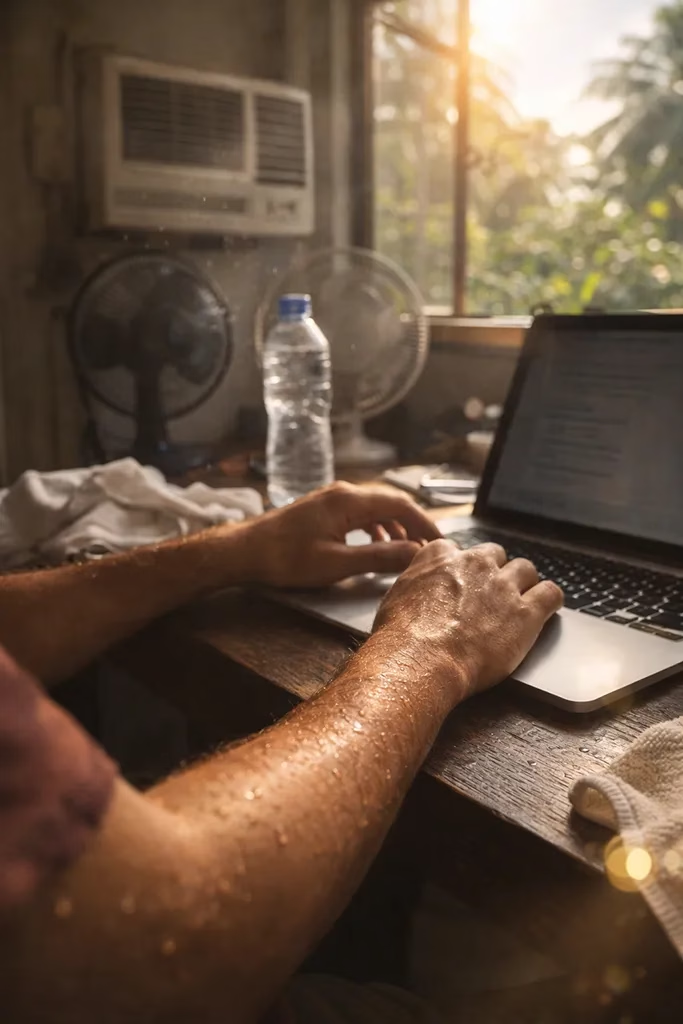
The heat and humidity affect you. This isn’t trivial. If you’re from a temperate climate, working in 32°C (90°F) heat with 80% humidity while your apartment’s air conditioning struggles is physically draining. Your cognitive function literally decreases. You’re not being lazy—you’re thermally exhausted.
But also: the natural environment can be healing in unexpected ways. The slower pace, the forced breaks when afternoon storms roll through, the routine of a morning walk before the heat gets oppressive—these rhythms can recalibrate your nervous system if you let them.
“I realized I’d been operating in survival mode for years,” Maria, a former New Yorker, told me. “Just constant hustle, no pause button. The Philippines forced me to slow down—partly because the infrastructure doesn’t support the same pace, partly because the culture values different things. I fought it for months. Then I leaned into it. My output didn’t decrease, but my anxiety did. Significantly.”
Practical Frameworks: What Actually Works
After talking to dozens of successful long-term nomads, here’s the framework I saw repeated:
The Time-Blocking Method:
- Designate workdays and adventure days—don’t mix them
- On workdays, treat it like an office job: set hours, professional standards, complete focus
- On adventure days, completely disconnect—leave the laptop at home, turn on auto-responders
- Have weekly or bi-weekly rhythms rather than trying to balance daily
The Morning Non-Negotiable:
- First 2-3 hours after waking are protected as deep work time
- No calls, no meetings, no email—just your most important work
- Everything else gets scheduled around this anchor
The Physical Boundary Hack:
- If working from home, have a specific workspace that’s only for work
- Or better: physically leave to work (café, co-working space) so home remains home
- When work is done, physically leave the workspace—ritualize the transition
The Communication Framework:
- Set clear expectations with clients/employers about your availability hours
- Use scheduling tools (Calendly, etc.) to manage time zone differences
- Block out local time for life, doctor appointments, visa runs, and mental health days
- Over-communicate: “I’m based in the Philippines, 12 hours ahead of EST, generally available for calls between X-Y.”
The truth is, work-life balance as a digital nomad requires more discipline than traditional employment, not less. You’re your own enforcer of boundaries, and the constant temptation of “I could be at the beach right now” makes it harder, not easier.

The Surprises No One Warned You About—And Why They Matter
Okay, we’ve covered the hard stuff. Now for the parts that genuinely surprised me—the things that don’t make it into either the promotional content or the complaint threads.
After interviewing dozens of digital nomads in Manila, Cebu, and Siargao, I discovered that the most transformative aspects of digital nomad life in the Philippines weren’t the ones advertised. These surprises fundamentally changed how people viewed success, productivity, and what makes life meaningful.
Surprise #1: The Slowness Is the Point
The “inefficiency” that frustrated me initially—the stores that close unexpectedly for a family event, the repair person who shows up “sometime between 8 am and whenever,” the general resistance to rigid scheduling—is actually a feature of a different value system, not a bug.
Filipino culture prioritizes relationships and present-moment humanity over optimization. At first, this drove my Western productivity brain absolutely ‘nuts’. Eventually, I realized: what if the rest of the world has this backward? What if optimizing every minute for productivity is actually an inefficient way to live a human life?
I’m not romanticizing poverty or suggesting structural problems that don’t need fixing. But the cultural emphasis on “bahala na” (roughly meaning “leave it to fate” or “we’ll figure it out”) and the prioritization of family and relationships over work genuinely shifted something in me.
Surprise #2: Your Definition of Success Will Morph
Before: success meant hitting revenue targets, getting client testimonials, optimizing my funnel, and scaling my freelance operation.
After six months abroad, success started meaning things like—did I have a meaningful conversation today? Is there something new that I learned about this place? Was I able to help someone today? Did I create something I’m proud of rather than just something profitable?
Cheesy? Maybe. But also, genuinely true.
David, a former Silicon Valley product manager who’d been in Cebu for three years, explained it: “I took a 40% pay cut to go remote and move here. On paper, a terrible career move. But I’m writing again, something I gave up years ago. I volunteer to teach kids English. I have time to actually think about what I’m building and why. My San Francisco friends think I’m wasting my potential. I think I finally found it.”
Surprise #3: Adaptability Is a Trainable Muscle
I used to think you were either adaptable or you weren’t—that it was a fixed personality trait. Turns out, it’s more like physical fitness: you can develop it, but it requires consistent practice, and it’s often uncomfortable.
Every time the internet goes out, you problem-solve a solution. When you navigate a bureaucratic system that makes no sense to your cultural framework. You get lost and have to ask for help in broken Tagalog. Every time you try a food you can’t identify, and it’s weird but also good. You’re training adaptability.
And that skill, the ability to stay calm and functional when things don’t go according to plan, turns out to be maybe the most valuable skill I’ve developed, period. It transfers to everything: demanding clients, personal challenges, and the general unpredictability of life.
Story Highlight: From Anxiety to Acceptance
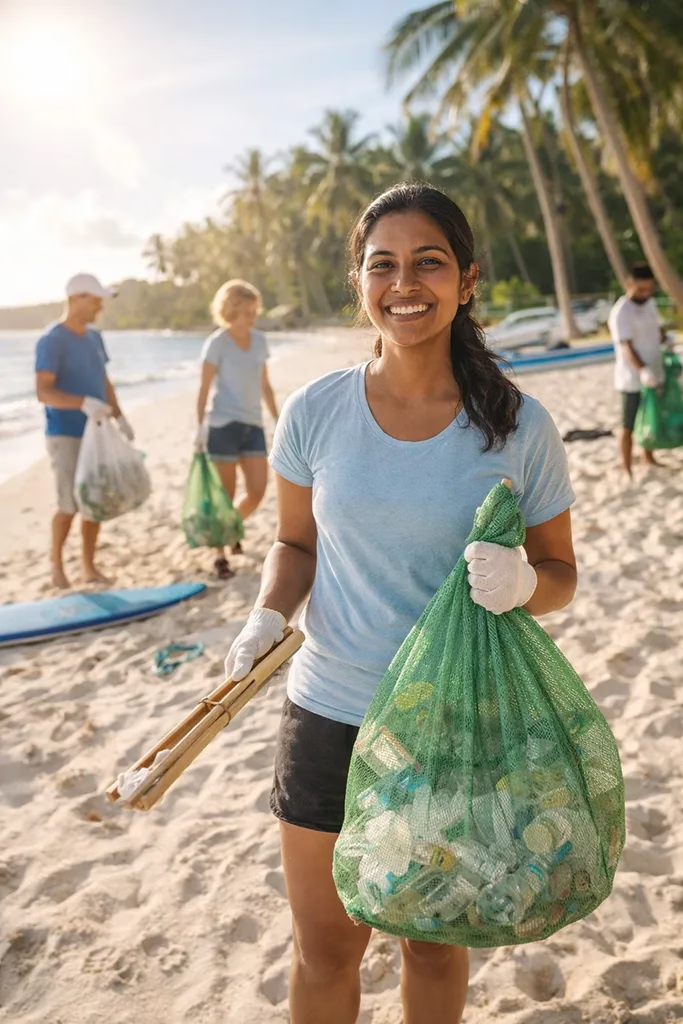
Let me tell you about Priya. She arrived in Siargao with a diagnosed anxiety disorder, a job that could be done remotely, and a desperation to change something in her life. The first month was hell—every challenge felt like confirmation she’d made a terrible mistake.
I met her at a beach cleanup organized by a local environmental group (another surprise: the intense ecological and community activism in many nomad hubs). She told me she’d joined because sitting in her room spiraling wasn’t working.
“That cleanup was the turning point,” she later explained. “I was surrounded by people, locals and expats, just doing something useful together, no performance, no networking agenda, just collective action. Someone offered me fresh buko juice. Someone else invited me to a potluck. And I realized: I’d been so focused on my own anxiety about being here that I hadn’t actually engaged with being here.”
Over the next year, Priya built a life in Siargao. She still had anxiety—this isn’t a miracle cure story. But she developed tools, community, and routines. She started a small side project teaching digital skills to local youth. She learned to surf poorly but enthusiastically.
“The anxiety didn’t disappear,” she told me. “But its voice got quieter relative to other voices—purpose, connection, growth. It’s still there. But so is everything else now.”
The Mindset Shift: From Tourist to Temporary Local
The people who thrive make a specific mental shift: they stop being long-term tourists and start being temporary locals. You at least know basic phrases in the local language. You begin to shop where locals shop. And most importantly, you understand you’re guests in someone else’s home country and behave accordingly—with respect, curiosity, and humility.
They also embrace unpredictability not as an annoyance but as the texture of life. Plans change. Things don’t work the way you expect. It rains when it shouldn’t. And instead of fighting this reality with rigid expectations, they develop a more fluid relationship with control.
As one long-term expat told me: “The Philippines will teach you to let go, whether you want to learn that lesson or not. You can fight it and be miserable, or lean into it and maybe discover something.”
Will You Thrive or Survive? Making an Informed Decision
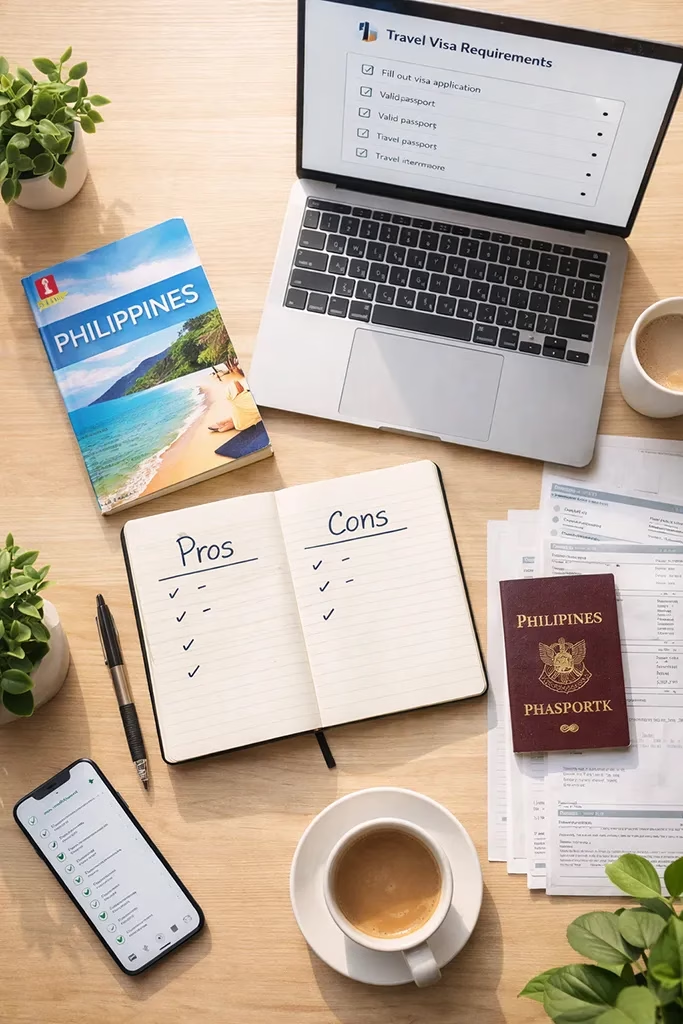
So here we are. You’ve read the reality checks, the budget breakdowns, the emotional complexity. Now what? The question ‘Is the Philippines good for digital nomads in 2026?‘ doesn’t have a universal answer. It depends entirely on your work situation, personality, adaptability, and what you’re genuinely seeking from this experience.
The digital nomad life in the Philippines, or anywhere, isn’t for everyone. And that’s not a judgment; it’s just honest. Some people will absolutely thrive in this environment. Others will struggle tremendously. Most will experience both, sometimes on the same day.
The Honest Pre-Flight Checklist:
Ask yourself these questions. Really ask them, not the Instagram version of asking:
- Can I handle uncertainty? Not occasionally, but as a baseline condition. Because that’s what you’re signing up for.
- Is my remote work actually location-independent? Do you have the systems, skills, and client/employer relationships that can genuinely function from anywhere?
- What am I running toward vs. running from? If you’re escaping problems, they’ll follow you. If you’re moving toward growth, that’s different.
- How do I handle loneliness? Not theoretically—actually. What’s your track record when you’re isolated?
- What’s my financial safety net? If everything goes wrong, can you get home? Can you have weather emergencies?
- Am I willing to be a beginner again? At basic life tasks, at cultural literacy, and at navigating systems. It’s humbling.
- What support systems am I leaving, and how will I replace them? Healthcare, therapy, community, hobbies, routines—what’s your plan?
- Can I be genuinely flexible? With plans, expectations, timelines, definitions of success, and comfort?
Red Flags to Watch Out For:
- If your entire plan is “figure it out when I get there” with no research or preparation
- If you’re expecting to live luxuriously on an unrealistic budget
- If you have severe health conditions and no plan for healthcare access
- If you’re hoping geographic change will fix internal problems
- If you have no emergency fund or backup plan
- If you’re not willing to respect local culture and are just looking for cheap exoticism
- If you cannot handle being wrong, lost, or confused—because you’ll be all three regularly
Resources and Support Systems: Your Philippines Digital Nomad Guide Essentials
If you’re serious about considering this as an option, click here to get a couple of aids to help you with your decision-making. If you decide to move forward, here are actual helpful starting points:
Online Communities:
- Facebook Groups: “Digital Nomads Philippines,” “Foreigners in Manila,” “[City Name] Expats.”
- Reddit: r/digitalnomad, r/Philippines (be respectful, more lurking than posting initially)
- Nomad List (nomadlist.com) for crowdsourced data on costs and conditions
Co-working Spaces (Your Initial Community Hub):
These co-working spaces in the Philippines serve as the central hubs for the digital nomad community in the Philippines:
- Manila digital nomad hubs: KMC Solutions, The Loft, Acceler8
- Cebu digital nomad spaces: The Company, ISpace
- Siargao digital nomad co-working: Tribal Coworking, Mika’s Beach Cowork
- Dumaguete remote work: Hayahay Coworking Space
Practical Services:
- Health insurance: SafetyWing, World Nomads, IMG Global
- Banking: Keep your home bank, add Wise for transfers, get local GCash/PayMaya
- Communication: Globe or Smart for local SIM, maintain your home number via Google Voice
- Shipping: LBC or JRS Express for domestic, Johnny Air Plus for international packages
Learning Resources:
- Basic Tagalog: Pimsleur app or YouTube channels like “Learn Tagalog with Fides.”
- Cultural context: “Culture Smart! Philippines” book, follow local news sources
- Legal/visa info: Philippine Bureau of Immigration official site (not just blogs)
The Real Takeaway for Aspiring Digital Nomads
Here’s what I want you to understand: the digital nomad life in the Philippines is neither the Instagram fantasy nor the dystopian nightmare that cynics describe. It’s real life, with the full messy complexity that phrase implies. The truth about digital nomad life in the Philippines is that it’s neither an Instagram fantasy nor a dystopian nightmare. Whether you’re considering remote work in Manila, the beach lifestyle of Siargao, or the balance of Cebu, understanding the full picture, costs, challenges, and rewards, is essential.
There will be days you’re sitting at a beachfront café, your work is flowing, you’ve just made a new friend from Germany and have plans to explore a nearby island on the weekend, and you think: “I cannot believe this is my life. I’m so lucky.” Those moments are real.
There will be days you’re sitting at a beachfront café, your work is flowing, you’ve just made a new friend from Germany and have plans to explore a nearby island on the weekend, and you think: “I cannot believe this is my life. I’m so lucky.” Those moments are real.
Most days will be somewhere in between—a mix of mundane work, small adventures, tiny frustrations, and little joy. You know, like regular life, just with different scenery and challenges.
How do you get through it all
The question isn’t whether the digital nomad lifestyle is “good” or “bad”, it’s whether it’s right for you, right now, with your specific needs, resources, and personality. And that’s not a question I can answer for you.
What I can tell you is this: if you go into it with open eyes, realistic expectations, proper preparation, and genuine respect for the place and people hosting you, there’s a decent chance you’ll experience something transformative. Not because the Philippines is magical, but because putting yourself in genuinely new circumstances forces growth in ways comfort never will.
You will learn things about yourself: your adaptability, your values, your capacity for both independence and connection. You’ll gain perspective on your home culture by seeing it from the outside. You will develop practical and emotional skills that serve you wherever you end up.
And maybe, just maybe, you’ll discover that “home” is less about a specific location and more about the feeling you create through intentional choices, built community, and the courage to keep showing up even when it’s hard.
Or maybe you’ll discover that actually, home is absolutely a specific location, and that’s where you belong, and this experiment helped you realize what you already had. That’s a valuable lesson, too.
Wrapping it all up
The digital nomad life isn’t a fantasy. It’s not a nightmare. It’s a deeply personal journey that will be uniquely yours, shaped by your choices, responses, and willingness to embrace both the gritty and the glorious. Transparency matters. Which is why I wrote this essay, to counter both the toxic positivity of “living the dream!” content and the bitter cynicism of “it’s all a scam” takes. The reality deserves better than either extreme.
So, if you’re considering this path: research thoroughly, prepare practically, budget realistically, go with open eyes and an open heart, be respectful, stay flexible, ask for help, build community, protect your boundaries, and remember that you can always change your mind.
The beauty of the remote work revolution is that it gave us options. Whether this particular option is right for you—that’s your call to make. Choose consciously. Prepare properly. Then, if you go, show up fully. Working remotely in the Philippines in 2026 offers unique opportunities for growth, but it requires honest self-assessment, proper preparation, and realistic expectations about digital nomad life.
And maybe I’ll see you at a co-working space somewhere, both of us frantically hotspotting off our phones because the Wi-Fi died again, laughing at the absurdity and somehow loving it anyway.
It’s up to you now
Do you feel ready to embrace the digital nomad life in the Philippines, or does this reality check raise new questions? Share your thoughts, fears, or experiences in the comments below—let’s spark an honest conversation. What surprised you most in this article? What concerns weren’t addressed? If you’re already living this life, what would you add?
Save this article to revisit before you leap. Better yet, bookmark it and check back in six months—see what questions you have then.
Follow for more unfiltered insights into expat life because you deserve real information to make real decisions.
Your future self will thank you, whether that future self is thriving in a Siargao co-working space or happily settled in your home city, clearer about what you actually want.
Both outcomes are successful if they’re chosen consciously.
The One Thing I Wish Someone Had Told Me
One more thing before you go. The thing nobody tells you, the thing I genuinely wish someone had pulled me aside and said before my first big move, is this:
“You’re allowed to change your mind.“
I mean, really allowed. Not “allowed, but you’re a failure if you do.” Actually allowed, with zero shame attached.
If you try the digital nomad life and hate it, coming home isn’t failure—it’s data collection. You learned something valuable about yourself. That’s the whole point of trying things. If you try it and love it for only six months, then want to move home, or somewhere else entirely, that’s not flakiness: that’s evolution. Humans grow. Needs change. It’s fine. If you try it and love it so much you stay for years, but then one day wake up and realize you’re done, that it was perfect for a season, but the season has changed—that’s also completely valid.
The Instagram version of digital nomad life suggests you have to be ALL IN forever, that you’ve either “made it” or you’re a fake, that you need to stick with it to prove something.
The Takeaway
That’s nonsense.
You don’t owe the internet a consistent narrative. Your followers (if you have them) won’t expect a particular lifestyle. You don’t owe anyone an explanation for choosing differently than you decided before. You’re allowed to experiment, to try, to change courses, to learn, to grow, to realize something isn’t for you, to realize it IS for you but not forever, to make different choices as you gain new information.
That’s not failure. That’s wisdom.
So, if you go to the Philippines (or anywhere) as a digital nomad, hold your plans loosely. Give it an honest try—not a week, but a real stint, maybe three months. Experience enough to get past the honeymoon phase and the initial culture shock into something more real. Then check in with yourself honestly. Not “am I living up to the fantasy?” but “Is this actually working for me? Am I growing or struggling? Is this sustainable, or am I white-knuckling through each day?”
And whatever the answer is, honor it.
The point of location independence is freedom—including the freedom to choose differently as you learn more about yourself. Give yourself that permission now, before you’re in the middle of it, feeling trapped by sunk costs and social media optics. You’re allowed to change your mind. That’s actually the most liberating part of this whole adventure.
Now go forth, or don’t, with full permission to figure it out as you go.
That’s the real digital nomad secret: none of us has it figured out. We’re all just making decisions with imperfect information and adjusting as we learn.
Welcome to the beautifully messy club.
FAQ: Your Digital Nomad Philippines Questions Answered
Q1: Does the Philippines have a digital nomad visa?
As of 2026, the Philippines hasn’t implemented a dedicated digital nomad visa like Thailand or Indonesia. However, the tourist visa can be extended for up to 3 years, creating a practical workaround for long-term remote work.
Q2: How much does it cost to live in the Philippines as a digital nomad?
Realistic budgets range from $1,500-$2,500/month depending on location and lifestyle. Manila and BGC are more expensive ($2,000+), while Dumaguete or provincial areas can be cheaper ($1,500-$1,800).
Q3: What are the best cities for digital nomads in the Philippines?
Manila (BGC) offers the best infrastructure and fastest internet; Cebu provides a balance of city amenities and beach access; Siargao attracts the surf/beach lifestyle crowd; Dumaguete offers affordability and a slower pace.
Q4: How reliable is internet for remote work in the Philippines?
A: Internet reliability varies significantly by location. Major cities and established co-working spaces offer decent speeds (25-50 Mbps), but in provincial and residential areas, internet speeds can be inconsistent. Always have backup options (a pocket Wi-Fi or multiple SIM cards).
Q5: Is it legal to work remotely in the Philippines on a tourist visa?
This is a gray area. Technically, tourist visas don’t permit “work” in the Philippines, but enforcement focuses on taking local jobs away from Filipinos. Remote workers earning income from foreign clients/employers and not engaging in the local job market generally operate without issues. However, for complete legal clarity and peace of mind, consult with an immigration lawyer. Many digital nomads have worked this way for years without problems, but it’s not officially endorsed.
Q6: What health insurance do digital nomads need for the Philippines?
You need comprehensive international health insurance, not just travel insurance. Popular options include SafetyWing ($45-75/month), World Nomads ($100-150/month), or IMG Global ($150-400/month, depending on age and coverage). Local healthcare in the Philippines can be affordable for minor issues, but serious medical emergencies or ongoing conditions require proper international coverage. Don’t skip this because medical evacuation alone can cost $50,000+.
Q7. How do digital nomads deal with loneliness in the Philippines?
Combat loneliness by joining co-working spaces (instant community), participating in Facebook groups like “Digital Nomads Philippines” before you arrive, attending regular meetups and events, learning basic Tagalog to connect with locals, volunteering for local causes, and maintaining realistic expectations about time zones for calls home. Most successful digital nomads report that the first 6-8 weeks are the hardest, but the community builds naturally if you show up consistently and stay open to connection.
Other Articles that may be of Interest
You may also find the following articles interesting.
Suggestions For Lodging and Travel
Lodging is widely available throughout the Philippines. However, you may want to consider getting assistance booking tours to some of the Philippines’ attractions. I’ve provided a few local agencies that we’ve found to be very good for setting up tours. For transparency, we may earn a commission when you click on certain links in this article, but this doesn’t influence our editorial standards. We only recommend services that we genuinely believe will enhance your travel experiences. This will not cost you anything, and I can continue to support this site through these links.
Local Lodging Assistance
- Guide to the Philippines: This site specializes in tours across the Philippines, offering flexible scheduling and competitive pricing. I highly recommend them for booking local arrangements for a trip like this one. You can book flights and hotels through the Expedia link provided below.
- Hotel Accommodations: I highly recommend The Manila Hotel for a stay in Manila. I stay here every time I travel to the Philippines. It is centrally located, and many attractions are easily accessible from there. Intramuros and Rizal Park are within walking distance. I have provided a search box below for you to use to find hotels (click “Stays” at the top) or flights (click “Flights” at the top). This tool will provide me with an affiliate commission (at no additional cost to you).
- Kapwa Travel is a travel company focused on the Philippines. It specializes in customizing trips to meet customers’ needs.
- Tourismo Filipino is a well-established company that has been operating for over 40 years. It specializes in tailoring tours to meet customers’ needs.
- Tropical Experience Travel Services – Tours of the Philippines: This company offers a range of tour packages, allowing you to tailor your trip to your preferences.
Lastly, we recommend booking international travel flights through established organizations rather than a local travel agent in the Philippines. I recommend Expedia.com (see the box below), the site I use to book my international travel. I have provided a search box below for you to use to find flights (click “Flights” at the top) or Hotels (click “Stays” at the top). This tool will provide me with an affiliate commission (at no cost to you).